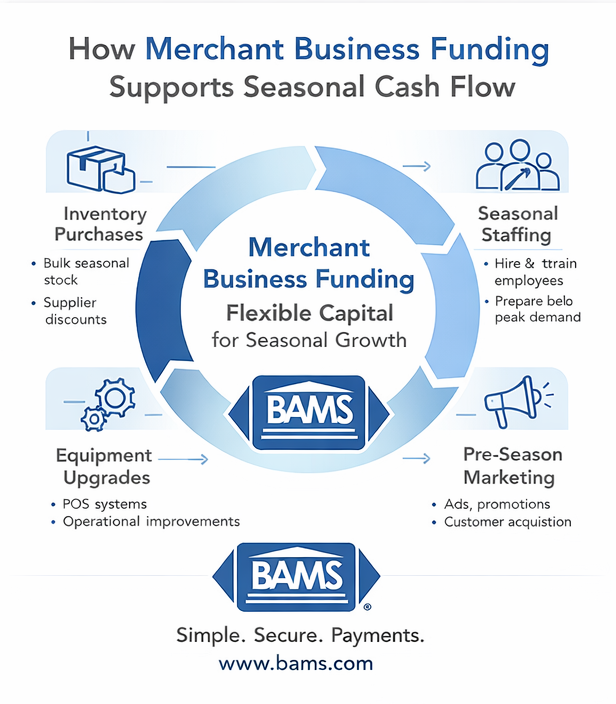
Using Merchant Business Funding for Seasonal Cash Flow
Financing Your Seasonal Business with Merchant Business Funding
Merchant business funding can help seasonal businesses manage uneven revenue cycles while preparing for peak demand. Many industries—including retail, hospitality, tourism, landscaping, and tax services—experience strong sales during specific periods of the year but must invest in inventory, staffing, and marketing long before revenue arrives. This timing gap creates significant cash flow pressure for business owners.
Seasonal businesses play a critical role in many industries, from retail and hospitality to landscaping, tourism, and tax preparation services. However, the seasonal nature of these operations often creates significant financial challenges. Revenue tends to arrive in concentrated bursts during peak periods, while expenses such as rent, payroll, and inventory purchases occur throughout the year.
This uneven revenue cycle creates pressure on working capital. Business owners often need to invest heavily in inventory, staffing, marketing, and operational preparation months before peak demand arrives. Without adequate financing, these upfront costs can limit growth opportunities or create cash flow strain during slower months.
Key Takeaways
- Seasonal businesses require flexible financing that aligns with fluctuating revenue cycles.
- Merchant business funding allows businesses to invest in growth before peak demand arrives.
- Merchant cash advances for seasonal businesses provide faster access to capital than many traditional loans.
- Revenue-based repayment structures reduce financial pressure during off-season months.
- Choosing the right funding partner can support long-term stability and seasonal growth.
The Unique Cash Flow Challenges of Seasonal Businesses
Seasonal companies operate under financial conditions that differ significantly from businesses with steady year-round demand. While peak periods can generate substantial revenue, the financial planning required to support those periods is often complex.
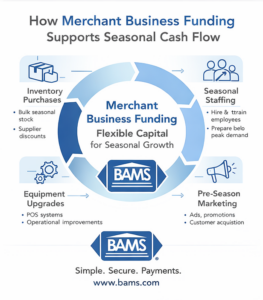
Merchant business funding helps seasonal businesses prepare for peak demand by supporting inventory, staffing, and marketing expenses.
Revenue Concentration in Peak Periods
Many seasonal businesses generate the majority of their annual revenue within a limited timeframe. Retail stores may experience strong sales during holidays, while tourism operators rely heavily on summer travel seasons. Landscaping services and snow removal companies often depend on weather-driven demand.
This compressed earning window increases financial volatility. External factors such as weather patterns, tourism trends, or economic conditions can significantly impact revenue performance.
Off-Season Fixed Costs
Even when customer activity slows down, businesses must continue covering fixed operational costs. These may include rent, utilities, insurance, equipment maintenance, and software subscriptions.
Additionally, some seasonal businesses choose to retain key employees during slower months in order to maintain operational continuity and avoid rehiring costs when demand returns.
Inventory and Operational Ramp-Up Costs
Preparing for peak season typically requires substantial upfront spending. Businesses often need to purchase inventory in bulk months before revenue arrives.
For example, retail businesses may stock large volumes of holiday merchandise, while restaurants may prepare for busy tourist seasons with expanded supplies and staffing. These investments are commonly supported through seasonal inventory loans or small business inventory loans.
For many small businesses, inventory purchases represent one of the largest seasonal investments. Research from the National Retail Federation shows that consumer spending during major seasonal shopping periods can reach hundreds of billions of dollars, which encourages retailers to invest in inventory and marketing months before peak demand arrives.
Marketing expenditures also increase before peak seasons begin. Advertising campaigns, digital promotions, and local outreach often need to be funded in advance to generate customer demand.
Why Business Financing for Seasonal Cash Flow Requires Flexibility
Traditional financing models often rely on fixed repayment schedules. However, these structures may not align with the fluctuating revenue patterns of seasonal businesses.
Consequently, fixed loan payments during slow months can strain liquidity. Flexible financing solutions that adapt to sales performance can therefore provide greater stability for businesses operating in seasonal markets.
Why Traditional Seasonal Business Loans Fall Short
Bank Loan Limitations
Many traditional bank loans require strong credit scores, lengthy financial documentation, and collateral. Approval processes can take weeks or even months, which may not align with the rapid timing required for seasonal opportunities.
According to the U.S. Small Business Administration, lenders often evaluate extensive financial history and collateral when assessing loan applications, which can slow the approval process for small businesses.
The Timing Problem
Seasonal opportunities often move quickly. Retailers may need to purchase inventory months before holiday demand spikes, while tourism operators must prepare for travel seasons well in advance.
Delayed approvals may cause businesses to miss supplier discounts, marketing windows, or early hiring opportunities.
The Risk of Fixed Monthly Payments
Traditional installment loans typically require fixed monthly payments regardless of revenue fluctuations. During slower months, these fixed obligations can reduce financial flexibility and increase operational risk.
In contrast, revenue-based financing models adjust repayment amounts based on actual sales activity.
What Is Merchant Business Funding?
Merchant business funding is a form of alternative financing designed for companies that process customer payments through credit cards or digital transactions.
Rather than providing capital through a traditional loan structure, merchant funding typically advances funds to a business in exchange for a portion of its future receivables.
This structure allows repayment to fluctuate with the business’s sales performance.
Key characteristics of merchant business funding include:
- No fixed installment schedule
- Repayments based on daily or weekly revenue
- Faster approval timelines compared to many bank loans
- Flexible qualification based on business revenue
Many seasonal companies use merchant funding as part of their broader payment infrastructure strategy. Businesses processing large volumes of digital transactions may also benefit from integrated solutions such as payment gateways that support seamless customer payments.
Types of Merchant Business Funding Options
- Merchant cash advances for seasonal businesses
- Revenue-based funding models
- Short-term working capital advances
These financing structures are specifically designed to support businesses with fluctuating revenue patterns.
How Merchant Cash Advances for Seasonal Business Work
Merchant cash advances are among the most common forms of merchant business funding. The process typically begins with a review of a business’s recent sales history.
Application Process
Business owners submit documentation such as bank statements or payment processing records. Approval decisions are often based primarily on revenue performance rather than solely on credit scores.
This approach can expand access to funding for businesses that may not qualify for traditional bank loans.
Funding Timeline
Compared to many conventional loans, merchant funding solutions often provide capital significantly faster. Some providers can approve and distribute funds within a few business days.
This speed allows seasonal businesses to secure capital before peak demand arrives.
Repayment Structure
Repayment is typically collected as a percentage of daily or weekly card sales.
This structure means:
- Payments increase during peak revenue periods
- Payments decrease during slower months
- Cash flow remains aligned with business performance
According to the Federal Reserve Small Business Credit Survey, many small businesses rely on alternative financing products to address short-term cash flow challenges and manage working capital needs.
Ideal Use Cases
Seasonal businesses often use merchant funding for:
- Purchasing bulk seasonal inventory
- Hiring temporary staff
- Launching seasonal marketing campaigns
- Repairing or upgrading equipment
Strategic Uses of Merchant Business Funding for Seasonal Businesses
Inventory Financing
Many businesses rely on inventory purchases to generate revenue during peak seasons. Merchant funding can serve as a flexible alternative to traditional small business inventory loans.
Access to capital before peak season allows businesses to purchase inventory in bulk and potentially negotiate supplier discounts.
Marketing and Customer Acquisition
Pre-season marketing campaigns can significantly influence peak-season sales. Businesses may use merchant funding to invest in digital advertising, email campaigns, or local promotional events.
Staffing and Payroll Stability
Hiring and training employees before peak periods can improve customer service and operational efficiency. Merchant funding helps businesses maintain payroll stability while preparing for increased demand.
Equipment and Infrastructure Improvements
Seasonal businesses often rely on specialized equipment or infrastructure upgrades. For example, restaurants may expand outdoor seating during tourism seasons, while service businesses may upgrade equipment before busy periods.
Businesses seeking to streamline payment acceptance during peak seasons may also consider solutions such as PCI compliance and secure payment processing systems.
Comparing Merchant Business Funding to Other Seasonal Business Financing Options
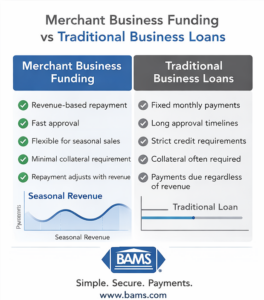
Revenue-based merchant funding provides flexibility compared to fixed payment seasonal loans.
| Financing Type | Approval Speed | Repayment Structure | Best For |
|---|---|---|---|
| Seasonal Business Loans | Slow | Fixed monthly payments | Businesses with stable credit and long planning timelines |
| Lines of Credit | Moderate | Flexible borrowing but interest accrues | Ongoing working capital needs |
| Merchant Business Funding | Fast | Revenue-based repayment | Businesses with fluctuating sales cycles |
For businesses dealing with seasonal fluctuations, revenue-based merchant funding can provide greater flexibility than fixed repayment loans.
When Should a Seasonal Business Consider Merchant Business Funding?
Timing plays a critical role in seasonal financial planning.
Businesses may consider merchant funding in the following situations:
- Before major inventory purchase deadlines
- While preparing for seasonal marketing campaigns
- When revenue history shows strong seasonal demand spikes
- When traditional lenders decline financing applications
- When speed and flexibility are essential
Strategic financing decisions made before peak seasons can help businesses maximize revenue opportunities.
Choosing the Right Merchant Business Funding Partner
Transparency in Funding Terms
Businesses should look for providers that clearly explain funding costs, repayment structures, and terms.
Industry Expertise
Funding providers with experience working with seasonal businesses may better understand peak and off-peak cycles.
Speed and Support
A streamlined application process and responsive account support can help businesses secure capital when timing is critical.
Flexible Solutions for Seasonal Growth
Working with a trusted provider ensures that financing aligns with business goals.
BAMS offers tailored financing solutions designed to support business growth and operational flexibility. Businesses exploring funding options can learn more about BAMS Funding Solutions.
FAQ: Merchant Business Funding for Seasonal Businesses
What is merchant business funding?
Merchant business funding is a form of alternative financing that provides capital to a business in exchange for a portion of its future receivables. Repayment is typically tied to sales performance, making it more flexible than traditional loans for businesses with fluctuating revenue.
How do merchant cash advances help seasonal businesses?
Merchant cash advances allow seasonal businesses to access capital before peak demand arrives. The repayment structure adjusts based on daily or weekly card sales, which means payments increase during busy seasons and decrease during slower periods.
Is merchant business funding better than seasonal business loans?
The best option depends on the business’s financial profile. Seasonal business loans may offer lower financing costs but often require strong credit and fixed payments. Merchant business funding can provide faster approval and repayment structures that align with revenue cycles.
How quickly can a business receive merchant business funding?
Many merchant funding providers can approve applications within a few business days once revenue documentation is submitted. This speed allows businesses to secure capital quickly when preparing for seasonal demand.
What can seasonal businesses use merchant funding for?
Seasonal businesses commonly use merchant funding for inventory purchases, marketing campaigns, payroll, equipment repairs, and other operational expenses needed before peak revenue periods begin.
Conclusion: Turning Seasonal Cycles into Predictable Growth
Seasonal businesses operate in environments where revenue fluctuates significantly throughout the year. Managing these fluctuations requires careful financial planning and access to flexible capital.
Merchant business funding provides a financing structure that aligns with real-world revenue cycles. By linking repayment to sales performance, businesses can manage cash flow more effectively during both peak and slower periods.
With faster access to capital, flexible repayment structures, and adaptable funding models, merchant funding solutions can help seasonal businesses invest in growth opportunities rather than simply reacting to cash flow challenges.
Businesses looking to strengthen financial stability and prepare for future demand can explore BAMS Funding Solutions to learn more about financing options designed for seasonal operations.