Chargeback Defense: Protect eCommerce Revenue From Disputes
Last Updated on October 14, 2026 by Dimitri Akhrin
Chargeback Defense: How to Reduce Disputes & Protect eCommerce Revenue
If you accept credit cards online, you need a structured chargeback defense strategy. Chargebacks are not simply refunds—they are forced transaction reversals that increase payment processing costs, damage your processing reputation, and threaten the long-term stability of your merchant account. Without a proactive dispute management system, eCommerce businesses gradually lose margin every month.
This guide explains how it works, why it matters, and how merchants can implement a structured system to protect revenue while maintaining healthy payment processing relationships.
Key Takeaways
- Chargeback defense protects eCommerce revenue from payment disputes.
- Disputes increase payment processing costs and merchant account risk.
- Prevention reduces overall dispute volume.
- Structured representment improves dispute win rates.
- Analytics strengthen long-term dispute control.
What Is Chargeback Defense?
Chargeback defense is the structured process of preventing, responding to, and resolving customer payment disputes. It combines fraud prevention controls, documentation management, representment procedures, and dispute analytics.
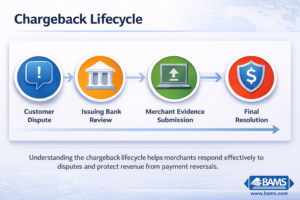
When a cardholder disputes a transaction, the issuing bank temporarily removes funds from the merchant’s account while the claim is investigated. If the merchant cannot present a strong chargeback defense, the business loses:
- The original transaction revenue
- The product or service delivered
- The chargeback fee
- Potentially higher payment processing rates
Over time, weak dispute management increases the merchant’s dispute ratio, which card networks monitor closely.
Why Chargeback Defense Is Critical for eCommerce Businesses
Card-not-present transactions carry higher fraud risk than in-person purchases. As a result, eCommerce businesses face greater exposure to disputes compared to traditional retail merchants.
Excessive dispute ratios can trigger monitoring programs, fines, increased scrutiny, and in extreme cases, merchant account termination. A disciplined chargeback defense strategy protects revenue, preserves processor relationships, and maintains operational stability.
Merchants experiencing frequent disputes often benefit from structured chargeback defense solutions that provide monitoring tools, alert systems, and dispute management support.
The True Cost of Weak Chargeback Defense
Strong chargeback defense is not just about saving individual transactions—it protects long-term business margin. Payment disputes exist within a broader payment ecosystem involving issuing banks, acquiring banks, and card networks. The Federal Reserve payment systems overview explains how these institutions support the infrastructure used for card transactions.
For example, if a business processes $500,000 per month and experiences a 0.8% dispute rate, thousands of dollars in revenue may be disputed monthly. When fulfillment costs, lost inventory, dispute fees, and administrative labor are included, the financial impact can compound into six figures annually.
The 4 Pillars of Effective Chargeback Defense
1. Prevention Before Representment
The strongest chargeback defense begins before a dispute occurs. Prevention lowers dispute volume, which is the most profitable form of dispute management.
- Clear refund policies displayed before checkout
- Recognizable billing descriptors
- Immediate order confirmation emails
- Responsive customer service
- AVS and CVV verification
- Fraud scoring and device monitoring
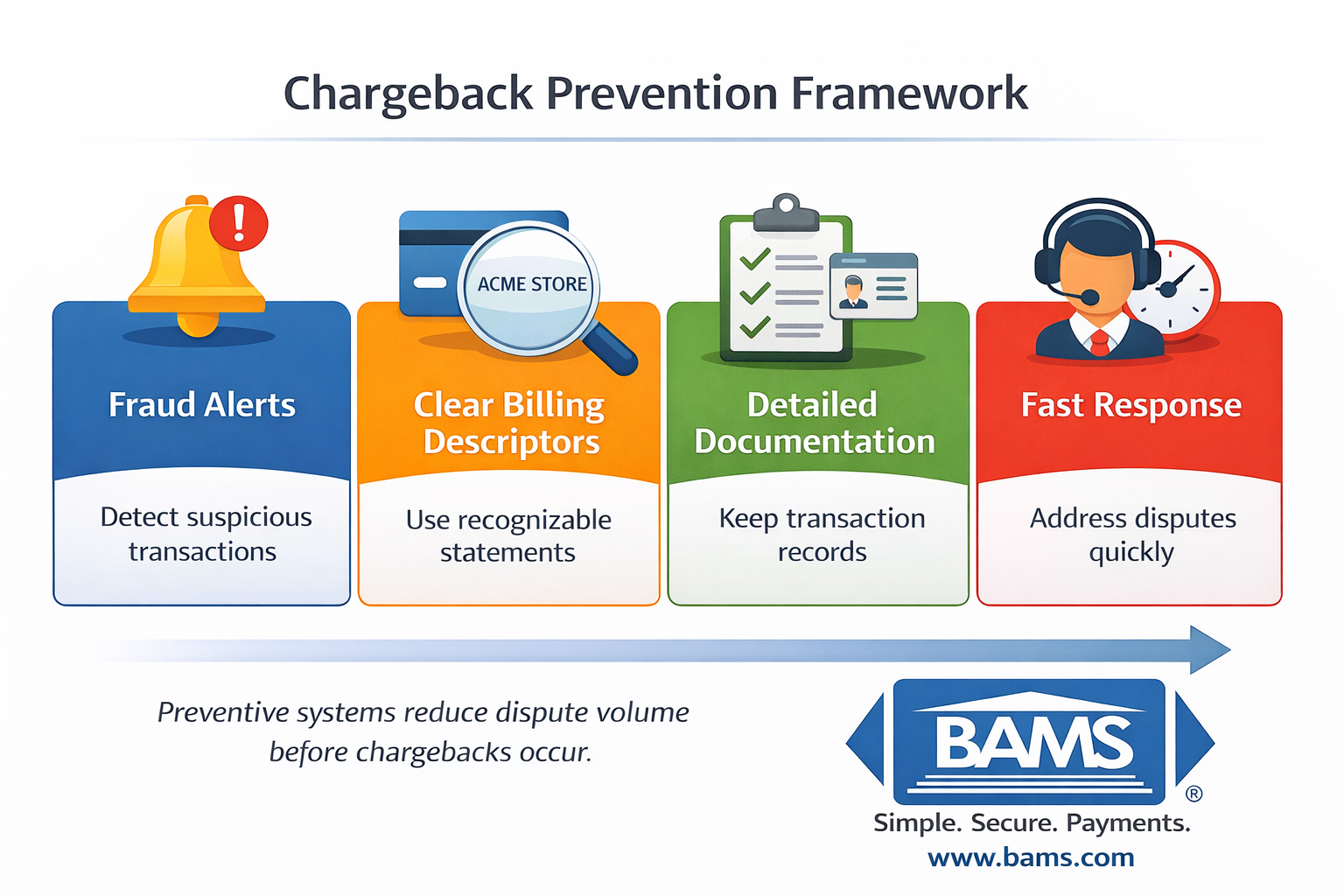
A structured chargeback prevention framework reduces disputes before they escalate into costly chargebacks.
Fraud controls and payment security play a critical role in preventing disputes before they occur. The PCI Security Standards Council merchant resources provide guidance on protecting cardholder data and maintaining secure payment environments.
2. Real-Time Dispute Monitoring
Effective chargeback defense requires immediate notification when disputes occur. Deadlines are strict, and missing response windows often forfeits the case.
- Real-time chargeback alerts
- Reason code identification
- Deadline tracking
- Documentation guidance
3. Compelling Evidence Submission
Winning disputes requires structured documentation aligned with the dispute reason code. Generic responses typically fail, while targeted evidence improves win rates.
- AVS match confirmation
- CVV match confirmation
- IP address logs
- Device fingerprint data
- Proof of delivery with signature
- Customer communication records
- Timestamped refund policy acceptance
4. Analytics & Continuous Optimization
Modern chargeback defense systems rely on data. Businesses should track dispute ratios, win rates, reason codes, product-level trends, and card network distribution.
Without analytics, merchants cannot improve dispute performance over time.
Merchant Account Health
Card networks monitor merchants using dispute thresholds. Exceeding those thresholds may trigger monitoring programs, fines, increased reserves, or account termination. Visa explains in its
merchant payment resources that businesses must maintain acceptable dispute ratios to preserve payment processing stability.
A structured chargeback defense strategy keeps dispute ratios below risk thresholds and protects the merchant’s ability to continue accepting payments.
Secure payment infrastructure such as modern payment gateways can also help merchants detect suspicious transactions earlier and strengthen dispute prevention workflows.
Common Chargeback Defense Mistakes
- Waiting too long to respond to disputes
- Submitting incomplete documentation
- Ignoring repeat dispute patterns
- Failing to optimize billing descriptors
- Not reviewing dispute ratios regularly
It must be systematic—not reactive, occasional, or optional.
How It Impacts Profit Margins
Every dispute increases effective processing costs. Chargebacks contribute to higher effective rates, increased processor risk classification, stricter underwriting, and reduced negotiating leverage.
Strengthening it lowers hidden payment leakage, improves margin predictability, and protects long-term payment processing stability.
Advanced Strategies for Scaling Businesses
High-volume eCommerce operators often implement advanced dispute tools including Rapid Dispute Resolution (RDR), Ethoca Alerts, Verifi services, automated evidence generation, and dedicated dispute management teams.
Scaling businesses treat it as a strategic cost-control system rather than a back-office administrative task.
Conclusion
Chargebacks will always exist in eCommerce. However, profitable merchants treat chargeback defense as a structured operational discipline.
Merchants should investigate immediately when dispute ratios exceed 0.5%. Businesses that do not track their dispute win rate should begin measuring it. Processors that cannot provide dispute analytics may not be the right long-term partner.
A disciplined chargeback defense strategy protects revenue, preserves processor relationships, and strengthens long-term profitability.
Frequently Asked Questions
What is chargeback defense?
It is the structured process of preventing, responding to, and resolving payment disputes filed by cardholders.
How does it reduce dispute ratios?
Effective chargeback defense combines prevention strategies, fraud controls, and structured evidence submissions that lower dispute frequency and improve win rates.
What is a good chargeback ratio for eCommerce businesses?
Most eCommerce businesses should maintain a dispute ratio below 0.5%. Ratios above 0.9% may trigger card network monitoring programs.
Can merchants win chargebacks?
Yes. Merchants can win disputes by submitting compelling evidence aligned with the dispute reason code.
What tools improve it?
Real-time dispute alerts, fraud monitoring systems, Rapid Dispute Resolution (RDR), Ethoca Alerts, and automated evidence management platforms improve dispute outcomes.