
How Problematic Are Chargebacks for Business Owners?
Last Updated on September 26, 2026 by Dimitri Akhrin
Why Chargebacks Can Become More Than a Refund
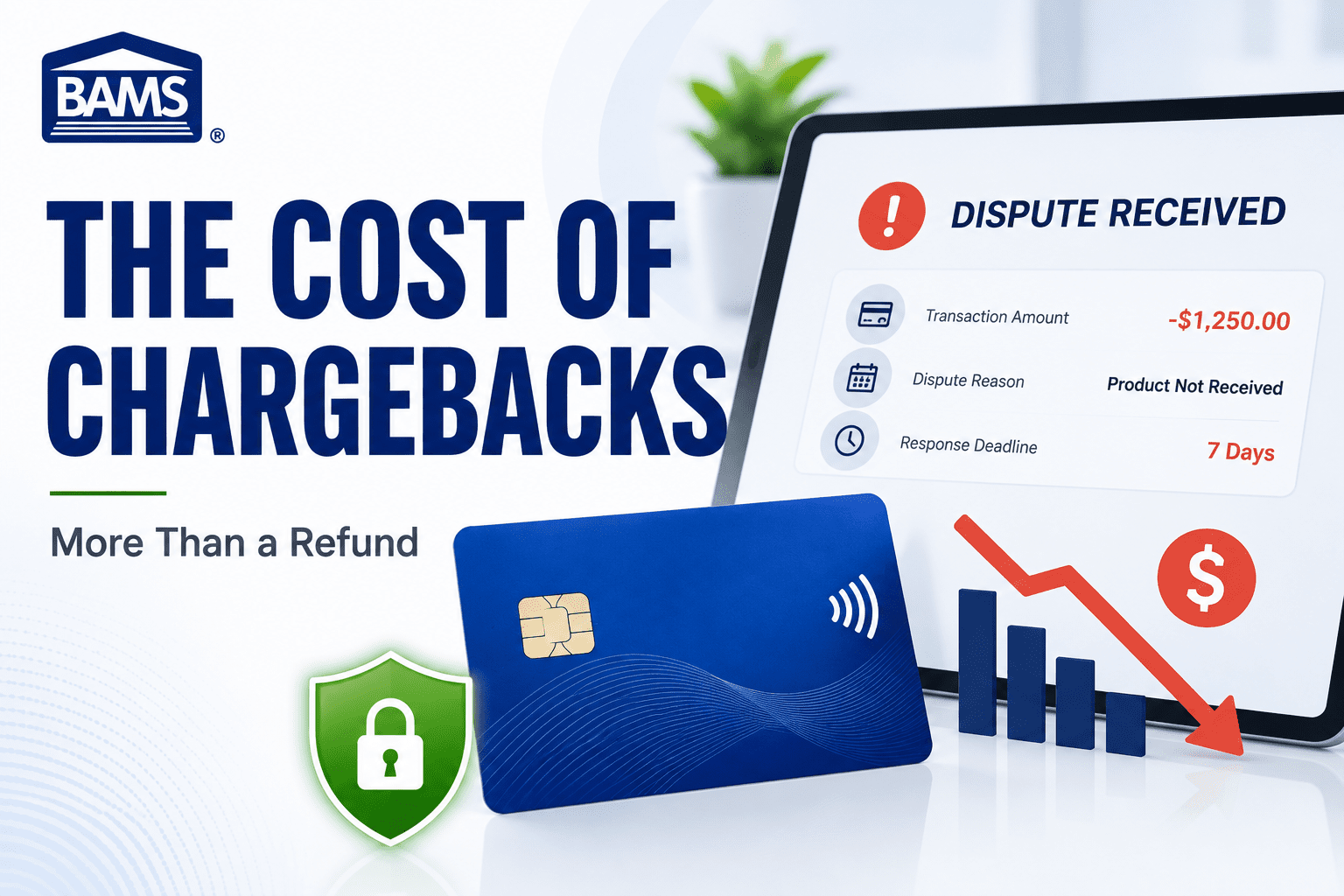
Chargebacks for business owners can create problems well beyond losing one sale. A dispute can affect revenue immediately, interrupt expected cash flow and create extra work for the team responsible for gathering records and responding to the claim.
One chargeback may be manageable. A pattern of them is different. That is when dispute management starts becoming a financial and operational issue rather than an occasional inconvenience.
Chargebacks are a reality of accepting credit card payments. While many chargebacks are requested for valid reasons, there are plenty of cases in which disputes are initiated despite the merchant holding up every aspect of their end of the bargain. Unfortunately, many merchants don’t really understand the dispute process, how to handle a chargeback, or the consequences that chargebacks represent to the health of their businesses. Those consequences can include unexpected drains on revenue, penalties levied by the card companies, and across-the-board rate increases.
Chargebacks Impact Revenue and Cash Flow

A chargeback can cost a business more than the original sale by affecting cash flow, account health and the time needed to manage disputes.
Chargebacks may not always be avoidable, but whether they’re legitimate or not, lost chargebacks always impact revenues in negative and often unexpected ways. That’s especially true for small businesses selling high-value products or services, where even a single chargeback can be potentially catastrophic if the company isn’t well prepared to deal with it. Not only do lost disputes claw back revenue, potentially from completely valid sales, they can also potentially impact cash flow. That’s especially true for merchants not keeping a diligent eye on their dispute notices, creating the possibility of income a company was depending on suddenly not being available when it comes time to take care of payroll or debt payments.
The Cost Does Not Stop at the Sale Amount
A lost dispute is easy to think of as a refund. In practice, the business may already have shipped the product, completed the service or paid other costs connected with the transaction.
There is also the time required to investigate what happened. Someone needs to find the order, review customer communications, locate delivery or service records and determine whether the dispute should be challenged. That administrative work has a cost even when the merchant eventually wins.
This is why business owners should track disputes separately from ordinary refunds. A refund is a customer-service decision. A chargeback enters a formal payment-network process with deadlines and evidence requirements.
Chargebacks Impact Status with Card Issuers
The major credit card companies take chargebacks very seriously, and all of them put programs and safeguards into place to try to minimize them. Not only do chargebacks represent lost revenue for the card companies as well, but they also represent potential fraud, one of the primary concerns of every card issuer. As a result, merchants that suffer from high chargeback rates or an excessive number of disputes in a single month may find themselves enrolled in one of the card companies’ chargebacks and fraud monitoring programs. That’s no big deal for merchants who can right the ship and get back in good standing quickly, but merchants who remain in fraud or chargeback monitoring programs for too long are subject to penalties on each chargeback or heavy assessment fees that can hit $25,000 with Visa, and as much as $100,000 with Mastercard.
Current monitoring-program context: The dollar amounts above reflect the network-program environment when this article was originally written. Visa and Mastercard have changed their monitoring frameworks since then, so merchants should not treat those figures as universal current penalties.
Visa now uses the Visa Acquirer Monitoring Program, or VAMP. Visa monitors both acquirer-level and individual merchant performance and looks at fraud and dispute activity together. The program also includes early warnings for clients approaching its monitoring levels.
Mastercard currently lists its Excessive Chargeback Program and Excessive Fraud Merchant Program among its compliance programs. Specific thresholds, remediation requirements and assessments can change, so merchants should work with their acquirer to understand the rules that apply to their account.
Watch the Trend Before It Becomes a Monitoring Problem
A merchant does not need to wait for a card network or processor to flag the account before paying attention to dispute activity.
Track how many disputes arrive each month. Then look at why they happened. A rising number of “product not received” claims points to a different problem than repeated unauthorized-transaction disputes. Treating every chargeback as the same problem makes it harder to fix what is actually causing them.
For an eCommerce merchant account, this can be especially useful because online businesses often have more customer, fulfillment and transaction data available to review. That information can show whether disputes cluster around a specific product, shipping method, billing descriptor or type of transaction.
Chargebacks Drive Up Rates
Chargeback fraud impacts everyone, not just the credit card issuers or the merchants suffering from it. The major credit card companies are in the payments game to make money, and they don’t just write off losses from chargebacks or fraud as the cost of doing business – those costs are passed on to merchants and consumers in the form of elevated transaction and card fees. That means that high chargeback rates impact everyone, including companies that don’t have them. As a result, it’s the responsibility of every merchant to ensure they have a robust chargeback monitoring and response framework in place so that every dispute can be answered on-time and with the necessary documentation to put up a strong defense.
For an individual merchant, the more immediate concern is the health of the account itself. Excessive disputes can lead to higher fees and penalties, monitoring requirements and, in more serious cases, account instability or termination.
The practical response is not to fight every dispute automatically. It is to understand why disputes occur, prevent the avoidable ones and respond properly when there is evidence that supports the merchant’s side.
A Missed Chargeback Deadline Is an Avoidable Loss

Fast alerts, organized evidence and clear dispute tracking can help merchants respond to chargebacks before deadlines expire.
Disputes run on deadlines. That makes slow internal communication a surprisingly expensive problem.
If a notice sits unread in an inbox or arrives by mail and no one owns the response process, the merchant can lose valuable time. Even strong evidence becomes less useful if the business misses the window to submit it.
Assign responsibility before the next chargeback arrives. Know who checks alerts, who gathers evidence and who submits the response. For larger businesses, document the process so someone else can handle it when the usual person is unavailable.
Build Better Evidence Before You Need It
Merchants usually have a stronger position when their records tell the story of the transaction clearly.
Keep order confirmations, invoices, customer correspondence, tracking information and proof of delivery when they apply. Service businesses may need signed agreements, appointment records or evidence showing that the customer received the service.
Clear refund and cancellation policies matter too. Make those terms visible before the purchase rather than relying on fine print after a disagreement starts.
Good records do two things. They make disputes easier to answer and they make recurring problems easier to diagnose.
Prevent the Disputes You Can Prevent
Some chargebacks will happen even when a merchant does everything correctly. Others begin with problems the business can fix.
An unclear billing descriptor can leave a customer staring at a transaction they do not recognize. Poor communication after an order creates uncertainty. Shipping delays without updates can make customers assume something went wrong. A complicated cancellation process may push someone toward their bank instead of the merchant.
Fraud controls matter as well, especially online. Merchants should use the tools available through their payment environment to identify suspicious transactions before fulfillment rather than waiting for a fraudulent payment to become a chargeback later.
Chargeback Management Has Changed
The payment industry is putting more effort into stopping disputes earlier. Mastercard, for example, now emphasizes real-time information sharing and dispute deflection before a case develops into a formal chargeback.
That approach makes sense. Preventing an unnecessary dispute can be less expensive than gathering evidence and fighting it after the process has already started.
The same principle applies inside the business. Resolve customer confusion quickly. Make support easy to find. Watch dispute alerts closely. Use the reason codes and historical data to understand what keeps going wrong.
How BAMS Helps Merchants Manage Chargebacks
At BAMS, we understand that most merchants want to keep up with that responsibility, but it can be a big job. That’s why we offer our Chargeback Defense program – a complete suite of tools designed to help BAMS merchants successfully resolve every dispute possible, as quickly and efficiently as they can. Our tools include real-time dispute notifications, online dispute management, cardholder verification tools like Verified by Visa, and access to the Cardholder Dispute Resolution Network through our partnership with Verifi.
Current BAMS update: BAMS now describes its Chargeback Defense platform around the Dispute Assistant Manager. The system gives merchants centralized visibility from the first alert through resolution.
Current features include email and SMS dispute notifications, automatic reason-code interpretation, online document uploads, status-change alerts and historical reporting. Those tools are designed to reduce the manual work involved in finding cases, understanding what documentation a dispute requires and tracking the response after submission.
The goal is not simply to react faster. Historical dispute data can help a merchant spot patterns and fix issues that repeatedly create chargebacks.
What Business Owners Should Track Each Month
You do not need a complicated dashboard to start managing chargebacks more deliberately.
- Total disputes: How many arrived this month?
- Dispute reasons: Which reason codes appear most often?
- Response rate: Did the business answer every dispute that was worth challenging?
- Win rate: How often did submitted responses succeed?
- Lost revenue: What was the total value of lost disputes?
- Recurring causes: Are certain products, channels or customer issues producing a disproportionate share of disputes?
Watch the direction, not just one month’s number. A sudden increase deserves attention even if the account has not reached a formal monitoring threshold.
Frequently Asked Questions
What is a chargeback?
A chargeback occurs when a cardholder disputes a transaction through the card issuer and the payment enters the formal dispute process. The merchant may have an opportunity to respond with evidence depending on the reason for the dispute.
Why are chargebacks expensive for businesses?
A merchant can lose the transaction revenue and may already have delivered the product or service. Chargebacks also create administrative work and can lead to additional fees or account problems when dispute activity becomes excessive.
Can a legitimate sale still receive a chargeback?
Yes. A customer can dispute a transaction even when the merchant believes the sale was valid. That is why businesses need records that can support their response when they decide to challenge a dispute.
What happens if a business gets too many chargebacks?
High fraud or dispute activity can lead to monitoring by card networks or the merchant’s payment provider. Continued problems may lead to remediation requirements, additional costs or greater risk to the merchant account.
Do Visa and Mastercard still use chargeback monitoring programs?
Yes, although the programs have changed over time. Visa currently uses VAMP to monitor fraud and dispute performance. Mastercard lists its Excessive Chargeback Program and Excessive Fraud Merchant Program among its compliance programs.
How can merchants reduce chargebacks?
Start with the causes. Clear billing descriptors, accurate product descriptions, strong customer service, useful fraud controls and reliable fulfillment records can help reduce avoidable disputes. Merchants should also monitor incoming cases closely so they do not miss response deadlines.
Should every chargeback be challenged?
Not necessarily. Review the reason for the dispute and the evidence available. A strong response makes sense when the merchant can document that the transaction was valid and fulfilled correctly.
How does BAMS Chargeback Defense help?
BAMS Dispute Assistant Manager helps merchants monitor cases, receive alerts, understand reason codes, upload evidence and track dispute status from one system.
For more information on how the BAMS Chargeback Defense program can help your business minimize the negative consequences of lost disputes, speak to a member of our team or request your free five step price comparison.


