NYC Merchant Services – No Place Like Home Startup
Last Updated on September 23, 2026 by Dimitri Akhrin
NYC Merchant Services Without the Payment Processing Headache
NYC merchant services should make accepting payments easier, not give a business owner another system to decipher. Rates matter, but so do the less obvious parts of the relationship: the technology, security requirements, reporting and the person you call when something does not look right.
For a New York startup or growing business, there is also something useful about working with a payment partner that understands the market you operate in. Local does not replace good service. It can make good service easier to access.
How is your business doing? Is your startup ready to rock and roll or is your well established SaaS business steadily growing? Perfect. That means that your stress and headache over the intricacies of payment processing are a distant memory, right?
The Strange World of Finance
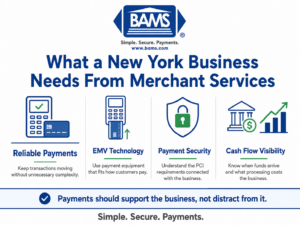
A merchant services relationship should make payments easier to manage while supporting security, technology and healthy cash flow.
It isn’t odd if you aren’t quite ready or if this land of financial transactions still feels a bit like the land of Oz. With the multitude of considerations and strange industry verbiage heard here, it might cause some disorientation. From integrating payment processing systems or setting up a useful reporting system to handling EMV payment structures or maintaining PCI compliance, there may be quite a few flying monkeys and singing dwarfs to distract you.
The jargon can make the payment side of a business sound more mysterious than it needs to be. In practice, a merchant usually wants a few basic things to work well: customers need to be able to pay, transactions need to move securely and the business needs a clear view of what happened afterward.
Visa describes modern payment processing in much the same way, emphasizing secure transactions, efficient operations and a payment experience that does not create unnecessary friction. Visa’s payment processing guidance also points to the growing role of connected payment technology in simplifying how businesses accept payments.
EMV Should Be Part of the Conversation
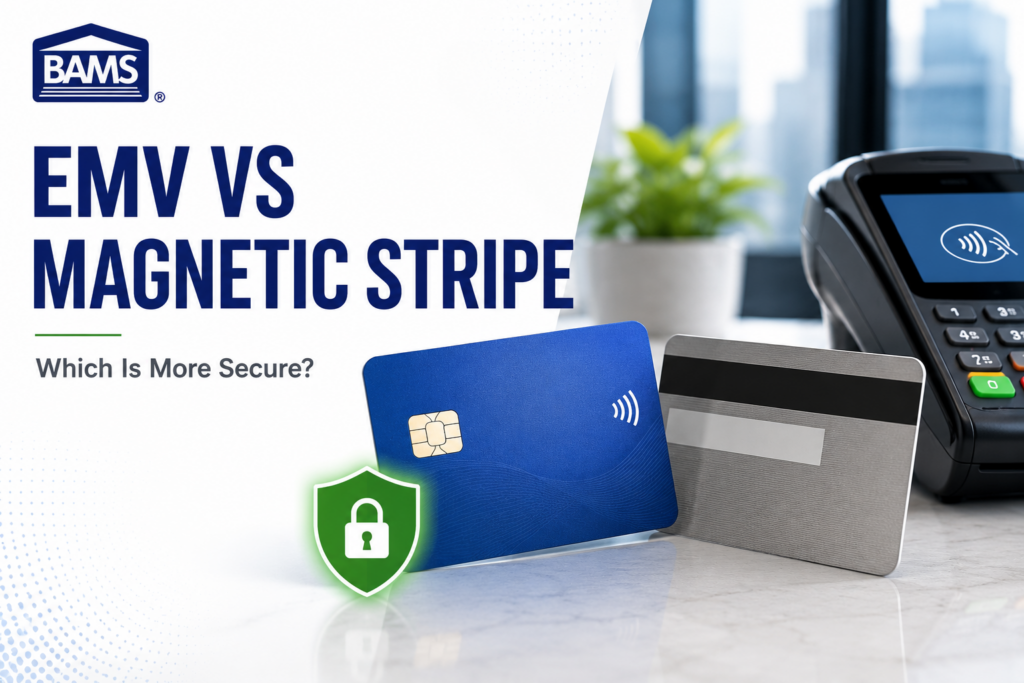
If you accept cards in person, the terminal matters. Modern EMV payment terminals give businesses a way to accept chip payments while supporting the security expected in a current card-present environment.
You do not need to become an expert in terminal technology. You do need to know whether your equipment fits the way customers pay and whether your processor can help when that equipment needs to change.
PCI Compliance Is Not Just Another Acronym
PCI compliance is another part of merchant services that can sound more complicated than it is. The underlying goal is straightforward: protect payment account data.
The PCI Security Standards Council explains that PCI DSS establishes baseline technical and operational requirements for organizations that store, process or transmit payment account data or can affect its security.
BAMS provides PCI compliance guidance for merchants that need help determining which assessment and security steps apply to their payment environment.
The Comforts of Home Startup
Not only is it important to have a reliable, trusted and successful payment processing partner, how much nicer would it be if that partner was someone familiar? You already understand the importance of cash flow and how that can determine the success or failure of your startup or the continued success of your growing company. Isn’t it hard enough to deal with the processes, systems and jargon surrounding the payment processing landscape? Working with people who know your demographic, your language and the nuances of New York will make this strange land a little less strange.
Cash flow is not a theoretical concern for small businesses. The Federal Reserve Banks’ 2025 Small Business Credit Survey found that 51% of employer firms reported uneven cash flow as a financial challenge while 56% cited paying operating expenses. The same report found that meeting operating expenses remained one of the most common reasons firms sought financing.
That is why the conversation with a payment processor should go beyond a quoted rate. When will deposits reach the account? Can the owner understand the statement? What happens when a transaction looks wrong? Who answers when the business needs help?
Those questions become more important as the company grows.
What “Local” Should Actually Mean
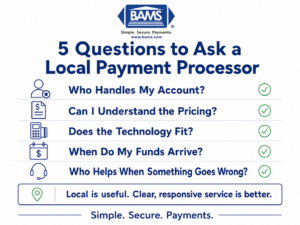
Local support matters, but businesses should still compare pricing, technology, funding and account service before choosing a processor.
A local provider is not automatically a better provider. Proximity does not compensate for poor pricing, outdated technology or bad support.
What it can offer is familiarity and access.
BAMS operates from Brooklyn, so the local angle here is literal. For New York business owners, that can mean working with a local NYC merchant services company that understands the pace and practical demands of running a business in the city.
Before choosing any local payment processor, ask a few direct questions:
- Who will handle my account after setup?
- How quickly can I reach someone when there is a processing issue?
- Can you explain my statement without hiding behind payment industry terminology?
- Does the payment technology fit how my customers actually pay?
- How do funding times and processing costs affect my cash flow?
A useful merchant services relationship should make those answers clearer, not more complicated.
Your Payment Setup Should Be Able to Grow With You
A startup may begin with one terminal and a straightforward merchant account. A growing business can eventually need online payments, multiple locations, better reporting or additional security controls.
The processor should not become an obstacle every time the business changes.
That is worth considering early. A payment setup that fits today but becomes difficult to expand six months from now can create unnecessary work later. Ask what happens when volume increases, a new location opens or the business adds another way for customers to pay.
Local Support Still Has to Deliver the Basics
It is easy to make “local service” sound warm and reassuring. That only matters if the fundamentals are there too.
Look closely at pricing. Ask about funding. Understand the technology being recommended. Know what support looks like after the account goes live.
Then pay attention to how those questions are answered. Clear explanations are usually a good sign. If a basic question about fees or equipment turns into a maze of industry terminology, that tells you something too.
Dorothy only had to click her heels three times, having someone local to address your immediate and real payment processing concerns will quickly remind you too, that there really is “no place like home.” Contact us to find out how NYC Merchant Services will alleviate the headaches of payment processing, provide a familiarity you will appreciate and afford a comfort that might feel, a little like home.
Frequently Asked Questions
What are NYC merchant services?
NYC merchant services help New York businesses accept and manage electronic payments. Depending on the provider, services can include merchant accounts, payment gateways, POS equipment, EMV terminals, reporting and payment security support.
Why would a business choose a local merchant service provider?
A local provider can offer a more familiar point of contact and direct support for payment questions. Location alone should not decide the choice. Pricing, technology, security and service still matter.
Does a startup need merchant services?
A startup that accepts card or electronic payments needs a way to process those transactions. The right setup depends on whether the business sells in person, online or through several channels.
Why does cash flow matter when choosing a processor?
The time between processing a transaction and receiving the deposit affects working capital. Businesses should understand funding schedules alongside transaction rates and account fees.
What is EMV?
EMV refers to chip-based payment technology commonly used for card-present transactions. Businesses that accept payments in person should make sure their terminals support the payment methods their customers use.
Does every merchant need to think about PCI compliance?
Businesses involved in payment account processing need to understand the PCI requirements that apply to their environment. The exact validation process can vary based on the merchant’s setup and payment brand requirements.
What should I ask a merchant services provider before signing up?
Ask how pricing works, when deposits arrive, what equipment or gateway you will use, who handles support and what happens if your business grows or changes its payment setup.