Choosing a gateway? Make Sure You Get a Free Authorize.net setup!
Last Updated on September 28, 2026 by Dimitri Akhrin
Authorize.Net Can Do Much More Than Connect an Online Checkout
Choosing a payment gateway is an important part of building an eCommerce payment setup.
The gateway sits between the checkout experience and the processing environment, helping payment information move securely through authorization while supporting the tools a business uses to manage transactions.
Authorize.Net remains a widely supported gateway with capabilities that extend beyond a basic online credit card form.
Depending on the integration, merchants can use Authorize.Net for card payments, ACH and eCheck transactions, recurring billing, customer payment profiles, fraud management, virtual terminal transactions and other payment workflows.
The question is therefore not simply whether Authorize.Net is available.
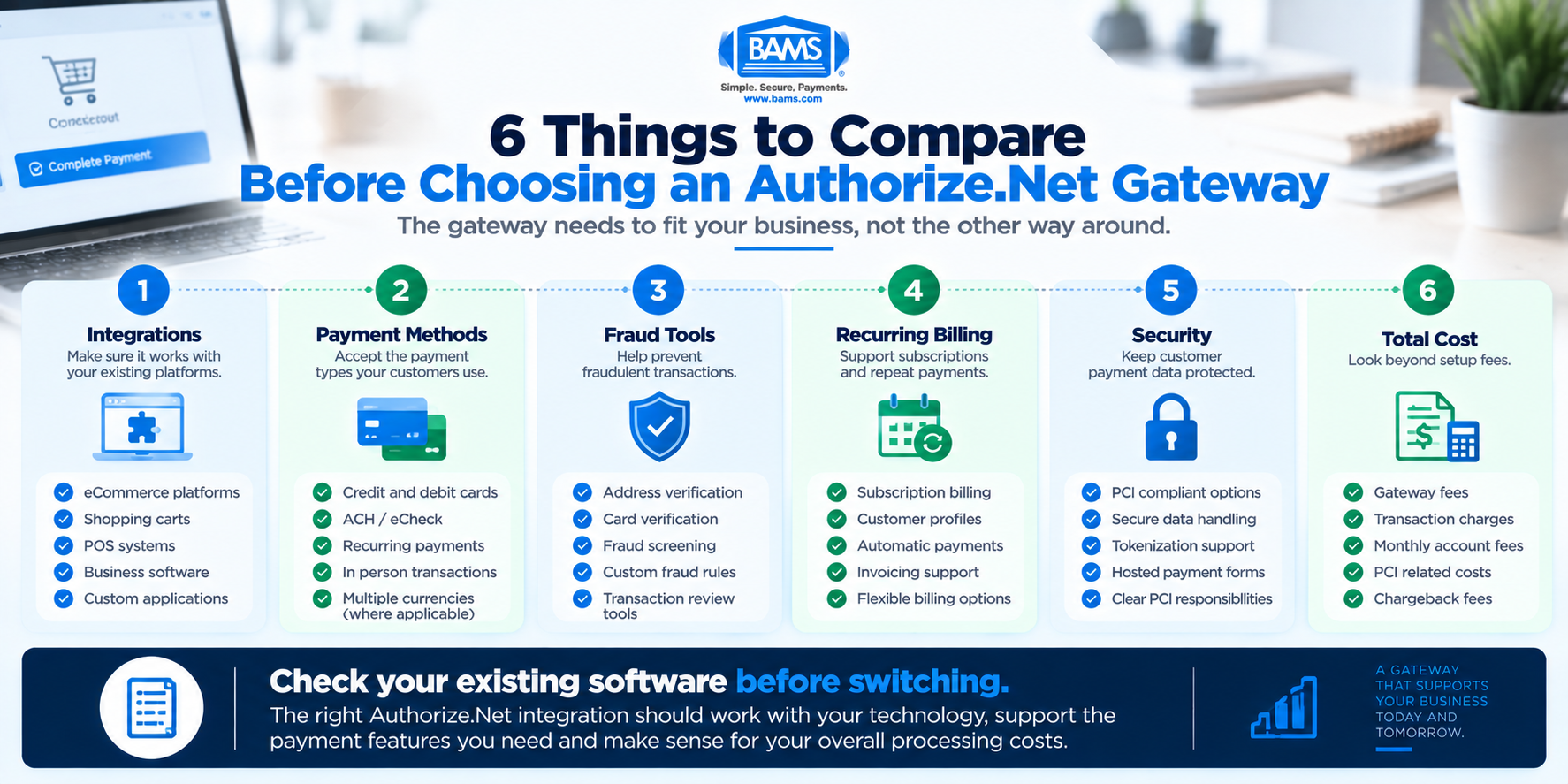
Merchants should determine whether the gateway works with their existing technology, supports the payment features they actually need and fits into a merchant account with understandable total costs.
TL;DR
- Authorize.Net is more than a basic eCommerce checkout gateway – Its current platform supports payment transactions, recurring billing, customer profiles, electronic checks, fraud management and in person payment capabilities.
- Integration compatibility should be checked before opening the gateway – Confirm that Authorize.Net works with your website, shopping cart, POS system or other business software before changing payment providers.
- Fraud controls and payment security should be part of the gateway comparison – A gateway can provide useful security tools but merchants still need to understand the PCI responsibilities that apply to their own payment environment.
- Do not evaluate a gateway based only on setup cost – Compare gateway fees, merchant account pricing, transaction charges and the services included with the complete payment setup.
- BAMS supports Authorize.Net integrations for different merchant environments – Businesses can review BAMS certified Authorize.Net integrations and work with BAMS to connect the gateway with a compatible merchant account and payment setup.
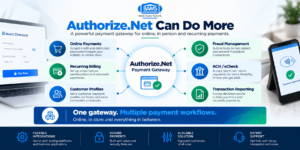
Authorize.Net can support multiple payment workflows beyond a basic eCommerce checkout.
What Is the Authorize.Net Payment Gateway?
Authorize.Net is a payment gateway that helps businesses securely accept and manage electronic transactions.
The gateway can sit between a merchant’s checkout or payment application and the payment processing environment.
According to the Authorize.Net Developer Center, the platform supports payment transactions along with features such as customer profiles, recurring billing, eCheck transactions, fraud management and transaction reporting.
That makes Authorize.Net useful for more than a traditional online shopping cart.
Depending on the merchant’s setup, it can support payment environments including:
- eCommerce websites
- Recurring billing applications
- Subscription businesses
- Virtual terminal transactions
- Mobile or in person payment acceptance
- Customer payment profiles
- ACH and eCheck transactions
- Custom applications using APIs
The exact capabilities available to a merchant depend on the account, integration and payment technology being used.
Authorize.Net Can Support Online and In Person Payments
The original version of this article treated Authorize.Net primarily as an eCommerce gateway that could also be adapted for occasional off site payments.
The current platform is broader than that description suggests.
Authorize.Net’s developer resources include dedicated support for online payment APIs and in person payment functionality along with customer profiles and recurring billing.
That means a business may be able to use the same gateway environment across several payment workflows rather than treating the gateway as something that exists only behind an online shopping cart.
This can be useful for businesses that combine online and physical transactions.
For example, a retailer may operate an eCommerce store while also accepting payments at temporary events. A professional services business may accept online invoices while employees also process payments through a virtual terminal.
The payment setup should start with the merchant’s actual transaction channels rather than assuming one gateway configuration works equally well for every business.
Fraud Management Is an Important Authorize.Net Feature
Online payments create fraud risks that merchants need to address before an order is fulfilled.
Authorize.Net provides fraud management capabilities that can help merchants review transactions and apply rules to suspicious activity.
Its developer platform includes functionality for reviewing, approving or declining transactions that have been held for fraud review.
Useful fraud controls may involve factors such as:
- Address verification results
- Card verification information
- Transaction velocity
- Transaction characteristics
- Merchant configured fraud rules
No fraud tool eliminates every fraudulent transaction.
The goal is to configure controls that match the merchant’s risk environment without unnecessarily blocking legitimate customers.
Payment Security Still Requires Merchant Attention
Using a well established gateway does not automatically remove every payment security responsibility from the merchant.
The PCI Security Standards Council’s merchant resources explain that PCI DSS responsibilities depend on how a business stores, processes or transmits payment account data and how third party service providers are involved.
A hosted payment experience can create a different PCI environment from a checkout where merchant controlled systems interact directly with card information.
Before implementing Authorize.Net, merchants should understand:
- Where payment information is entered
- Which systems interact with cardholder data
- Which payment fields are hosted by a third party
- Which website scripts can affect checkout
- What PCI validation applies to the merchant
- Which security responsibilities belong to each provider
Security should therefore be considered alongside gateway features and integration convenience.
Recurring Billing and Stored Customer Profiles Can Expand the Use Case
Some businesses need more than one time payment acceptance.
Authorize.Net supports customer payment profiles and recurring billing tools that can be useful for businesses managing repeat transactions.
Examples can include:
- Subscription services
- Membership organizations
- Professional services
- Recurring invoices
- Businesses with repeat customers
Instead of asking customers to reenter payment details for every purchase, compatible payment profile functionality can support repeat payment workflows without requiring the merchant to build its own card storage system.
Merchants should still review how the integration handles customer authorization, recurring payment terms and applicable PCI requirements.
Integration Compatibility Should Be Checked Before You Switch
A payment gateway is only useful if it connects properly with the technology the business already relies on.
Before opening a new account, confirm compatibility with:
- Your eCommerce platform
- Your shopping cart
- Your website
- Your accounting system
- Your recurring billing software
- Your POS environment
- Your mobile application
- Your custom business software
BAMS maintains a dedicated directory of Authorize.Net certified integrations so merchants can review compatible applications and integration options before changing their payment setup.
The current BAMS Authorize.Net integration offering also supports a range of certified applications and provides onboarding assistance for connecting an existing Authorize.Net environment with a BAMS merchant account.
That is particularly valuable for an established merchant that wants to change processing providers without unnecessarily replacing the software customers and employees already use.
How a BAMS Authorize.Net Integration Works
BAMS can connect an Authorize.Net gateway with a BAMS merchant account and assist with the transition.
The current BAMS integration process includes coordinating account information, connecting the BAMS merchant credentials with Authorize.Net and testing the configuration before processing begins.
A typical setup can involve:
- Review the merchant’s current payment environment. Identify the website, application, shopping cart or other systems using Authorize.Net.
- Confirm integration compatibility. Make sure the business’s existing software can continue working with the gateway.
- Connect the merchant account. Configure the appropriate BAMS merchant credentials within the Authorize.Net environment.
- Run a test transaction. Verify that authorization and transaction reporting work correctly.
- Begin processing. Move the payment environment into normal production use once the setup has been verified.
This approach can help merchants switch payment processing relationships without rebuilding an otherwise functional Authorize.Net integration.
Authorize.Net Is Not the Only Gateway Option
A familiar gateway should not automatically be selected simply because a merchant has heard of it before.
Different businesses can have different gateway requirements.
BAMS supports several gateway environments and also offers its own integrated payment gateway for merchants that need a secure and scalable payment system across online, in store or omnichannel environments.
When comparing gateway options, consider:
- Existing integrations
- Recurring billing requirements
- Fraud management
- Customer payment profiles
- API flexibility
- Reporting
- Payment methods
- PCI scope
- Gateway fees
- Merchant account pricing
The most recognizable gateway is not automatically the best fit for every merchant.
Do Not Choose a Gateway Based Only on the Setup Fee
The original version of this article focused heavily on finding a processor that would provide Authorize.Net setup for free.
That is too narrow for a current payment gateway comparison.
Setup cost is worth asking about but merchants should evaluate the complete payment relationship.
Potential costs can include:
- Gateway monthly fees
- Gateway transaction charges
- Merchant account processing fees
- Processor markup
- Monthly account expenses
- PCI related charges
- Chargeback fees
- Optional gateway services
A gateway with no setup fee could still become expensive if the ongoing account costs are high.
Likewise, a payment setup with an initial implementation cost could offer better long term value if its ongoing processing structure works better for the merchant.
The better comparison is total cost combined with the technology and support the business actually receives.
Payment Gateway Reliability Matters at Checkout
A payment gateway sits directly inside the revenue path of an eCommerce business.
When the gateway is unavailable or poorly integrated, customers may be unable to complete purchases.
Visa Acceptance Solutions describes Authorize.Net as a gateway designed to streamline payment acceptance, support fraud management and store sensitive payment information securely.
That makes reliability, security and integration quality important parts of the gateway decision.
Merchants should also understand who provides support when an issue crosses several parts of the payment setup.
A failed transaction might involve the website, gateway, processor or issuing bank. Having a clear support path can make those issues easier to investigate.
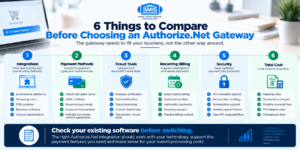
Gateway selection should consider compatibility, payment features, security and total processing cost rather than setup price alone.
What Should You Compare Before Choosing Authorize.Net?
| What to Compare | Why It Matters |
|---|---|
| Platform compatibility | Confirms that the gateway works with your existing website or business software. |
| Payment methods | Ensures customers can use the payment options your business needs to accept. |
| Recurring billing | Important for subscription and repeat payment businesses. |
| Customer profiles | Can support repeat transactions without rebuilding payment storage internally. |
| Fraud controls | Helps identify suspicious transactions before fulfillment. |
| PCI responsibilities | Gateway design can affect the merchant’s payment security environment. |
| Reporting | Transactions should remain easy to review and reconcile. |
| Gateway fees | Monthly and transaction charges affect the complete cost. |
| Merchant account pricing | The gateway is only one part of the total payment processing expense. |
| Support | Merchants need to know who can troubleshoot payment or integration problems. |
Frequently Asked Questions
What is Authorize.Net?
Authorize.Net is a payment gateway that supports electronic payment acceptance and related services including customer payment profiles, recurring billing, eCheck transactions, fraud management and transaction reporting.
Is Authorize.Net only for eCommerce?
No. Authorize.Net also provides technology for in person payments and virtual payment environments in addition to traditional online checkout.
Can Authorize.Net support recurring billing?
Yes. The Authorize.Net developer platform includes recurring billing functionality for subscription based and repeat payment applications.
Does Authorize.Net offer fraud prevention tools?
Yes. Authorize.Net provides fraud management features that can help merchants review and control suspicious transactions.
Does using Authorize.Net automatically make my business PCI compliant?
No. A gateway can help reduce direct exposure to payment data but merchants still have PCI DSS responsibilities based on their specific payment environment and integration.
Can I keep Authorize.Net if I switch payment processors?
That depends on the merchant account, gateway configuration and processor compatibility. BAMS supports Authorize.Net integrations and can help merchants review whether an existing setup can be connected to a BAMS merchant account.
How can I find software that works with Authorize.Net?
BAMS provides an Authorize.Net certified integrations directory that lists compatible applications and tools that can work with the gateway.
Should I choose a gateway because setup is free?
No. Setup cost is only one factor. Compare ongoing gateway fees, merchant account pricing, integrations, fraud tools, payment features, security responsibilities and support before choosing a gateway.
Does BAMS support other payment gateways?
Yes. BAMS supports multiple payment gateway environments and also provides its own integrated payment gateway for merchants that need online, in store or omnichannel payment acceptance.
Sources
- Authorize.Net Developer Center – API Reference
- PCI Security Standards Council – Merchant Resources
- Visa Acceptance Solutions – Global Payments and Authorize.Net
Choose the Gateway That Fits the Rest of Your Payment Setup
Authorize.Net provides a broad set of payment tools but gateway selection should still start with the merchant’s actual business requirements.
Compatibility, fraud management, recurring billing, payment security, reporting and total cost can all matter more over time than whether the gateway has the lowest initial setup expense.
Businesses considering Authorize.Net can review the BAMS Authorize.Net certified integrations to see which applications can work with the gateway.
If you want to compare your current gateway and merchant account costs with BAMS, request a free five-point Merchant Account Price Comparison.