
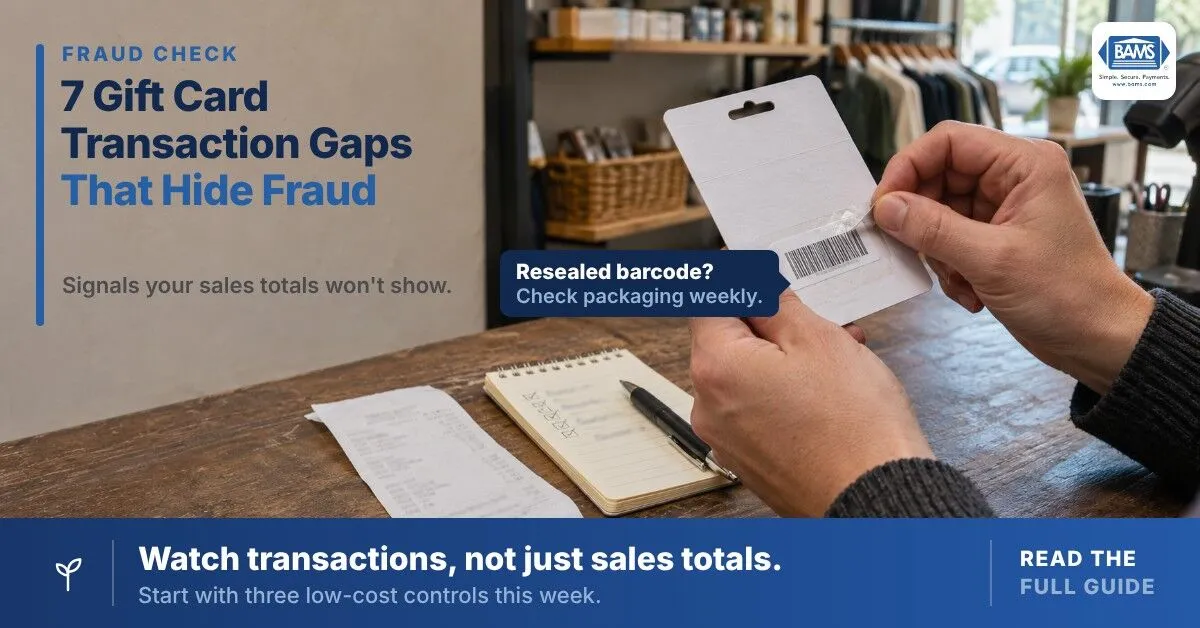
The Fraud Signals Hiding in Your Gift Card Sales Gift card programs are one of the most efficient revenue tools a small business can run. They shift cash flow forward, drive repeat visits and cost almost nothing to maintain once they’re live. But as programs grow, so does exposure. And the signals that something is […]
Category: Zero Fee Payment Processing
Featured Article Gift Card Program Scaling: A Guide for Small Businesses

What You Will Achieve: A Fully Compliant Surcharge Program By the end of this tutorial, you will have completed every step of credit card surcharge registration with Visa and Mastercard, confirmed your state allows it, configured your point-of-sale disclosures correctly and documented everything your business entity needs to prove legal compliance if audited. This is […]
What You Will Build: A Chargeback-Resistant Receipt and Signage System By the end of this tutorial, you will have a fully compliant dual pricing signage layout installed at every customer touchpoint, a POS receipt template that satisfies card brand disclosure rules and a staff script your team can use from the first transaction forward. This […]
The Compliance Trap Hiding in Plain Sight Credit card surcharging looks simple on the surface. Add a small fee at checkout, recover your processing costs, protect your margins. Thousands of merchants are doing it right now. But a growing number of them are doing it wrong. The consequences range from card-brand fines to state-level legal […]
What You Will Achieve: A Fully Compliant Surcharge Program By the end of this tutorial, you will have completed the core steps to launch a credit card surcharge program that follows card-brand rules and the state laws that apply to you. You will know which states prohibit surcharging, how to notify your acquiring bank, how […]
What You Will Build: A Chargeback-Proof Receipt By the end of this tutorial, you will have a chargeback-proof receipt: a fully configured template that includes the fields card brands and dispute analysts look for when you submit evidence in a chargeback dispute. Your receipt will display the transaction ID, authorization code, card brand, entry mode, […]
TL;DR Cash discounts and surcharges are legally distinct – The label you use does not determine classification. Your pricing structure, disclosures and transaction mechanics define which rules apply to your program. Cash discounts are permitted everywhere; surcharges are not – Several states ban credit card surcharges, while every state permits cash discounts, usually with disclosure […]
TL;DR Configuration drift is the real threat – Software updates, processor rate changes and state law shifts silently erode your dual-pricing program’s savings and compliance status after launch. Build a quarterly audit habit, not an annual overhaul – Five focused steps (regulation check, terminal verification, rate table review, disclosure audit, documentation snapshot) take 30 to […]
TL;DR Compliance isn’t the whole picture – Your dual-pricing program can pass every legal check and still push loyal customers away through poor communication, inconsistent staff explanations and surprise pricing at checkout. Seven diagnostic signals matter – Track repeat-customer payment shifts, surcharge cap compliance, receipt clarity, staff readiness, signage placement, exception documentation and whether your […]
TL;DR Receipts must show the surcharge as its own line – Visa requires the surcharge to appear as a separate charge. Mastercard requires both the percentage and the dollar amount. Rolling it into the total creates a violation and vague labels like “service fee” invite disputes. Debit and prepaid cards cannot be surcharged – Your […]
TL;DR Compliance isn’t an enterprise problem – Small and midsize businesses running dual-pricing or fee-recovery programs face real regulatory exposure that changes state by state, often without warning. Monthly beats annual – A 30-minute compliance check at month-end (statement review, signage audit, regulatory scan) costs almost nothing and prevents expensive reactive cleanups. Think margin hygiene, […]
TL;DR Audit readiness is a routine, not a project – Build a lightweight compliance file and review it quarterly so you can respond to any card-brand or processor review within one business day, not one frantic week. Your program label must match your program structure – A “cash discount” that operates as a surcharge creates […]
TL;DR Debit and prepaid cards cannot be surcharged – Visa and Mastercard prohibit it and violations can lead to card-brand fines, refunds and customer complaints. Test your terminal with a debit card to confirm it is properly excluded. State laws vary and change – Visa’s merchant guidance (current as of February 2024) lists Connecticut, Maine, […]
TL;DR Three layers govern your program – State laws, card-network rules and processor agreements all apply simultaneously. Monitoring only one creates blind spots. A five-minute weekly scan helps prevent costly surprises – Subscribe to state legislature alerts, card-network updates and industry news, then triage incoming alerts every week using a simple relevant-or-not filter. Assess before […]
