Contactless Payments: The Safest Way to Lose
Last Updated on October 1, 2026 by Dimitri Akhrin
Why payment tokenization solved a security problem but left SMB merchants bleeding revenue on chargebacks
Contactless payments and digital wallets promised safer transactions — but safer infrastructure doesn’t mean protected revenue. Learn why SMB merchants still absorb chargebacks they can’t fight without an operational dispute workflow.
TL;DR
- Tokenization solved security, not revenue protection – Digital wallets reduced card data theft, but chargebacks from friendly fraud, confusion, and unauthorized use still hit SMB merchants hard.
- Token-based disputes are harder to fight – Transaction data from digital wallets often doesn’t map cleanly to what issuers need, leaving merchants with incomplete evidence and lost representments.
- Dispute defense is revenue infrastructure – Treating chargeback management as a back-office afterthought costs eCommerce businesses real margin, and uncontested losses raise your processing rates over time.
- A proactive partner closes the gap – The difference between safer payments and protected revenue is an operational workflow that matches the right evidence to the right dispute, before deadlines expire.
The Safest Transaction You’ll Ever Lose Money On
Digital wallets are everywhere. Contactless payments now account for more than 75% of transactions on major card networks. Your customers love the speed, the tap, the biometric confirmation. And the payment industry keeps telling you this is the most secure way to get paid. So why are you still eating chargebacks you can’t explain?
The Promise Payment Tokenization Made to Merchants
The pitch was elegant. Payment tokenization replaces sensitive card data with a unique Device Account Number, so the real card number never touches your system. Biometric authentication adds another layer. The result, according to every payments provider and card network, is dramatically reduced fraud. PCI Security Standards Council guidance explains how tokenization protects payment credentials by replacing sensitive card data with secure payment tokens throughout the payment process.
And at the infrastructure level, that’s true. Tokenization has made it harder for criminals to steal card data in transit. For enterprise merchants with dedicated fraud teams, compliance departments, and direct relationships with acquirers, the technology works as advertised.
But for eCommerce operators running lean teams of 10 to 50 people? The promise stopped at the front door. The infrastructure got safer. The chargebacks didn’t go away. They just got harder to understand.
Safer Infrastructure and Protected Revenue Are Not the Same Thing
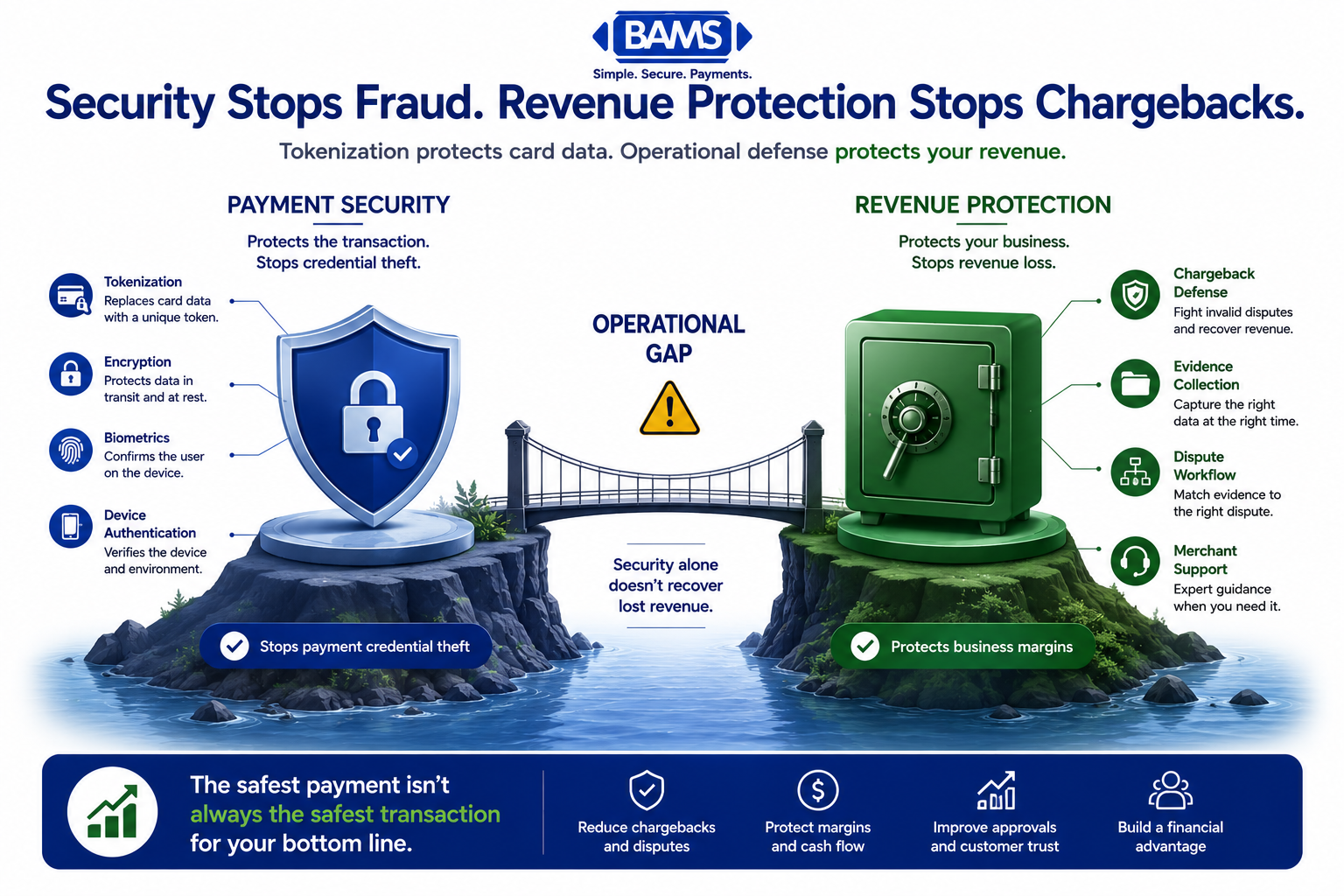
Here’s what we actually believe: payment tokenization solved a security problem, not a revenue protection problem. And the gap between those two things is where small and midsize eCommerce merchants are quietly bleeding cash.
The industry conflated “harder to commit fraud” with “you won’t lose money to disputes.” That conflation has cost merchants dearly.

Payment tokenization protects card data, but protecting revenue requires dispute workflows, evidence management, and proactive chargeback defense.
Where Contactless Payments Create Invisible Exposure
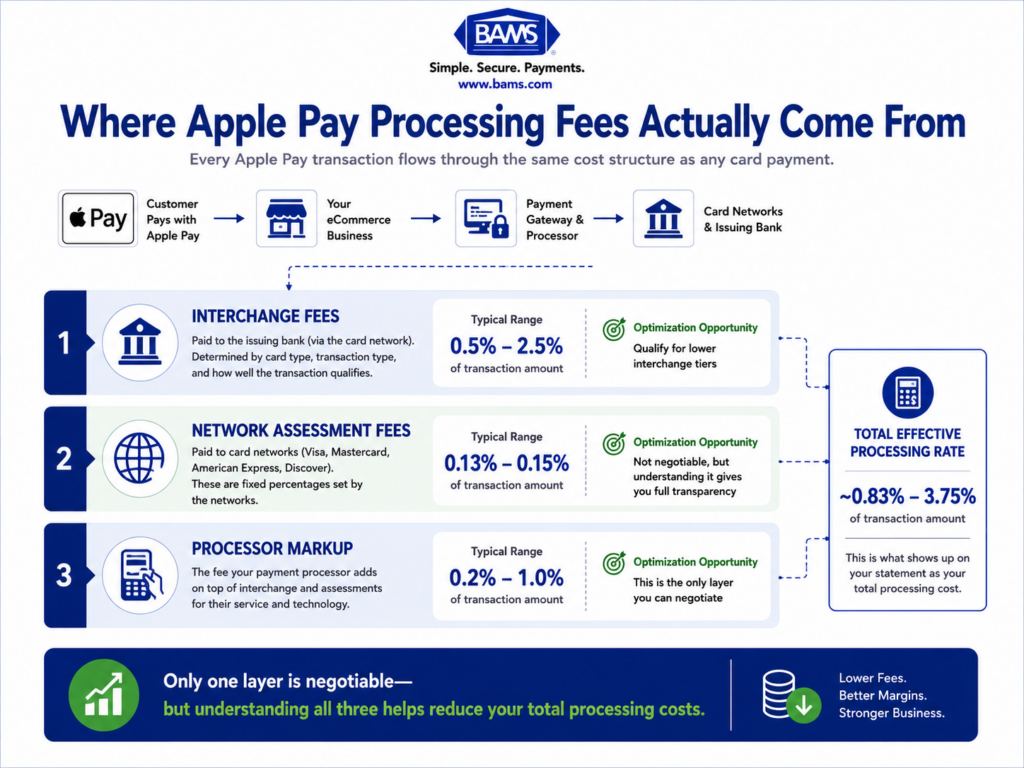
Consider what happens when a customer pays with Apple Pay on your eCommerce site. The transaction is tokenized. The Device Account Number is different from the card number on file. The customer’s bank sees a token-based transaction. Your payment processor records it one way. Your order management system may record it another. Mastercard Developers documents how device-based payment credentials and network tokenization are used to secure digital wallet transactions while minimizing exposure of sensitive payment data.
Now that customer disputes the charge. Maybe it’s friendly fraud. Maybe they forgot they bought from you. Maybe their teenager used their phone. The reason doesn’t matter as much as what happens next: you receive a chargeback notification, and the transaction data you need to fight it doesn’t line up cleanly with what the issuer sees.
This is the operational gap nobody talks about. The total transaction value of contactless payments reached around $18 trillion globally, but the dispute infrastructure for the merchants processing those payments hasn’t kept pace. Tokenized transactions create a mismatch between what you see in your dashboard and what the card network sees in theirs. Without a clear workflow to bridge that gap, you’re fighting disputes with incomplete evidence.
While tokenization via digital wallets has significantly reduced card-not-present fraud, the burden of unfamiliar chargeback processes still disproportionately absorbs small and medium-sized merchants who lack dedicated fraud teams.
We’ve seen this pattern repeatedly.
A merchant accepts Apple Pay for online purchases because customers expect it. Chargebacks arrive. The merchant tries to respond, but the token-based transaction data doesn’t map neatly to the evidence the issuer needs. The representment fails. The merchant absorbs the loss and assumes it’s just the cost of doing business.
It’s not. It’s the cost of not having an operational dispute workflow designed for how modern payments actually work.
This is precisely where a merchant services partner matters. BAMS provides proactive chargeback defense that helps eCommerce merchants respond to disputes with the right evidence, matched to the right transaction identifiers, before deadlines expire. It’s not about adding more technology. It’s about having someone in your corner who understands the gap between tokenized security and actual revenue recovery.
Contactless payments in the US have now surpassed about 60% of in-store volume, and digital wallet adoption for eCommerce is climbing fast. The merchants who treat dispute management as an afterthought will keep subsidizing the ones who don’t.
What This Means for Your Bottom Line
If this thesis is right, then the merchants most exposed aren’t the ones with weak fraud filters. They’re the ones who adopted digital wallets, saw fraud rates dip, and assumed the problem was solved. They stopped watching chargeback ratios. They didn’t invest in dispute response. They trusted the infrastructure to do work it was never designed to do.
The cost compounds quietly. Each uncontested chargeback isn’t just a lost sale. It’s the product cost, the shipping cost, the processing fee, and the chargeback fee stacked on top. For an eCommerce business doing $2M to $10M in annual revenue, even a modest spike in unrecovered disputes can erase a quarter’s margin.
And here’s the part that stings: your chargeback ratio affects your processing rates. Lose too many disputes you never fought, and you’ll pay more on every transaction going forward.
Think of Dispute Defense as Revenue Infrastructure
The mental model shift is simple. Stop thinking of chargeback management as a cost center or a back-office annoyance. Start thinking of it as revenue infrastructure, just as critical as your payment gateway or your checkout flow.
Your checkout converts visitors to buyers. Your dispute workflow converts chargebacks back into revenue. One without the other is a leaky bucket.
The merchants who understand how digital wallet payments actually flow through their systems, and who have a partner helping them respond to disputes with precision, are the ones who will keep their margins intact as contactless payments become the default.
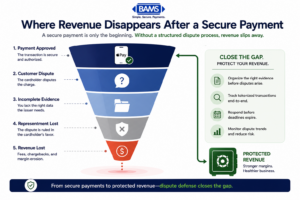
A secure payment is only the beginning. Without a structured dispute process, merchants can still lose revenue long after the transaction is approved.
The Real Security Gap Isn’t in the Token
Tokenization made payments safer. Nobody is arguing otherwise. But safer payments and protected revenue are two different outcomes, and only one of them shows up on your P&L. The merchants who recognize that distinction now will be the ones still standing when digital wallets aren’t just popular. They’re mandatory.
Frequently Asked Questions
How does tokenization enhance the security of digital wallet transactions?
Payment tokenization replaces your actual card number with a unique Device Account Number during each transaction. This means your real card data never travels through the merchant’s system, making it significantly harder for criminals to intercept and reuse payment credentials.
Why do chargebacks still happen with Apple Pay if it’s more secure?
Tokenization reduces data theft, but it doesn’t prevent friendly fraud, buyer’s remorse, or unauthorized use by family members. These disputes still generate chargebacks that merchants must actively fight with proper evidence and documentation.
What should eCommerce merchants do to protect revenue as contactless payments grow?
Build an operational dispute workflow that accounts for token-based transaction data, and partner with a processor that offers proactive chargeback defense. Treating dispute management as revenue infrastructure is just as important as having a strong checkout experience.