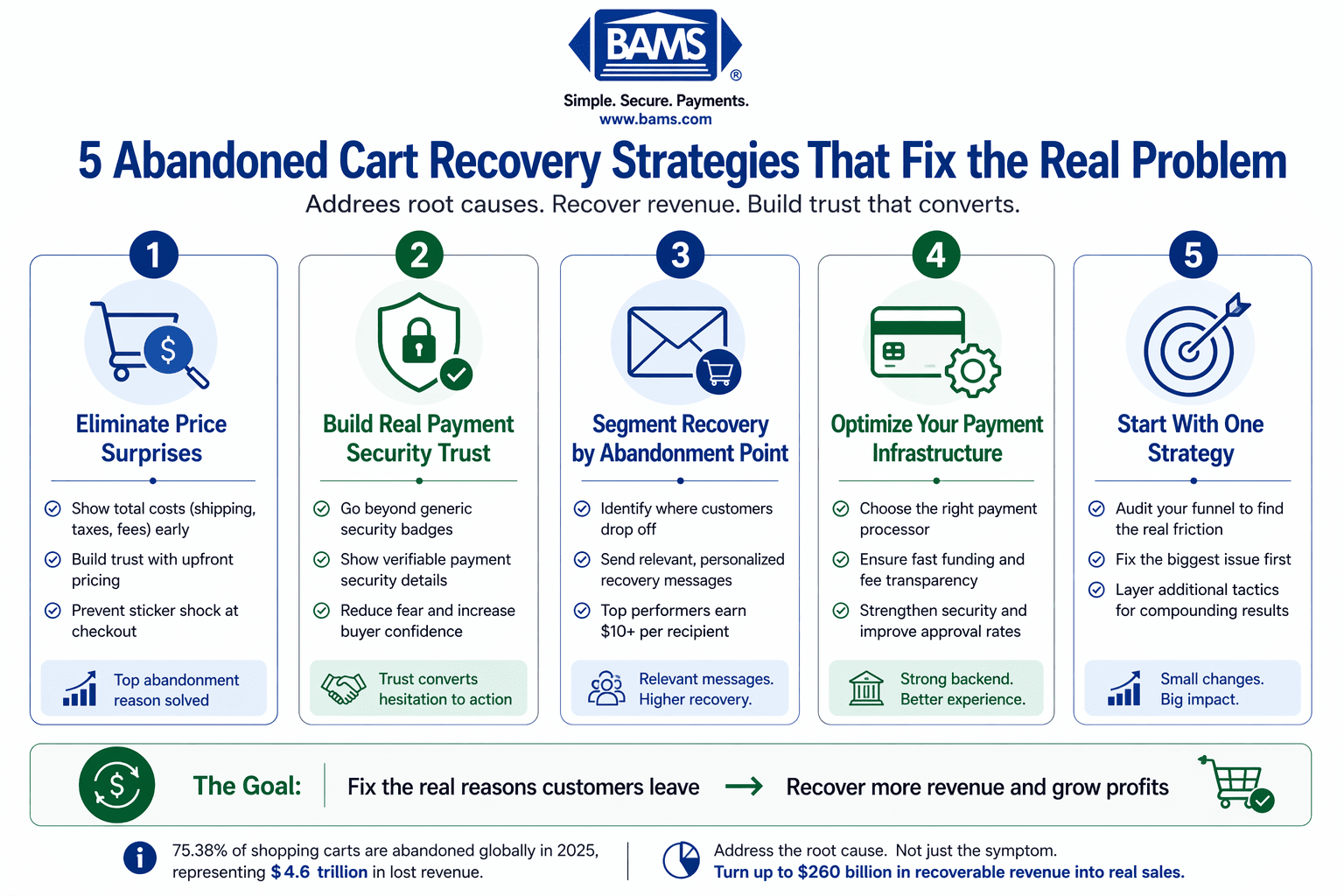
5 Abandoned Cart Recovery Strategies That Actually Work
Why email sequences fail when hidden fees and payment friction are driving customers away at checkout
Learn why most cart recovery tactics miss the mark and discover five strategies that address root causes like unexpected fees and payment security concerns. Built for eCommerce managers ready to convert $260 billion in recoverable revenue.
TL;DR
- Price surprises kill conversions – Display total costs (shipping, taxes, fees) before the payment page, not on it. Customers abandon carts when they feel deceived by unexpected charges.
- Generic security badges are not enough – Build trust through specific, verifiable payment processing security details rather than standard icons customers have learned to ignore.
- Segment your recovery emails by abandonment point – Top performers earn $10+ per recipient by addressing the specific reason each customer left, not sending blanket discount codes.
- Your payment processor affects everything – Funding speed, fee transparency, and security infrastructure ripple through your entire checkout experience and recovery capabilities.
- Start with one strategy – Audit where abandonment actually occurs in your funnel, then address that specific friction point before layering additional tactics.
The Hidden Cost of Abandoned Carts (And Why Most Recovery Tactics Miss the Point)
Your checkout page is leaking revenue. The problem is something stops them at the finish line.
Most abandoned cart recovery advice focuses on email sequences and discount codes. These tactics matter, but they treat symptoms rather than causes. When customers abandon carts because they encounter unexpected fees, confusing payment flows, or security concerns, no amount of follow-up emails will fix the underlying friction.
The eCommerce managers who recover the most revenue in 2025 understand this distinction. They address why carts get abandoned in the first place, then layer smart recovery tactics on top.
eCommerce payment experiences continue to evolve toward faster, more transparent checkout flows, with infrastructure improvements helping reduce friction and improve conversion outcomes according to Modern Treasury.
What This List Delivers
If you manage checkout operations for an established online business, you know the frustration of watching conversion rates stall while processing fees eat into margins. This list is for you.

Five strategic approaches that address the root causes of cart abandonment and help recover lost eCommerce revenue.
We are not covering basic email templates or generic “reduce friction” advice you have read a dozen times. Instead, these five strategies connect transparent pricing practices to measurable conversion improvements. Each tactic addresses a specific abandonment trigger while strengthening your payment infrastructure.
You will walk away with actionable changes you can implement this quarter, not vague principles that sound good but go nowhere.
How We Selected These Strategies
Each strategy meets three criteria: it addresses a documented abandonment cause, it creates compounding benefits beyond the initial conversion, and it can be implemented without rebuilding your entire checkout flow. We prioritized tactics that work for businesses processing enough volume to feel the pain of delayed deposits and high transaction fees, but not so complex they require enterprise-level resources.
1. Eliminate Price Surprises Before the Payment Page
Why It Matters
Unexpected costs remain the top reason customers abandon carts. When shoppers see one price throughout their browsing experience, then encounter additional fees at checkout, trust breaks immediately. This is not about customers being cheap. It is about feeling deceived.
What It Looks Like Today
Leading eCommerce brands now display total costs (including shipping, taxes, and any processing-related fees) on product pages or in cart summaries, not just at final checkout. Some use geolocation to show accurate shipping costs before customers even add items to cart. The shift reflects growing consumer expectations for hidden fees transparency across all purchase experiences.
How to Apply It
Audit your checkout flow for any cost that appears for the first time on the payment page. Move these disclosures earlier in the journey. If your payment processor charges fees that affect customer-facing costs, work with a partner that offers interchange-plus pricing so you can predict and communicate costs accurately.
2. Build Payment Processing Security Into Your Trust Signals
Why It Matters
Customers abandon carts when they do not trust the checkout with their payment information. Generic security badges help, but they have become so common that shoppers often ignore them. The businesses recovering more carts communicate payment processing security through specific, verifiable details.
What It Looks Like Today
Effective trust signals now include specific processor names, PCI compliance certification details, and clear explanations of how payment data gets handled. Some brands display real-time fraud protection indicators or show the encryption level used during transmission. The goal is moving from “we are secure” to “here is exactly how we protect you.”
How to Apply It
Partner with a payment processor that offers proactive chargeback defense and can provide documentation you can reference in your checkout flow. Display specific security credentials rather than generic badges. Consider adding a brief tooltip explaining what happens to payment data after submission. These details matter most for higher-value purchases where customers naturally hesitate.
Strong payment security standards play a critical role in protecting customer data and maintaining trust during checkout, as defined by the PCI Security Standards Council.
3. Deploy Abandoned Cart Recovery Sequences That Address Root Causes
Why It Matters
The difference between average and top performers often comes down to whether recovery emails acknowledge why the customer left.
What It Looks Like Today
Sophisticated abandoned cart recovery now segments by abandonment point. A customer who left at shipping cost display gets different messaging than one who abandoned at payment method selection
How to Apply It
Track where in your checkout flow abandonment happens most frequently. Create email sequences that directly address the likely concern at each stage. If payment page abandonment is high, your recovery email should emphasize security and payment options. If shipping cost reveals drive exits, consider whether your pricing structure needs adjustment rather than just offering free shipping codes.
4. Streamline Payment Method Variety Without Creating Confusion
Why It Matters
Offering too few payment options loses customers who prefer specific methods. Offering too many creates decision paralysis and visual clutter that undermines trust. The balance point depends on your customer base and average order value.
What It Looks Like Today
Smart checkout design now uses progressive disclosure for payment methods. Primary options (cards, PayPal, Apple Pay) display prominently, with secondary options available but not overwhelming the interface. Mobile checkout optimization has become critical, as more than half of ecommerce traffic now comes from phones where screen space is limited.
How to Apply It
Review your payment method analytics to identify which options customers actually use. Remove or de-emphasize methods with minimal adoption. Ensure your integrated payment gateway supports one-click checkout for returning customers. Test whether guest checkout options improve conversion for first-time buyers, as forcing account creation remains a significant abandonment trigger.
Optimized payment experiences improve authorization rates and reduce checkout friction through tokenization and secure authentication methods, as outlined by Visa.
5. Connect Faster Funding to Better Customer Experience
Why It Matters
This strategy addresses an often-overlooked connection: your payment processing speed affects your ability to recover abandoned carts effectively. When deposits take 3-5 days, you have less cash flow flexibility to offer competitive shipping, run targeted promotions, or invest in checkout improvements. Next-day funding changes this equation.
What It Looks Like Today
Businesses with predictable, fast access to funds can respond more quickly to abandonment patterns. They can test new checkout flows, adjust pricing strategies, and invest in recovery campaigns without waiting for revenue to clear. This operational advantage compounds over time.
How to Apply It
Evaluate whether your current processor’s funding timeline creates operational constraints. If delayed deposits force you to be conservative with inventory, marketing, or customer experience investments, the indirect cost may exceed the direct processing fees. Look for partners offering next-day funding alongside transparent interchange plus pricing, so you can predict both when money arrives and what it costs to process.
The Pattern Across These Strategies
A side-by-side comparison of ineffective cart recovery tactics versus high-performing strategies that fix the real causes of abandonment.
Each strategy shares a common thread: they treat abandoned cart recovery as a system rather than a single tactic. Price transparency reduces the need for recovery emails. Strong security signals decrease payment page abandonment. Targeted recovery sequences work better when the underlying checkout experience is solid.
Your processor affects your pricing flexibility, your security posture, your operational speed, and ultimately your ability to convert browsers into buyers.
Where to Start
You do not need to implement all five strategies simultaneously. Start with the one addressing your biggest abandonment trigger. For most businesses, that means auditing your checkout flow for unexpected costs (Strategy 1) or reviewing where abandonment actually occurs in your funnel (Strategy 3).
If your current payment processor creates friction through delayed funding, opaque fees, or limited support, addressing that foundation may unlock improvements across all other strategies. The question is whether your current infrastructure supports that recovery or works against it.
Frequently Asked Questions
What is checkout optimization and why is it important?
Checkout optimization involves improving every element of your payment flow to reduce friction and increase completed purchases. It matters because even small improvements can yield significant revenue gains. Research shows that addressing checkout usability issues alone can increase conversion rates by over 35%, representing billions in recoverable sales across the ecommerce industry.
How can I reduce cart abandonment during the checkout process?
Focus on eliminating surprises. Display total costs (shipping, taxes, fees) before the final payment page. Offer guest checkout options for first-time buyers. Show specific security credentials rather than generic badges. Ensure your checkout loads quickly on mobile devices. Each of these changes addresses a documented reason customers abandon carts.
What makes abandoned cart recovery emails effective?
The most effective recovery emails address the specific reason a customer left. Instead of sending generic reminders, segment your sequences based on where abandonment occurred. A customer who left at shipping cost display needs different messaging than one who abandoned at payment selection. Top performers achieve $10 or more in revenue per recipient through this targeted approach.
Which payment methods should I offer to optimize my checkout experience?
Offer the methods your customers actually use, which you can identify through analytics. Most businesses need card payments, PayPal, and mobile wallets (Apple Pay, Google Pay) as primary options. Avoid overwhelming the checkout with rarely-used alternatives. Use progressive disclosure to keep the interface clean while still providing options for customers with specific preferences.
How does payment processing speed affect cart abandonment recovery?
Faster funding gives you more operational flexibility to invest in checkout improvements, run recovery campaigns, and test new approaches. When deposits take days to clear, you may be forced into conservative decisions that indirectly hurt conversion rates. Next-day funding allows you to respond more quickly to abandonment patterns and reinvest revenue into customer experience improvements.
How can I build trust with customers during the checkout process?
Move beyond generic security badges to specific, verifiable details. Display your payment processor’s name, mention PCI compliance certification, and explain how payment data is protected. For higher-value purchases, consider adding tooltips that describe your security measures. Partner with a processor that offers proactive chargeback defense so you can communicate concrete protection to customers.


