How Customer Behavior Tracking Improves Mobile Checkout
Last Updated on May 12, 2026 by Dimitri Akhrin
A practical framework for integrating behavior analytics with transparent pricing to reduce cart abandonment and accelerate cash flow
Learn how to combine customer behavior tracking with transparent pricing to convert more mobile shoppers. This guide covers payment gateway integration, reducing the 84.8% mobile cart abandonment rate, and speeding up your funding cycles.
TL;DR
- Transparent pricing converts – Show all costs (shipping, taxes, fees) before the final checkout step to eliminate the surprise charges that cause 84.8% mobile cart abandonment.
- Behavior tracking reveals friction – Use customer behavior tracking to identify exactly where shoppers drop off, then fix those specific points rather than guessing.
- Mobile demands priority – With mobile commerce hitting $2.52 trillion in 2025 and accounting for 73% of eCommerce sales, optimize for mobile first, not as an afterthought.
- Payment gateway integration matters – A fast, reliable gateway with multiple payment options and next-day funding turns checkout improvements into immediate cash flow benefits.
- Start with an audit – Walk through your own mobile checkout, identify friction points, fix one issue at a time, measure results, and repeat quarterly.
What This Guide Covers
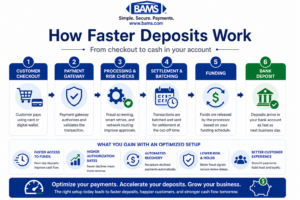
A visual framework showing how transparent pricing, behavior tracking, and payment gateway optimization work together to increase conversions and accelerate cash flow.
This guide shows you how to use transparent pricing and customer behavior tracking to increase conversion rates in your mobile checkout. You will learn a practical framework for integrating these elements with your payment gateway, so you can reduce cart abandonment and speed up cash flow.
This is for eCommerce managers at established online businesses who want to stop losing sales to hidden fees, confusing checkouts, and slow funding cycles. By the end, you will understand how to build a checkout experience that earns trust, converts browsers into buyers, and gets you paid faster.
We focus on actionable steps, not theory. If you want to optimize your mobile commerce strategy without wading through jargon, you are in the right place.
Why Transparent Pricing and Behavior Tracking Matter Now
Combining transparent pricing with customer behavior tracking reduces friction, builds trust, and significantly improves mobile checkout conversion rates.
Your customers are buying on their phones, and they expect a seamless experience. But here is the problem: abandoned cart rates on mobile phones.
Why do so many shoppers bail? Hidden fees at checkout rank among the top reasons.
According to Visa, clear and streamlined checkout experiences significantly improve payment completion rates. Tracking how customers interact with your checkout lets you remove friction, personalize offers, and recover abandoned carts before they become lost revenue.
The cost of inaction is real. Every day you operate with opaque pricing or a generic checkout flow, you leave money on the table. Your competitors who invest in transparency and behavior-informed mobile commerce strategies will capture the customers you lose.
Core Concepts You Need to Understand
Transparent Pricing Defined
Transparent pricing means showing customers the full cost of their purchase before they reach the final checkout step. This includes shipping, taxes, and any processing fees. No surprises, no hidden charges that appear at the last second.
Many merchants confuse “competitive pricing” with “transparent pricing.” They are not the same. You can have low prices but still lose sales if customers feel deceived by last-minute additions. Transparency builds trust, and trust converts.
Customer Behavior Tracking Explained
Customer behavior tracking means collecting and analyzing data on how shoppers interact with your site and checkout. This includes what pages they visit, where they hesitate, when they abandon carts, and what prompts them to complete a purchase.
This is not about surveillance. It is about understanding friction points so you can fix them. When you know that 40% of your mobile users drop off at the shipping cost reveal, you have a clear target for improvement.
Payment Gateway Integration
Your payment gateway is the system that processes transactions between your customer’s bank and yours. Effective payment gateway integration means your checkout loads fast, accepts multiple payment methods, and communicates clearly with your behavior tracking tools.
A poorly integrated gateway creates lag, errors, and confusion. These kill conversions. A well-integrated gateway becomes invisible to the customer, which is exactly what you want.
The Transparency-to-Conversion Framework
This guide follows a five-stage framework that connects transparent pricing, behavior tracking, and payment processing into a unified mobile commerce strategy.
Stage 1: Audit (Identify where you lose customers and why)
Stage 2: Clarify (Make pricing visible and honest at every step)
Stage 3: Track (Implement behavior tracking to measure what matters)
Stage 4: Optimize (Use data to remove friction and personalize)
Stage 5: Accelerate (Connect checkout improvements to faster funding)
Each stage builds on the previous one. Skip the audit, and your optimizations will miss the mark. Ignore tracking, and you will never know if your changes work. This is a system, not a checklist.
Step-by-Step Breakdown
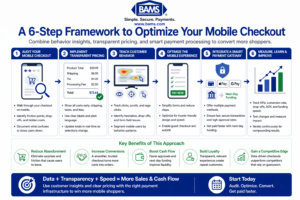 A structured mobile checkout framework connects behavior insights, transparent pricing, and payment optimization to increase conversions and accelerate cash flow.
Step 1: Audit Your Current Checkout for Hidden Friction
Objective: Identify exactly where and why customers abandon your mobile checkout.
Start by walking through your own checkout on a mobile device. Note every moment where you feel uncertain, confused, or surprised. Pay special attention to when costs appear. If shipping fees only show up on the final screen, that is a red flag.
Pull your analytics data. Look at drop-off rates by checkout step. If your conversion rate does not reflect that intent, something in your checkout is breaking the momentum.
Survey recent customers who abandoned carts. A simple email asking “What stopped you from completing your purchase?” often reveals issues your data cannot.
What to avoid: Do not assume you know the problem. Many merchants blame price when the real issue is confusion or distrust. Let the data guide you.
Success indicators: You have a clear list of friction points ranked by impact. You can point to specific checkout steps where customers leave.
Step 2: Make Pricing Visible and Honest at Every Step
Objective: Eliminate surprise costs so customers feel confident throughout checkout.
Display shipping costs on product pages, not just at checkout. If you offer free shipping above a threshold, show progress toward that threshold in the cart. Use a running total that updates as customers add items.
Break down costs clearly. Instead of one lump sum, show subtotal, shipping, taxes, and any fees as separate line items. This feels more honest, even if the total is the same.
If you charge processing fees, disclose them upfront. Better yet, absorb them into your pricing. Customers hate feeling nickel-and-dimed. Payment processing partners that offer transparent pricing make this easier by giving you predictable costs you can build into your margins.
What to avoid: Do not hide fees in fine print or reveal them only after the customer enters payment information. This destroys trust and triggers abandonment.
Success indicators: Customers see the full cost before they click “Buy.” Your support team receives fewer complaints about unexpected charges.
Step 3: Implement Behavior Tracking That Drives Decisions
Objective: Collect actionable data on how customers interact with your checkout.
Install tracking that captures key events: page views, add-to-cart actions, checkout step progression, and abandonment points. Most analytics platforms support this, but you need to configure it specifically for your checkout flow.
Some eCommerce companies now run website personalization programs because behavior data drives higher conversion and retention. You do not need enterprise-level tools to start. Basic event tracking gives you the foundation.
Focus on metrics that connect to revenue. Time on checkout page, scroll depth, and button clicks tell you where customers hesitate. Combine this with your payment gateway data to see which payment methods convert best and which cause friction.
What to avoid: Do not track everything just because you can. Drowning in data is worse than having none. Track what you will actually use to make decisions.
Success indicators: You can answer questions like “Where do most mobile users drop off?” and “Which payment method has the highest completion rate?”
Step 4: Optimize Checkout Based on Behavior Data
Objective: Use your tracking insights to remove friction and personalize the experience.
If data shows customers abandon at the shipping step, test showing shipping costs earlier. If users hesitate at payment selection, simplify your options or highlight the most popular method.
If your mobile web checkout underperforms, consider whether a streamlined single-page checkout or app experience could close the gap.
Implement abandoned cart recovery emails triggered by behavior. When someone leaves with items in their cart, send a reminder within an hour. Include the exact items, the total cost (no surprises), and a clear path back to checkout.
Test one change at a time. Measure the impact before moving to the next optimization. This discipline prevents you from breaking what works while fixing what does not.
What to avoid: Do not overhaul your entire checkout at once. Incremental changes let you isolate what works. Avoid copying competitors without understanding why their approach might work for their audience.
Success indicators: Conversion rate improves on mobile. Abandoned cart recovery emails generate measurable revenue. You can trace specific changes to specific outcomes.
Step 5: Connect Checkout Improvements to Faster Funding
Objective: Turn higher conversions into faster access to cash.
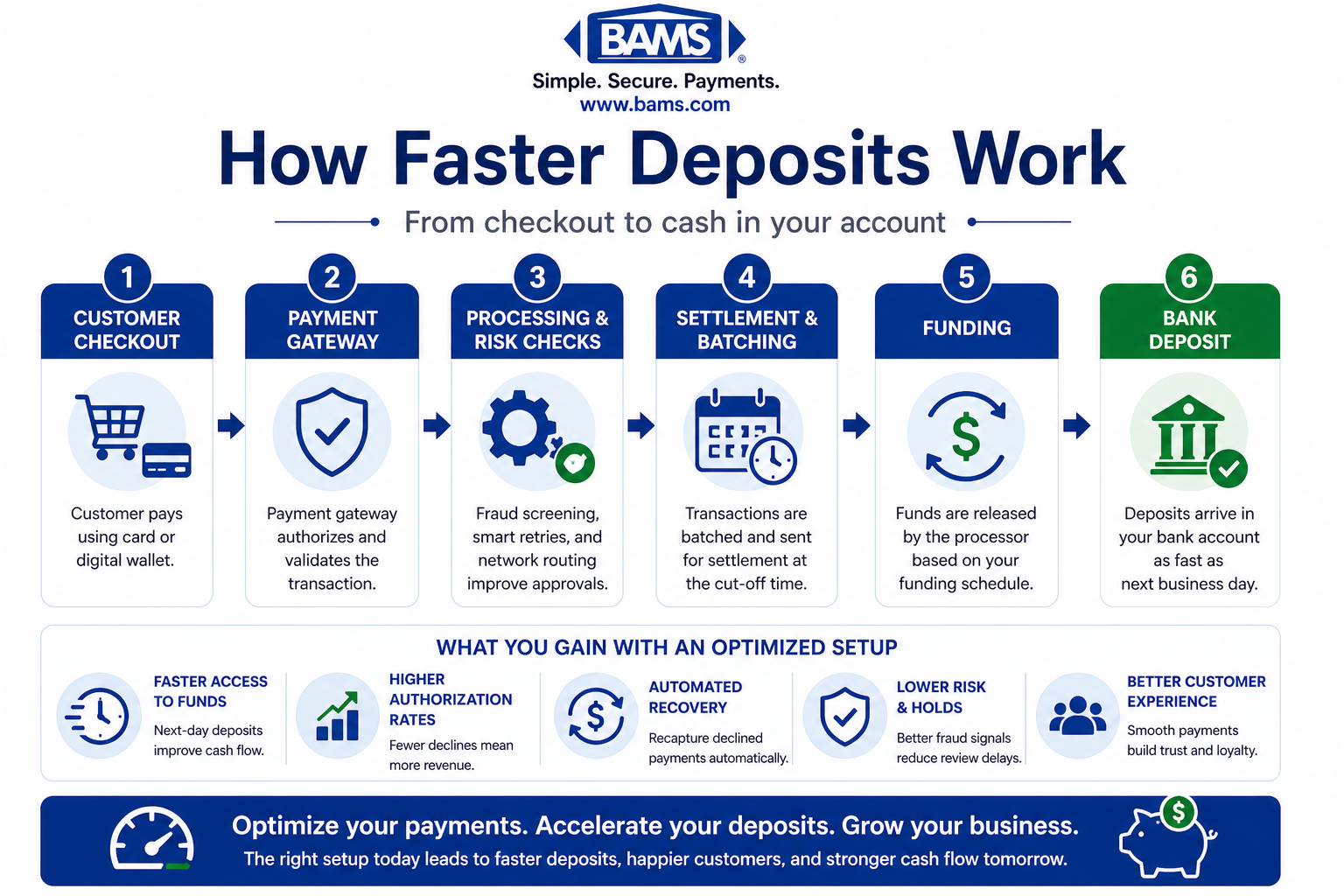
More conversions mean more transactions. But if your payment processor holds funds for days, you do not benefit from that growth immediately. Next-day funding changes this equation.
When you get cash the next business day, you can reinvest in inventory, marketing, or operations without waiting. This is especially important for businesses running tight margins or seasonal promotions.
Evaluate your current processor’s funding timeline. If you wait 2 to 3 days (or longer) for deposits, that delay costs you flexibility. Payment partners that offer guaranteed next-day funding changes this equation. let you capture the full benefit of your conversion improvements immediately.
Align your payment gateway integration with your behavior tracking. As explained by Modern Treasury, better transaction visibility and payment operations control help businesses make faster, more informed financial decisions.
When both systems communicate, you can see not just how customers behave but how that behavior translates to actual revenue in your account.
What to avoid: Do not assume all processors offer the same funding speed. Read the fine print. Some advertise fast funding but add conditions that delay most transactions.
Success indicators: You receive deposits within one business day. Cash flow becomes predictable enough to plan confidently.
Step 6: Build Trust Signals Into Every Checkout Element
Objective: Reinforce customer confidence at each decision point.
Trust signals include security badges, clear return policies, and visible customer support options. On mobile, these need to be prominent without cluttering the screen.
Display payment security indicators near the payment form. Your mobile web checkout needs to match that perception.
Show real-time support options. A chat widget or visible phone number tells customers they can get help if something goes wrong. This reduces anxiety, especially for first-time buyers.
Include social proof near the checkout button. Reviews, ratings, or a simple “X customers bought this today” message can tip hesitant shoppers toward completion.
What to avoid: Do not overload the checkout with badges and messages. Too many trust signals feel desperate and can backfire. Choose two or three high-impact elements.
Success indicators: Customer surveys indicate higher confidence. Chargeback rates stay low because customers feel informed and supported.
Common Mistakes That Kill Conversions
The most common mistake is treating transparency as a marketing message rather than an operational commitment. Saying “no hidden fees” means nothing if customers still encounter surprise charges.
Another frequent error is collecting behavior data but never acting on it. Tracking without optimization is just surveillance. If you are not using insights to make changes, you are wasting resources.
Many merchants also underestimate the impact of payment gateway speed and reliability. A checkout that times out or shows errors loses sales, no matter how transparent your pricing. Test your gateway under load and on real mobile devices. The NACHA ACH Network governs how electronic payments are processed and settled, which directly impacts funding speed and cash flow timing.
Finally, some businesses optimize for desktop and assume mobile will follow. If your mobile checkout is an afterthought, you are optimizing for the minority of your customers.
What to Do Next
Start with the audit. This week, walk through your mobile checkout as a customer. Note every friction point, every moment of confusion, every hidden cost. Write them down.
Then pick one issue to fix. Maybe it is showing shipping costs earlier. Maybe it is adding a trust badge near the payment button. Make the change, measure the result, and move to the next item on your list.
Use this guide as a reference, not a one-time read. Checkout optimization is ongoing. Customer expectations shift, mobile commerce strategies evolve, and your competitors improve. Revisit your audit quarterly.
If your current payment processor creates friction through slow funding, hidden fees, or poor integration, that is worth addressing early. The best checkout experience in the world loses value if you wait days to access your revenue.
Frequently Asked Questions
What is checkout optimization and why is it important?
Checkout optimization means improving every step of the purchase process to reduce friction and increase completed sales. It matters because even small improvements can significantly impact revenue. With mobile cart abandonment rates at 84.8%, optimizing your checkout directly addresses your biggest conversion leak.
How can I reduce cart abandonment during the checkout process?
Show all costs upfront, including shipping and taxes, before the final checkout step. Simplify your checkout to as few steps as possible. Offer guest checkout so customers do not have to create accounts. Use behavior tracking to identify exactly where customers leave, then fix those specific friction points.
Which payment methods should I offer to optimize my checkout experience?
Offer the methods your customers actually use. At minimum, accept major credit cards, debit cards, and digital wallets like Apple Pay and Google Pay. Review your behavior data to see which payment options have the highest completion rates. Avoid overwhelming customers with too many choices, as this can cause decision paralysis.
How can I build trust with customers during the checkout process?
Display security badges near payment fields. Show clear return and refund policies. Make customer support visible through chat or phone options. Use transparent pricing so customers never feel surprised. Include social proof like reviews or purchase counts near the checkout button.
When should I consider implementing a one-page checkout solution?
Consider single-page checkout if your data shows significant drop-off between checkout steps. Mobile users especially benefit from fewer page loads. If your current multi-step checkout has completion rates below industry averages, testing a single-page version is worth the investment.
How does faster funding from my payment processor affect my business?
Next-day funding means you can reinvest revenue immediately rather than waiting days for deposits. This improves cash flow, lets you respond faster to inventory needs, and reduces the gap between making a sale and having usable funds. For businesses with tight margins or seasonal demand, faster funding provides meaningful operational flexibility.