Payment Gateway Technology: The Future of Payments
Last Updated on April 28, 2026 by Dimitri Akhrin
The Future of Payment Gateway Technology
Payment gateway technology has become a foundational component of modern commerce as digital transactions continue to accelerate globally. The rise of eCommerce, embedded finance, and global online marketplaces has fundamentally changed how businesses accept and process payments. Today, companies rely on advanced payment systems not just to complete transactions, but to drive growth, improve customer experience, and manage risk.
A payment gateway is the technology that securely captures, encrypts, and transmits payment data between a customer, merchant, and financial institutions. While early systems focused primarily on authorization and settlement, modern payment gateway technology has evolved into a sophisticated infrastructure layer that supports real-time processing, fraud prevention, and global scalability.
The future of payments depends on intelligent, secure, and flexible gateway systems. Businesses that understand emerging payment technology trends will be better positioned to compete in an increasingly digital and global economy.
Key Takeaways
- Payment gateway technology has evolved into a strategic revenue infrastructure, not just transaction routing.
- AI, real-time payments, and embedded finance define the future of payment processing.
- Modern gateways must support omnichannel, global, and subscription-based business models.
- Security and compliance automation are critical for reducing fraud and maintaining trust.
- Businesses investing in advanced gateways today will lead the future of payments.
The Evolution of Payment Gateway Technology
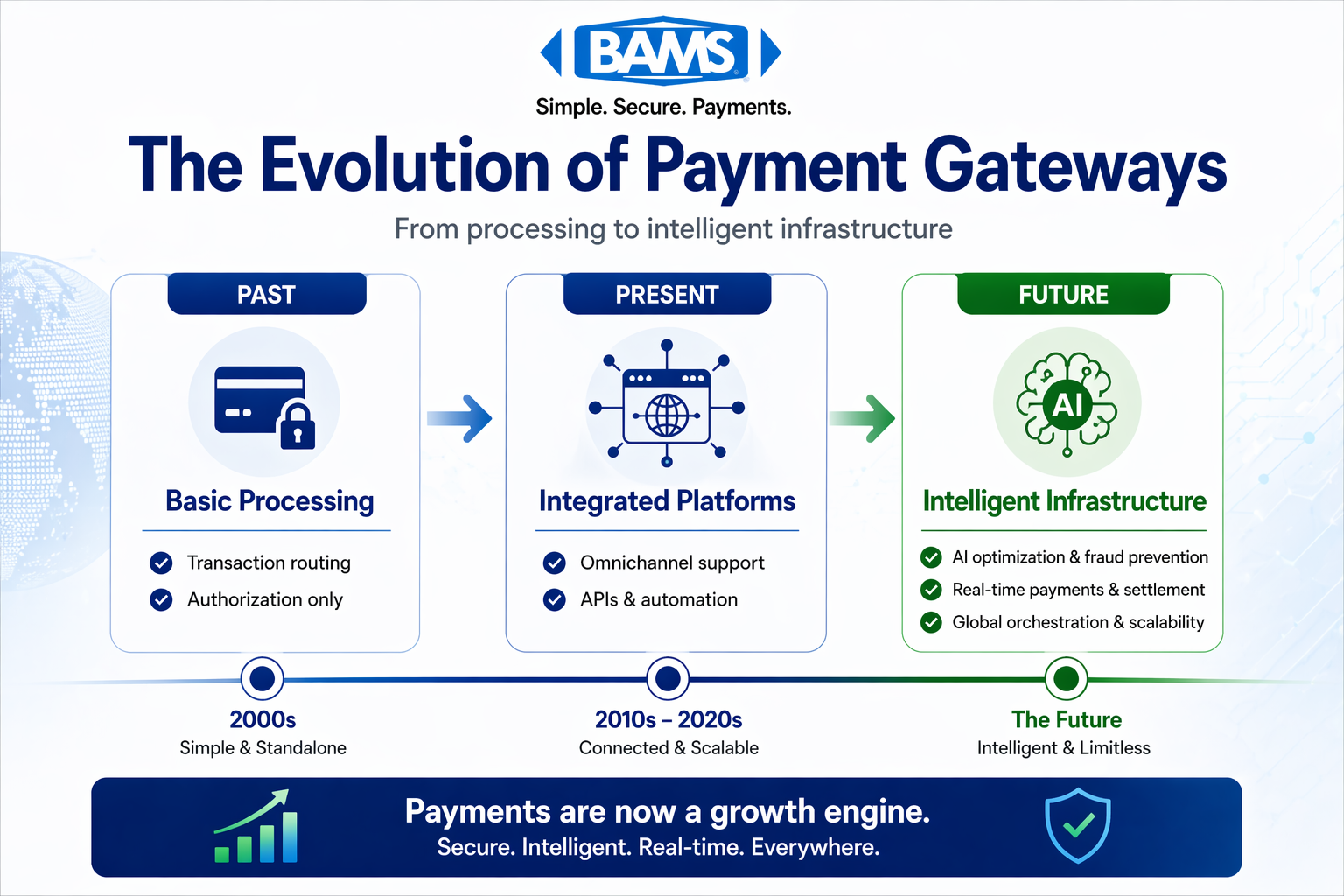
The evolution of payment gateway technology from basic transaction processing to intelligent, real-time infrastructure powering modern digital commerce.
Payment gateway technology has evolved from simple transaction processing to intelligent, AI-driven infrastructure supporting global commerce.
From Basic Transaction Routing to Intelligent Infrastructure
In the early days of eCommerce, payment gateways were primarily responsible for processing transactions and sending authorization requests to issuing banks. These systems were limited in functionality and often operated as standalone tools.
As commerce evolved, businesses began to require more advanced capabilities. The rise of omnichannel commerce introduced new complexities, including in-store, online, and mobile payments. At the same time, fraud threats became more sophisticated, and compliance requirements increased.
The Shift Toward Platform-Based Payment Gateways
Modern payment gateways now function as integrated platforms rather than isolated systems. They connect with ERP systems, CRM platforms, subscription billing tools, and POS systems.
Cloud-based architectures and API-first design have enabled businesses to customize payment experiences while maintaining scalability.
Companies using advanced payment gateways can streamline operations and create more efficient payment workflows.
Why Modern Businesses Require Advanced Gateway Solutions
Customer expectations have shifted toward faster, frictionless checkout experiences. Additionally, businesses must now support cross-border payments, multiple currencies, and recurring billing models.
These requirements have transformed payment gateway technology into a mission-critical component of business infrastructure.
Major Payment Technology Trends Shaping the Future
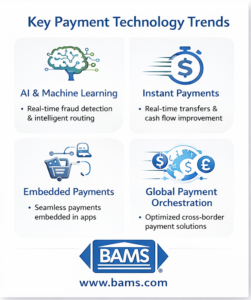
Modern payment gateway technology is driven by AI, real-time processing, embedded payments, and global payment orchestration.
Artificial Intelligence and Machine Learning in Payment Processing
Artificial intelligence is playing a central role in modern payment systems. AI-powered tools can analyze transaction data in real time to detect fraud, reduce false declines, and optimize authorization rates.
According to JPMorgan, AI-driven payment solutions are helping businesses improve transaction approval rates and enhance fraud detection capabilities.
- Real-time fraud detection
- Behavioral analytics
- Predictive fraud scoring
- Smart routing and decline optimization
Real-Time Payments and Instant Settlement
Real-time payment networks are transforming how quickly funds move between accounts. Businesses are increasingly adopting systems that enable instant or near-instant settlement.
The Federal Reserve’s FedNow service represents a major step toward real-time payments in the United States, enabling faster transaction processing and improved liquidity management.
Faster settlement cycles allow businesses to improve cash flow and reduce reliance on external financing.
Embedded and Invisible Payments
Payments are increasingly being embedded directly into digital platforms, creating seamless customer experiences. From subscription services to mobile apps, users can complete transactions without leaving the platform.
Technologies such as tokenization and digital wallets support one-click checkout and recurring billing automation.
Global Payment Orchestration
As businesses expand internationally, payment gateways must support multiple acquirers, currencies, and local payment methods.
Payment orchestration platforms allow businesses to route transactions intelligently, improving approval rates and reducing costs.
Enhanced Security and Compliance Automation
Security remains a top priority in payment processing. Modern gateway systems incorporate advanced encryption, tokenization, and compliance automation.
According to PCI Security Standards Council, maintaining PCI compliance is essential for protecting sensitive cardholder data.
- Tokenization and encryption
- Biometric authentication
- Zero-trust architecture
- Automated compliance monitoring
The Role of Online Payment Gateway Technology in Omnichannel Commerce
Unified Commerce Strategy
Businesses must integrate payment systems across in-store, online, and mobile channels. A unified approach enables consistent customer experiences and centralized reporting.
Data-Driven Decision Making
Modern gateways provide valuable data insights, including customer purchasing behavior, chargeback trends, and conversion rates.
These insights help businesses optimize pricing strategies, marketing campaigns, and operational efficiency.
Customer Experience as Competitive Advantage
Payment experience plays a critical role in customer satisfaction. Faster checkout processes and reduced transaction friction can significantly improve conversion rates.
Payment experience plays a critical role in customer satisfaction. Faster checkout processes and reduced friction can significantly improve conversion rates. Insights from Mastercard highlight that payment systems are evolving to become more seamless, personalized, and interoperable, reinforcing the importance of frictionless payment experiences in modern commerce.
The Future of Payment Processing for Businesses
Smarter Authorization Optimization
Payment gateways are evolving to include dynamic routing, automated retries, and network tokenization. These features help improve transaction success rates.
Increased Focus on Revenue Recovery
Businesses are investing in tools that recover lost revenue from failed transactions, chargebacks, and subscription churn.
Infrastructure Designed for Scale
Cloud-native, API-driven systems allow businesses to scale quickly and adapt to changing market conditions.
Payment gateway technology is no longer optional—it is essential infrastructure for modern commerce.
How Businesses Should Prepare for the Future of Payments
Evaluate Current Payment Gateway Capabilities
- Does your gateway support omnichannel commerce?
- Can it provide real-time insights?
- Does it effectively reduce fraud?
Prioritize Scalability and Flexibility
Businesses should choose payment systems that support API integrations, global expansion, and subscription models.
Partner With Forward-Thinking Providers
To remain competitive, businesses need payment solutions that evolve with technology trends. Providers like BAMS offer scalable and secure gateway solutions designed to support modern business needs.
Explore BAMS payment gateway solutions to learn how advanced infrastructure can improve performance and scalability.
Emerging Innovations in Payment Technology to Watch
- Blockchain-based settlement systems
- Central Bank Digital Currencies (CBDCs)
- Biometric and behavioral authentication
- Internet of Things (IoT) payments
- Voice commerce
- AI-powered compliance automation
FAQ: Payment Gateway Technology
What is payment gateway technology?
Payment gateway technology is a system that securely processes payment transactions between customers, merchants, and financial institutions.
Why is payment gateway technology important?
It enables secure, fast, and reliable payment processing, which directly impacts revenue, customer experience, and business scalability.
How does a payment gateway improve business performance?
Modern gateways improve transaction approval rates, reduce fraud, and provide data insights that help optimize operations.
What trends are shaping payment gateway technology?
Key trends include AI-driven fraud detection, real-time payments, embedded finance, and global payment orchestration.
Conclusion: The Strategic Importance of Payment Gateway Technology
Payment systems are no longer just operational tools—they are strategic drivers of revenue, customer experience, and global expansion.
Businesses that invest in advanced payment gateway technology gain a competitive advantage through faster transactions, improved security, and scalable infrastructure.
The future of payment processing requires intelligence, speed, and adaptability. Companies that align with forward-thinking providers will be best positioned for long-term success.
To stay ahead in the evolving payments landscape, businesses should evaluate their current systems and explore modern solutions such as BAMS payment gateway technology.