

How to Prevent Chargebacks Without Slowing Checkout
Last Updated on September 26, 2026 by Dimitri Akhrin
Configure fraud filters, optimize billing descriptors, and automate alerts that catch disputes before they cost you money
Learn to build a layered fraud protection system that blocks suspicious transactions while keeping authorization rates above 95%. This step-by-step guide covers real-time filters, descriptor optimization, and automated monitoring.
TL;DR
- Audit your chargebacks first – Export 90 days of dispute data and identify your top three chargeback reasons before implementing any fixes
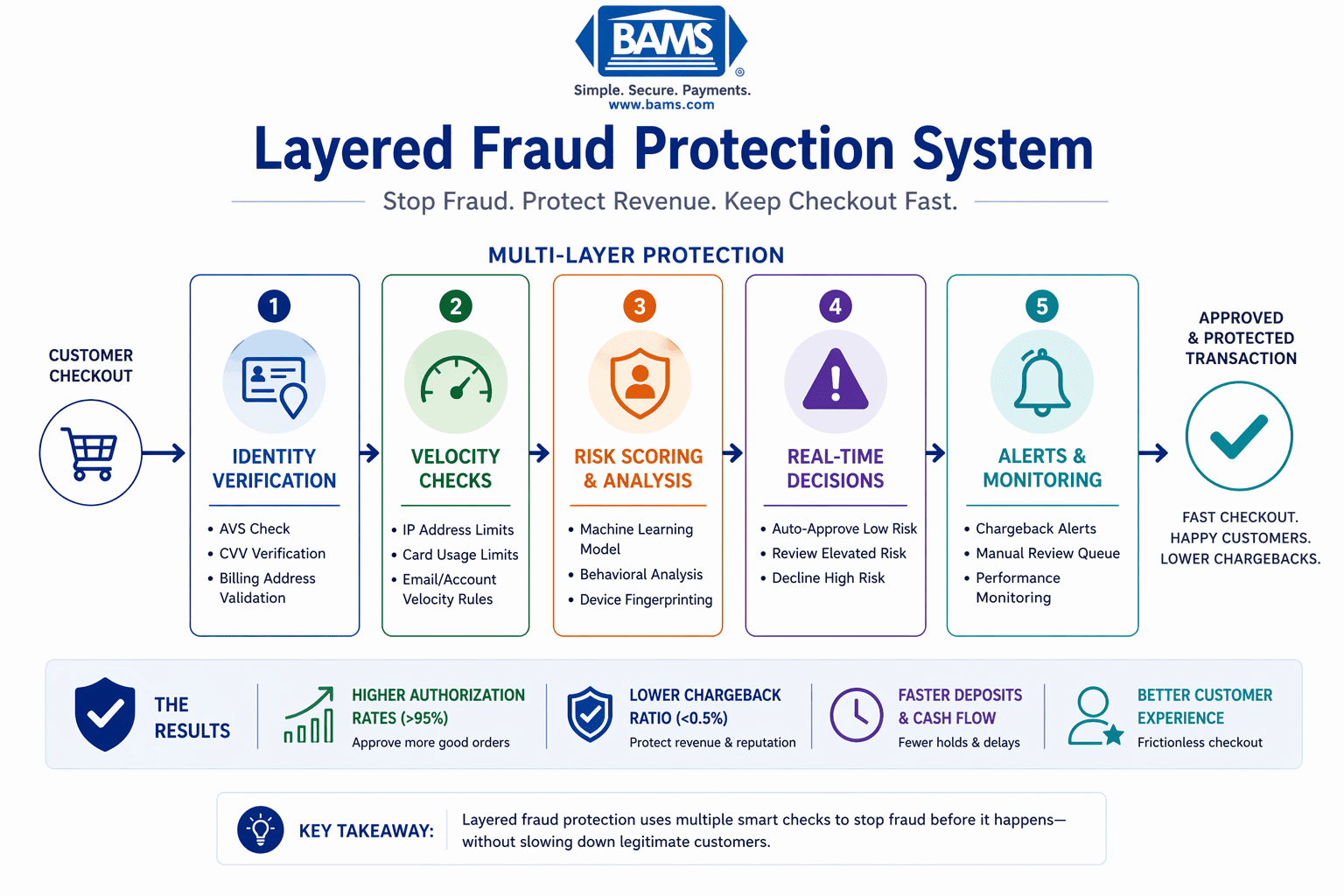
- Layer your fraud filters – Combine AVS verification, velocity limits, and real-time risk scoring to catch fraud without blocking legitimate sales
- Fix your billing descriptor – Unrecognized charges cause preventable chargebacks; make sure customers see your business name and phone number on their statements
- Automate your evidence collection – Store IP addresses, delivery confirmations, and all customer communications so you can win disputes when they happen
- Monitor and adjust weekly – Target authorization rates above 95% and chargeback ratios below 0.5%; adjust thresholds based on your actual data
What You Will Achieve: Fast, Secure eCommerce Transactions
By the end of this tutorial, you will have implemented a layered fraud protection system that stops suspicious transactions without slowing down legitimate sales. Your deposits will arrive faster because fewer transactions get flagged for manual review.
You will verify success when your authorization rates stay above 95%, your chargeback ratio drops below 0.5%, and your funds hit your account within one business day. These are measurable outcomes you can track in your payment dashboard.
This guide walks you through chargeback prevention strategies that protect revenue while keeping checkout friction low. You will configure real-time fraud filters, optimize billing descriptors, and set up automated alerts that catch problems before they become disputes.
Prerequisites and Setup Checklist
Before you start, confirm you have access to these tools and accounts. Missing any item will block your progress at specific steps.
- Payment gateway admin access with permission to edit fraud settings and billing descriptors
- E-commerce platform backend (Shopify, WooCommerce, Magento, or similar) with checkout customization rights
- Transaction reporting dashboard that shows authorization rates, decline codes, and chargeback data
- Email service provider connected to your store for automated post-purchase messages
- 30-60 minutes for initial configuration, plus 15 minutes daily for the first week of monitoring
Potential blockers include outdated gateway integrations and limited API access on basic e-commerce plans. Check your subscription tier before starting Step 4.
Why This Approach Works

A layered fraud protection system combining real-time filters, risk scoring, and alerts to prevent chargebacks without reducing conversion rates.
Traditional fraud protection operates like a bouncer who checks every ID twice. It catches bad actors but creates lines that frustrate paying customers. The method in this tutorial applies friction selectively based on risk signals.
You could implement stricter manual review for all orders above a certain dollar amount. That approach catches fraud but delays deposits while your team verifies each transaction. The layered system below automates 90% of decisions instantly and flags only genuinely suspicious patterns.
According to Visa, effective chargeback prevention depends on identifying dispute causes early and applying the right controls before they escalate into costly disputes.
Step 1: Audit Your Current Chargeback Sources
Action: Log into your payment gateway and export the last 90 days of chargeback data. Sort by reason code to identify your top three dispute categories.
Navigate to Reports > Disputes or Chargebacks > Export CSV. Open the file and create a pivot table grouping disputes by reason code. Common codes include 10.4 (fraud), 13.1 (merchandise not received), and 13.3 (not as described).
Expected result: You will see which dispute type costs you the most. Your specific breakdown might show friendly fraud or fulfillment issues as bigger problems.
Common failure: Export shows zero chargebacks but you know you have had disputes. Fix: Check if your processor separates “retrievals” from “chargebacks” in different report sections.
A structured step-by-step framework showing how to prevent chargebacks while maintaining fast and frictionless checkout.
Step 2: Configure Address Verification Service (AVS) Rules
Action: Access your gateway’s fraud filters and set AVS to decline transactions where the street address does not match the card issuer’s records.
In your gateway admin panel, go to Fraud Settings > AVS Configuration. Enable the following rules:
Decline if: AVS response = "N" (no match on address or zip)
Decline if: AVS response = "A" (address matches, zip does not)
Allow if: AVS response = "Y" (full match)
Review if: AVS response = "U" (unavailable/international)
Expected result: Fraudulent orders using stolen card numbers with incorrect billing addresses get blocked automatically. Legitimate customers with matching information proceed without delay.
Common failure: International orders all get declined. Fix: Create a separate rule set for international transactions that relies more heavily on CVV and velocity checks rather than AVS, since AVS works differently outside the US.
Step 3: Implement Velocity Filters for Fraud Protection Measures
Action: Set limits on how many transactions can occur from the same IP address, email, or card number within a specific timeframe.
In your fraud filter settings, create these velocity rules:
Block if: Same card number > 3 attempts in 1 hour
Block if: Same IP address > 5 transactions in 24 hours
Block if: Same email > 4 orders in 24 hours
Review if: Same shipping address > 2 different cards in 7 days
Expected result: Card testing attacks (where fraudsters validate stolen numbers with small purchases) get stopped after the first few attempts. Legitimate repeat customers rarely trigger these thresholds.
Common failure: Your best customer who orders daily gets blocked. Fix: Add a whitelist for verified customer email addresses or implement a loyalty program integration that exempts trusted accounts.
Step 4: Optimize Your Billing Descriptor
Action: Change your billing descriptor to clearly show your business name and include a phone number or URL that customers recognize.
Contact your payment processor or access your merchant account settings. Update the descriptor field to follow this format:
YOURSTORE.COM 800-555-1234
or
YOURBRAND*PRODUCT 555-1234
Expected result: Customers reviewing their credit card statements will recognize your charge and call you directly instead of disputing with their bank. Unrecognized charges are a top driver of chargebacks, often preventable through transparent descriptors.
Common failure: Descriptor shows your payment processor’s name or a parent company customers have never heard of. Fix: Request a custom descriptor from your processor. Most allow this for an additional monthly fee or as part of premium accounts.
Step 5: Set Up Post-Purchase Confirmation Emails
Action: Configure automated emails that send immediately after purchase, when the order ships, and when delivery is confirmed.
In your email service provider, create three triggered sequences:
- Purchase confirmation (immediate): Include order details, billing descriptor preview, and customer service contact
- Shipping notification: Include tracking number and expected delivery date
- Delivery confirmation: Request feedback and remind customers to contact you with any issues
Expected result: Customers have documentation at every stage. When they see a charge they do not immediately recognize, they can reference these emails before calling their bank.
Common failure: Emails land in spam folders. Fix: Authenticate your sending domain with SPF, DKIM, and DMARC records. Test deliverability with tools like Mail Tester before going live.
Step 6: Implement Real-Time Transaction Scoring
Action: Enable your gateway’s machine learning fraud scoring or integrate a third-party risk assessment tool.
Most modern gateways include built-in risk scoring. Enable it in Fraud Settings > Risk Scoring and set thresholds:
Score 0-30: Auto-approve (low risk)
Score 31-70: Auto-approve with logging (medium risk)
Score 71-85: Hold for review (elevated risk)
Score 86-100: Auto-decline (high risk)
Expected result: The system analyzes dozens of signals (device fingerprint, behavioral patterns, historical data) and makes instant decisions. Low-risk transactions process immediately while only genuinely suspicious orders require manual review.
For eCommerce businesses processing significant volume, layered fraud protection tools can work alongside your merchant services to catch sophisticated fraud patterns.
Common failure: Too many legitimate orders get flagged for review, creating deposit delays. Fix: Lower your review threshold gradually and monitor false positive rates. Aim for less than 5% of orders requiring manual review.
Step 7: Create a Chargeback Alert System
Action: Subscribe to chargeback alert services that notify you before disputes become formal chargebacks.
Services like Verifi and Ethoca connect directly to card networks. When a cardholder initiates a dispute, you receive an alert with a window to issue a refund before it becomes a chargeback on your record.
Contact your payment processor to enable these alerts. Configuration typically involves:
- Providing your merchant ID numbers
- Setting up webhook endpoints for real-time notifications
- Defining auto-refund rules for disputes under a certain dollar amount
Expected result: You can resolve potential chargebacks through proactive refunds, protecting your chargeback ratio and merchant account standing.
Common failure: Alert arrives but you miss the response window. Fix: Set up SMS notifications in addition to email, and assign a specific team member to monitor alerts during business hours.
Step 8: Establish Clear Checkout Transparency
Action: Review your checkout flow and ensure pricing, shipping costs, and billing terms are visible before the customer enters payment information.
Audit your checkout pages for these elements:
- Total price (including taxes and fees) displayed before payment step
- Shipping cost calculator available before checkout
- Return policy linked and summarized
- Subscription terms (if applicable) clearly stated with cancellation instructions
Unclear checkout flows and poorly implemented upsells cause chargebacks that are entirely preventable through better design. According to the PCI Security Standards Council, merchants should maintain clear payment practices and secure transaction environments to reduce payment risk and customer disputes.
Expected result: Customers complete purchases with full knowledge of what they are paying and when. “I did not authorize this” disputes drop significantly.
Common failure: Mobile checkout hides key information below the fold. Fix: Test your checkout on actual mobile devices and ensure all pricing and terms are visible without scrolling.
Step 9: Document Everything for Dispute Defense
Action: Set up automated systems to capture and store evidence you will need if a chargeback occurs despite your prevention efforts.
Configure your systems to automatically save:
- IP address and device fingerprint at time of purchase
- Timestamps for all customer interactions
- Delivery confirmation with signature (for high-value orders)
- Screenshots of the checkout page the customer saw
- All email communications with the customer
Expected result: When you need to respond to a chargeback, you have compelling evidence ready within minutes instead of scrambling to reconstruct the transaction history.
Clear identity verification techniques and proactive customer communication provide the documentation trail you need to respond more effectively to disputes.
Common failure: Evidence exists but is scattered across multiple systems. Fix: Use your e-commerce platform’s order notes feature or a dedicated tool to centralize all transaction evidence in one searchable location.
Configuration and Customization Options
The thresholds in this tutorial work for most mid-size eCommerce operations. Adjust these variables based on your specific business model:
High-ticket merchants ($500+ average order): Lower your velocity limits and add manual review for first-time customers. The cost of one fraudulent order justifies extra verification.
Subscription businesses: Subscription models are especially vulnerable to chargebacks where customers misuse disputes to exit contracts. Implement clear cancellation flows and send billing reminders 3-5 days before each charge.
International sellers: Relax AVS requirements but tighten velocity and risk scoring. Consider requiring 3D Secure authentication for orders from high-fraud regions.
Safe defaults to keep: Never disable CVV verification. Always require billing address. Keep your risk scoring active even if you adjust thresholds.
Verification and Testing Procedures
After implementing these changes, verify your system works correctly before processing real customer transactions.
Test procedure:
- Place a test order with a card that has an intentionally mismatched AVS (your gateway should decline it)
- Attempt multiple rapid transactions from the same IP to trigger velocity limits
- Complete a successful order and verify all confirmation emails arrive
- Check that your billing descriptor appears correctly on your test card statement
Success definition: Fraudulent test transactions get blocked, legitimate test transactions process instantly, and all automated communications fire correctly.
Edge cases to verify: International orders, guest checkout versus logged-in customers, mobile versus desktop checkout, and orders with multiple shipping addresses.
Common Errors and Fixes for Payment Security Enhancements
Error: “Transaction declined: AVS mismatch” for legitimate customers
Cause: Customer recently moved or uses a PO Box that does not match card records. Fix: Add an option to verify via phone or email before declining. Consider allowing partial AVS matches for returning customers with purchase history.
Error: High-value orders stuck in manual review queue
Cause: Risk score thresholds are too aggressive. Fix: Analyze your review queue data. If more than 80% of reviewed orders are ultimately approved, raise your auto-approve threshold by 5-10 points.
Error: Chargeback alerts arriving but response window already closed
Cause: Webhook endpoint is slow or email notifications are delayed. Fix: Test your webhook response time (should be under 2 seconds). Set up redundant notification channels.
Error: Customers complaining they do not recognize charges
Cause: Billing descriptor change has not propagated or shows truncated on certain card statements. Fix: Test your descriptor by making a small purchase with your own card. Contact your processor if it displays incorrectly.
Error: Authorization rate dropped after implementing fraud filters
Cause: Filters are too strict and blocking legitimate transactions. Fix: Review decline logs for patterns. Temporarily loosen specific rules and monitor chargeback rates to find the right balance.
Merchant services partners like chargeback defense tools can help reduce dispute risk, and guaranteed next-day funding helps your deposits arrive faster when fewer transactions get caught in fraud review queues.
Next Steps and Extensions
With your fraud protection foundation in place, consider these advanced optimizations:
Implement 3D Secure 2.0: This authentication protocol shifts liability for fraudulent transactions to the card issuer while adding minimal friction for low-risk purchases. Most gateways now support frictionless 3DS2 flows.
Add device fingerprinting: Track returning devices across sessions to identify trusted customers and flag new devices attempting to use stored payment methods.
Build a customer trust score: Create an internal scoring system based on purchase history, email verification status, and dispute history. Use this score to fast-track orders from your best customers while applying extra scrutiny to new accounts.
Monitor your metrics weekly for the first month, then monthly thereafter. Your target benchmarks: authorization rate above 95%, chargeback ratio below 0.5%, and manual review rate below 5% of total orders.
Frequently Asked Questions
What are faster deposit strategies in merchant services?
Faster deposits depend on two factors: your processor’s funding schedule and how many transactions get flagged for review. Choose a merchant services provider that offers next-day funding, then reduce fraud flags by implementing automated risk scoring. When fewer orders require manual verification, your batch settles faster and funds arrive sooner.
How can I improve my payment authorization rates?
Authorization rates improve when you reduce false declines from overly aggressive fraud filters. Start by analyzing your decline codes to identify patterns. Adjust AVS rules to allow partial matches for returning customers, implement smart retry logic for soft declines, and use risk scoring that approves low-risk transactions instantly rather than blocking anything suspicious.
What role does fraud protection play in payment optimization?
Fraud protection directly impacts your cash flow speed. Aggressive fraud filters delay deposits by flagging legitimate orders for review. Optimized fraud protection uses machine learning to approve good transactions instantly while catching actual fraud. The result is faster processing, fewer chargebacks, and deposits that arrive on schedule.
Why do chargebacks cause delayed deposits?
When your chargeback ratio rises, payment processors flag your account as high-risk. This triggers additional transaction scrutiny, reserve holds on your funds, and longer settlement times. Keeping chargebacks below 0.5% of transactions maintains your good standing and ensures normal funding schedules.
How do I balance fraud protection with customer experience?
Apply friction based on risk level, not uniformly. Low-risk transactions (returning customers, small orders, matching AVS) should process with zero additional steps. Reserve verification challenges for genuinely suspicious patterns like mismatched addresses, new accounts with high-value orders, or unusual velocity. This approach stops fraud without annoying legitimate buyers.
When should I consider expanding my payment options?
Add payment methods when you see cart abandonment at the payment step or receive customer requests. Digital wallets like Apple Pay and Google Pay include built-in authentication that reduces fraud while speeding checkout. Local payment methods in international markets can improve authorization rates because they use authentication systems customers already trust.
Sources


