Why One-Click Checkout Fails Without Transparent Pricing
Last Updated on May 12, 2026 by Dimitri Akhrin
The real conversion killer isn’t slow checkout—it’s the moment customers feel surprised by hidden fees
Discover why transparent pricing outperforms speed optimization for eCommerce conversions. Learn how showing exact costs upfront builds the trust that actually reduces cart abandonment.
TL;DR
- Speed isn’t the real problem – Cart abandonment stems from trust breakdowns, not slow checkouts. Surprise fees at the final step kill more sales than extra clicks.
- Transparent pricing drives conversions – Showing complete costs upfront, before checkout, builds the trust that makes one-click purchasing actually work.
- Your processor’s clarity affects your customer’s experience – Hidden fees and unpredictable rates make it harder for you to price transparently, and customers feel that uncertainty.
- Think of checkout as a promise kept – Every step should confirm what the customer already expected, supported by secure payment processing.
The Pricing Page Problem Nobody Talks About
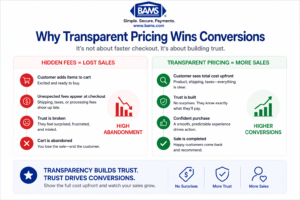
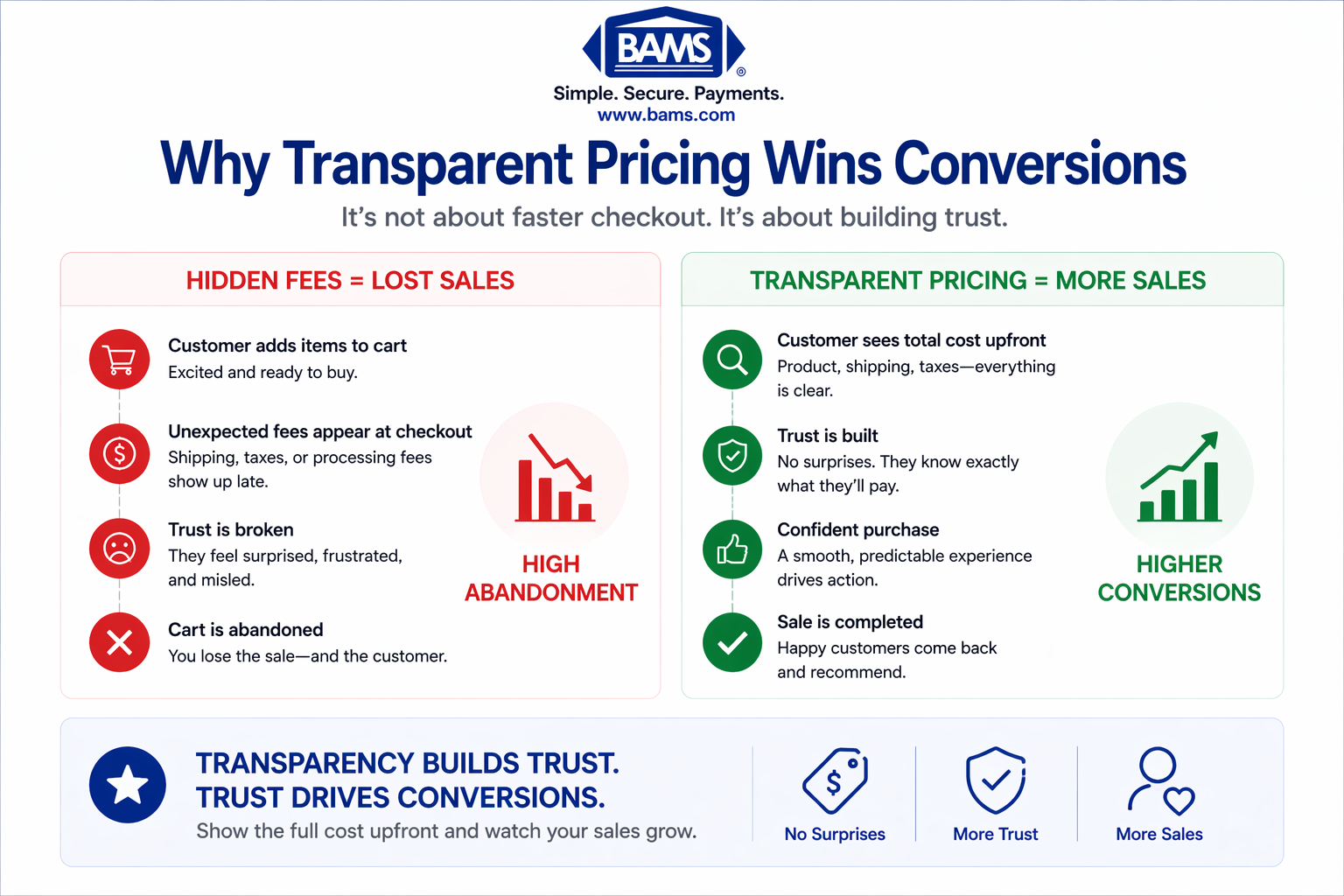
Unexpected fees at checkout break trust instantly, causing customers to abandon purchases regardless of how fast or optimized the checkout is.
Here’s something I’ve watched happen dozens of times: an eCommerce manager spends weeks perfecting their checkout flow, testing button colors, optimizing load times. Then a customer reaches the final step, sees an unexpected fee, and leaves.
All that work, gone in a second. Not because the checkout was slow or confusing. Because it felt dishonest.
We obsess over one-click checkout and frictionless experiences. But we’re solving the wrong friction.
The Industry’s Blind Spot
The conventional wisdom in eCommerce goes like this: make checkout faster, and conversions will follow. Speed matters. I’m not arguing otherwise.
But here’s what the speed obsession misses: cart abandonment isn’t just about friction. According to Visa, streamlined and transparent checkout experiences significantly improve transaction completion rates.
Transparent Pricing Is the Real Conversion Lever
I believe the biggest unlock for eCommerce conversion isn’t faster checkout. It’s showing customers exactly what they’ll pay, exactly when they expect to see it, with zero surprises.
Transparent pricing isn’t a feature. It’s a competitive moat.
According to the Federal Reserve, payment cost structures influence how merchants present pricing, making transparency critical for maintaining trust and improving conversions.
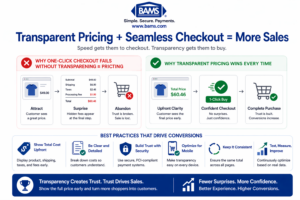
One-click checkout only works when trust is already established. Transparent pricing builds that trust by eliminating surprises and making purchases feel predictable.
What I’ve Seen Change Everything
Let me tell you about a pattern I’ve observed. Businesses that display all costs upfront, including shipping, taxes, and any processing fees, before customers even enter checkout, consistently outperform those that reveal costs gradually.
The Psychology Behind the Numbers
When a customer sees a product for $49 and reaches checkout to find it’s actually $58.47 with fees, something breaks. Not just the sale. The relationship.
They don’t think “oh, taxes and shipping.” They think “they tried to trick me.”
That feeling doesn’t go away. Even if they complete the purchase, they’re less likely to return. Less likely to recommend you. More likely to dispute charges later.
How This Plays Out in Real Operations
I’ve seen eCommerce managers implement gorgeous single-page checkouts with order bumps and upsells, only to watch abandonment stay flat. The problem wasn’t the flow. It was that customers felt ambushed by the final total.
The fix isn’t complicated. Show the complete price on the product page. Make shipping calculators available before checkout. If you’re offering upsells, show the new total immediately, not after they click “add.”
This approach works especially well with strategies to prevent shopping cart abandonment. Transparency amplifies every other optimization you make.
The Backend Truth Nobody Mentions
Here’s where this connects to something deeper: your payment processor’s pricing model directly affects your ability to be transparent with customers.
If you’re dealing with hidden interchange fees, monthly minimums buried in fine print, or surprise rate increases, that uncertainty trickles down. You pad prices “just in case.” You hesitate to show real-time totals because you’re not sure what your own costs will be.
When your processor is transparent with you, you can be transparent with your customers. When they’re not, you’re passing that uncertainty along, and customers feel it.
What Changes If This Is True
If transparent pricing really is the conversion lever I’m describing, then a lot of eCommerce optimization is backwards.
It means your user experience design priorities should shift. Before you test button colors or checkout page layouts, audit every moment where a customer might feel surprised by cost.
It means your payment processing relationship matters more than you thought. Not just for fees, but for the clarity that lets you price confidently.
It means the businesses winning on mobile aren’t just the fastest. They’re the ones customers trust enough to buy from without hesitation.
If you’re seeing signs you need a new payment processor, unclear pricing should be at the top of that list.
A Different Way to Think About Checkout
Stop thinking about checkout as a funnel to push people through. Think of it as a promise you’re keeping.
Every step should confirm what the customer already expected. The price they saw on the product page should match the price at checkout. The delivery date should be what you implied. The total should feel inevitable, not surprising.
The PCI Security Standards Council emphasizes that secure and transparent payment practices build customer confidence and reduce checkout friction. One-click checkout works when customers already trust you. Transparent pricing is how you earn that trust in the first place.
Speed without trust is just faster disappointment.
The Real Competitive Advantage
The eCommerce brands that will win the next decade aren’t hiding behind complexity. They’re winning by making every transaction feel simple, fair, and predictable.
That starts with what you show customers. It depends on what your partners show you. And it compounds every time a customer completes a purchase thinking “that was exactly what I expected.”
That’s the experience worth optimizing for.
Frequently Asked Questions
What is checkout optimization and why is it important?
Checkout optimization removes barriers between a customer’s decision to buy and completed payment. It matters because even small friction points can trigger the 70% average cart abandonment rate that costs eCommerce businesses billions annually.
How can I reduce cart abandonment during the checkout process?
Show all costs upfront before customers enter checkout. Combine this with guest checkout options, multiple payment methods, and clear security indicators to address the trust gaps that cause most abandonment.
Which payment methods should I offer to optimize my checkout experience?
Offer credit cards, digital wallets, and buy-now-pay-later options at minimum. Match your payment variety to your customer demographics, and ensure your integrated payment gateway processes all options with consistent, transparent fees.