Device Account Number: A Merchant Guide
Last Updated on August 19, 2026 by Dimitri Akhrin
How Apple Pay tokenization creates blind spots in your transaction data — and what to do about it
Learn how Device Account Numbers replace real card data in mobile wallet transactions, creating gaps in your reconciliation, fraud detection, and chargeback workflows. This guide shows eCommerce managers exactly where visibility breaks down and how to protect revenue.
TL;DR
- Apple Pay hides real card numbers from merchants — Your processor receives a Device Account Number (DAN), not the customer’s actual card, which breaks reconciliation, chargeback matching, and fraud detection workflows that rely on card numbers.
- Tokenization reduces fraud but not chargebacks — Friendly fraud, service disputes, and “item not received” claims still happen at normal rates, but the data in those disputes is harder to work with because it references a DAN you may not have stored.
- Your fraud rules need recalibration — Card-number-based velocity checks miss fraudsters using stolen cards across multiple Apple Pay devices. Shift to device-independent signals like shipping address clustering, email patterns, and order behavior.
- Authorization rate uplift isn’t automatic — Tokenized transactions can authorize 4-10 percentage points higher, but only if your gateway passes the full token context (including cryptograms) to the issuer. Misconfigured gateways silently cost you revenue through false declines.
- Start by measuring your mobile wallet mix — Pull 90 days of data, calculate your wallet transaction percentage, and segment chargebacks and approval rates by payment method. That baseline tells you where to focus first.
Guide Orientation: What This Covers and Who It’s For
This guide explains how mobile wallet transactions (especially Apple Pay) create a visibility gap in your transaction records, and what you can do to protect your revenue because of it. The core issue: when a customer pays with Apple Pay, your processor receives a Device Account Number, not the customer’s real card number. That substitution changes how chargebacks arrive, how fraud signals surface, and how reconciliation works in your dashboard.
This guide is written for eCommerce managers at small-to-midsize businesses who handle day-to-day payment operations. You don’t need to understand cryptographic protocols. You do need to understand what shows up (and what doesn’t) in your transaction data when mobile wallet volume grows.
By the end, you’ll be able to identify where payment tokenization creates blind spots in your reporting, adjust your dispute and reconciliation workflows accordingly, and make informed decisions about how to defend revenue as contactless and mobile wallet payments become a larger share of your sales.
This guide does not cover the technical engineering of token vaults, PCI compliance certification, or in-store NFC terminal setup. It focuses entirely on the operational and financial impact on your business.
Why Protecting Revenue from Mobile Wallet Blind Spots Matters Now
Mobile wallet adoption continues to grow across eCommerce and retail. More customers are choosing Apple Pay at checkout, which means more of your transactions arrive as tokenized payment data rather than raw card numbers. Apple Pay uses tokenization and device-based authentication to help protect payment credentials while allowing merchants to accept payments through their existing payment infrastructure.
The security benefits are real. Tokenization reduces exposure of primary account numbers during transactions and helps lower the risk of payment credential compromise. However, “less fraud overall” does not automatically mean fewer operational challenges for your finance or support teams.
Here’s the cost of inaction: as your mobile wallet transaction share grows, your existing reconciliation process will match fewer and fewer records cleanly. Chargeback disputes tied to tokenized transactions follow different data paths. Fraud patterns that would be obvious with a raw PAN become invisible when all you see is a Device Account Number. If you don’t adapt your workflows, you’ll experience more unresolved disputes, slower identification of fraud clusters, and revenue leakage that’s difficult to trace.
The businesses that treat tokenization as “someone else’s infrastructure problem” are the ones that discover the revenue impact months too late. This guide helps you avoid that.
Core Concepts: What a Device Account Number Actually Changes
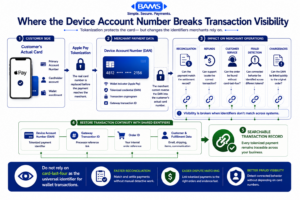
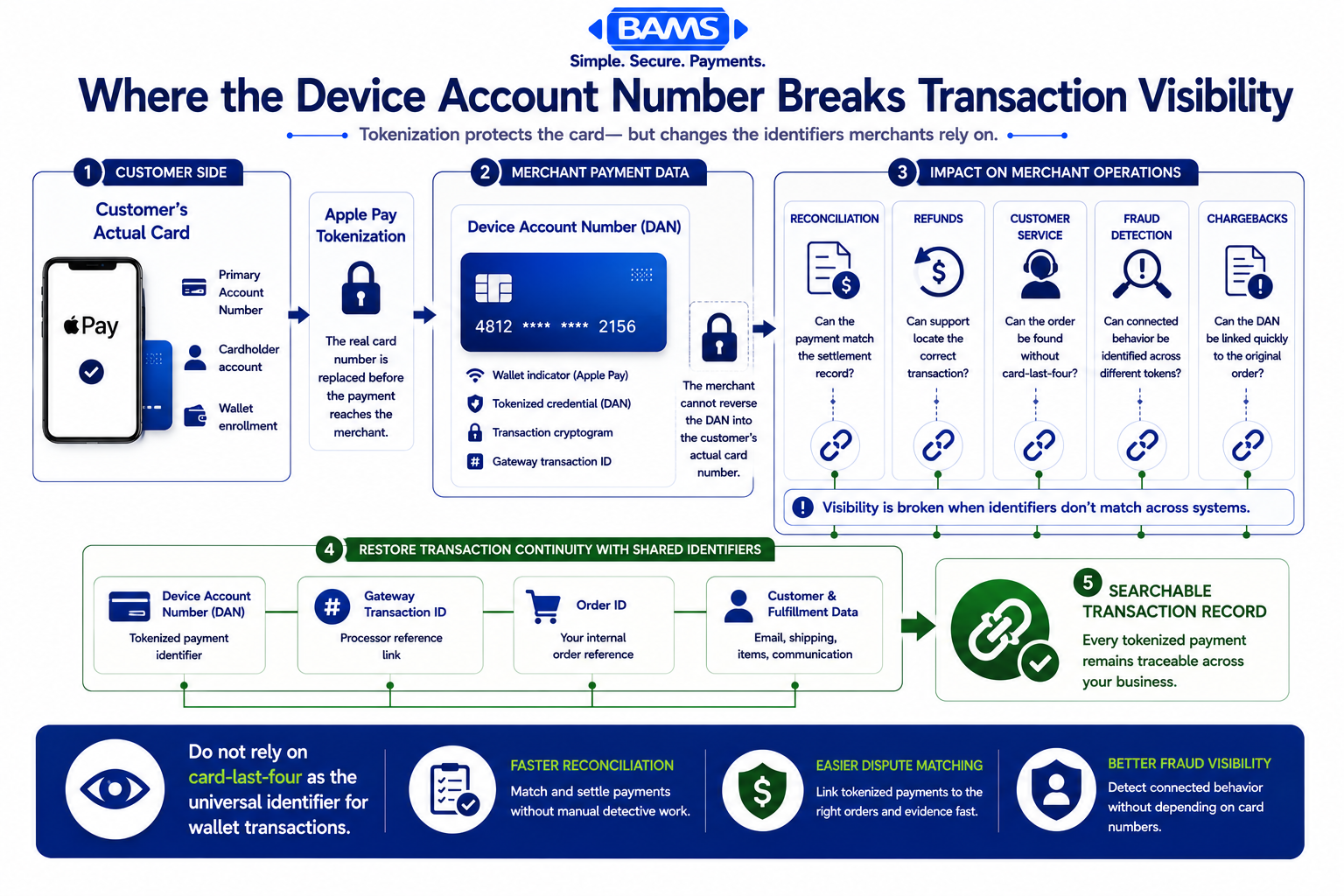
Apple Pay protects card credentials by replacing the real card number with a Device Account Number. Without consistent transaction identifiers, that protection can create operational blind spots for merchants.
The Token Swap You Never See
When a customer adds their credit card to Apple Pay, Apple and the card network generate a Device Account Number (DAN). This is a unique number tied to that specific device. It replaces the customer’s actual card number (the Primary Account Number, or PAN) for every transaction made through that wallet.
Your processor never touches the real card number. Your gateway never sees it. Your dashboard never displays it. What you get is the DAN, and that DAN is what flows through authorization, settlement, and (critically) disputes.
Why This Isn’t Just a Security Feature
Most content about tokenization frames it as a fraud prevention mechanism. That framing is accurate but incomplete. For your operations, the DAN creates a translation layer between what your customer sees on their bank statement and what you see in your merchant dashboard. The customer’s bank resolves the DAN back to their real card. You cannot.
This means if a customer calls their bank to dispute a charge, the bank works with the real PAN. When that dispute arrives at your processor, it references the DAN. If your internal records (CRM, order management, customer support tickets) are organized by the last four digits of a card number, the DAN won’t match. The dispute looks orphaned.
Persistent Tokens vs. One-Time Tokens
Not all payment tokens behave the same way. Some remain associated with the same device over time, while others are refreshed based on the payment network or wallet implementation. Visa’s Token Service documentation explains how network tokens securely replace primary account numbers throughout the transaction lifecycle. Understanding how your processor implements tokenization helps determine how much visibility you retain for reconciliation and fraud analysis.
The Misconception to Correct
Many eCommerce managers assume that because tokenization reduces fraud, it also reduces chargebacks. It doesn’t. Tokenization reduces unauthorized fraud. It does nothing to prevent friendly fraud, buyer’s remorse, or “item not received” disputes. Those chargebacks still arrive, but now they arrive with data that’s harder to match to your records.
The Framework: Four Layers of Revenue Protection
Protecting revenue as mobile wallet adoption grows requires work across four interconnected layers. Each layer addresses a different stage of the transaction lifecycle where tokenization creates operational risk.
- Layer 1: Transaction Visibility — Ensuring your systems capture and surface tokenized transaction identifiers in a usable way.
- Layer 2: Reconciliation Accuracy — Adapting your matching process so DAN-based transactions don’t fall through the cracks.
- Layer 3: Dispute Readiness — Building chargeback response workflows that account for the data gaps tokenization creates.
- Layer 4: Fraud Signal Adaptation — Recalibrating your transaction analysis to detect patterns in tokenized data rather than relying on PAN-based heuristics.
These layers are sequential in priority but ongoing in practice. You don’t “finish” Layer 1 and move on permanently. As your mobile wallet mix shifts, you revisit each layer with updated data.
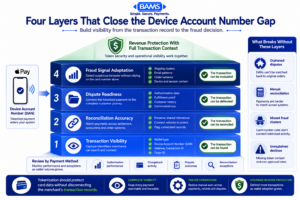
Merchants can close mobile-wallet data gaps by capturing searchable token identifiers, improving reconciliation, preparing wallet-specific dispute evidence, and monitoring behavior beyond card numbers.
Step-by-Step Breakdown: Protecting Revenue Across the Device Account Number Gap
Step 1: Audit Your Current Mobile Wallet Transaction Mix
Objective: Know exactly what percentage of your transactions are tokenized and through which wallets, so you can size the operational risk accurately.
Start by pulling a 90-day transaction report from your processor or payment gateway. Look for fields that indicate the transaction source: wallet type (Apple Pay, Google Pay), entry mode (contactless, in-app, web), and whether a DAN or network token was used. Many processors label these differently, so you may need to ask your account manager for the specific field names.
Calculate the percentage of total transactions and total revenue flowing through mobile wallets. Then calculate the percentage of your chargebacks that originate from those same transactions. If mobile wallet transactions represent 15% of volume but 25% of disputes, you have a disproportionate problem that demands immediate attention.
Anti-patterns: Don’t assume your mobile wallet share is small because you haven’t actively promoted it. Customers choose Apple Pay at checkout regardless of your marketing. Don’t rely on a single month of data; seasonal variation matters.
Success indicators: You can state your mobile wallet transaction percentage, revenue percentage, and chargeback percentage with confidence. You know which wallet types are most common among your customers.
Step 2: Map Your Reconciliation Gaps
Objective: Identify every point where a DAN-based transaction fails to match cleanly across your systems.
Walk a tokenized transaction through your entire data chain: from checkout to gateway authorization, to settlement, to your accounting software, to your CRM or order management system. At each handoff, check whether the identifier used is consistent. In many setups, the gateway records the DAN, the order management system records the order ID, and the accounting system records the settlement batch. These three records may share no common identifier that’s easy to search.
Document every point where a human (or an automated rule) would need to manually connect records. These are your reconciliation gaps. Common problem areas include refund matching (the refund references the DAN, but your support team searched by the customer’s card last-four), partial shipment adjustments, and subscription renewals where the DAN may change if the customer switches devices.
Anti-patterns: Don’t assume your payment gateway handles this automatically. Many gateways pass through whatever identifier the network provides without normalizing it for your downstream systems. Don’t skip the subscription renewal scenario; customers upgrade phones regularly, and each new device generates a new DAN.
Success indicators: You have a documented map showing where DAN-based transactions break your matching logic. You can estimate how many transactions per month are affected.
Step 3: Restructure Your Chargeback Response Workflow
Objective: Build a dispute response process that works even when the transaction data references a Device Account Number instead of the customer’s real card.
When a chargeback arrives for a tokenized transaction, the dispute notification from your acquirer will reference the DAN. Your first task is linking that DAN back to the original order. If you completed Step 2, you already know where this link breaks. The fix is procedural: ensure your order management system stores the DAN (or a gateway transaction ID that maps to it) as a searchable field on every order record.
Next, prepare your evidence packages with the understanding that the issuing bank may reference different identifiers than you have. Include the DAN, the gateway transaction ID, the order ID, and any customer-identifying information (email, shipping address, IP) that bridges the gap. The stronger your non-card evidence, the less the DAN mismatch matters to the dispute outcome.
For businesses processing significant volume, a merchant services partner with proactive chargeback defense can make a measurable difference here. BAMS, for example, offers dedicated account management that includes chargeback support, helping merchants build evidence packages that account for tokenized transaction data rather than leaving you to decode DAN references alone.
Anti-patterns: Don’t respond to tokenized chargebacks using only the DAN as your transaction identifier. The issuer may not resolve it to the same record you’re referencing. Don’t ignore the representment deadline because you’re struggling to find the matching order.
Success indicators: Your dispute response template includes fields for DAN, gateway transaction ID, and order ID. Your average response time for tokenized chargebacks is no longer than for traditional card disputes.
Step 4: Recalibrate Fraud Detection for Tokenized Transactions
Objective: Ensure your fraud rules and manual review processes can detect suspicious patterns in transactions that use Device Account Numbers rather than raw PANs.
Traditional fraud detection often relies on PAN-based signals: the same card number used across multiple orders, velocity checks on a specific card, or BIN-level risk scoring. When Apple Pay replaces the PAN with a DAN, those signals change shape. A fraudster using a stolen card loaded into Apple Pay on multiple devices generates multiple DANs, so your velocity check on “card number” sees each device as a separate, low-risk card.
Shift your fraud rules to emphasize device-independent signals: shipping address clustering, email domain patterns, order value anomalies, and behavioral signals like session duration and checkout speed. Transactions using Visa network tokens show an 18% reduction in fraud compared to PAN-based transactions online, but that reduction reflects the elimination of card-not-present skimming, not the elimination of all fraud vectors.
If your gateway or fraud tool supports it, request access to the token requestor ID. This field identifies which wallet or platform requested the token and can help you distinguish legitimate Apple Pay transactions from tokens requested through less secure channels.
Anti-patterns: Don’t disable fraud rules for Apple Pay transactions because “tokenization handles fraud.” Don’t treat all tokenized transactions as equally low-risk. A DAN from a newly provisioned device with a new email address shipping to a freight forwarder is still suspicious.
Success indicators: Your fraud rules include at least three device-independent signals. You can identify a cluster of suspicious tokenized transactions without relying on PAN matching.
Step 5: Optimize Authorization Rates on Tokenized Transactions
Objective: Capture the revenue uplift that tokenization makes possible, rather than leaving approval rate improvements on the table.
Tokenized transactions can authorize more efficiently because issuers receive additional token and authentication context during the authorization process. Visa reports an average 4.3% authorization uplift with network tokens. These improvements happen because issuers trust tokens more than raw PANs for online transactions, as tokens carry cryptographic proof of the device and wallet context.
To capture this uplift, ensure your gateway is passing the full token context to the network. Some gateways strip or downgrade token metadata during authorization, which eliminates the trust signal the issuer needs. Ask your processor whether tokenized transactions are being sent with the correct Electronic Commerce Indicator (ECI) and whether the cryptogram (the one-time code generated by the device) is included in the authorization request.
If your authorization rates on Apple Pay transactions are not meaningfully higher than your overall authorization rate, something in the data chain is degrading the token’s value. This is a conversation to have with your processor or account manager.
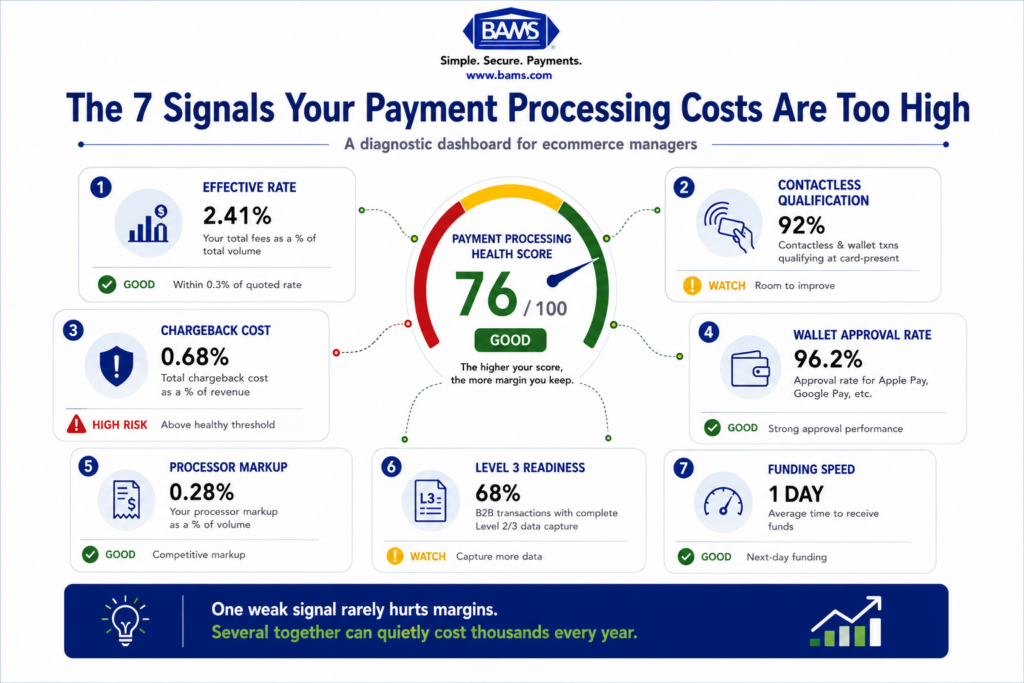
Anti-patterns: Don’t assume authorization uplift happens automatically. Don’t ignore declined tokenized transactions; they often indicate a configuration issue rather than a genuine risk signal. Don’t overlook the cost impact: higher approval rates on the same traffic volume is direct revenue recovery. If your processing fees seem high relative to your approval rates, this is one area worth investigating.
Success indicators: Your tokenized transaction approval rate is measurably higher than your non-tokenized rate. You can confirm that cryptograms are being passed in authorization requests.
Step 6: Establish Ongoing Monitoring and Reporting
Objective: Create a sustainable cadence for tracking how mobile wallet growth affects your revenue protection metrics over time.
Set up a monthly review that tracks four metrics segmented by payment method (traditional card vs. mobile wallet): authorization rate, chargeback rate, dispute win rate, and reconciliation exception rate (the percentage of transactions requiring manual matching). Tracking these by payment method reveals whether your mobile wallet segment is performing differently from your overall portfolio.
Build a simple dashboard or spreadsheet that trends these metrics month over month. You’re looking for divergence. If your overall chargeback rate is stable but your mobile wallet chargeback rate is climbing, you have a targeted problem. If your reconciliation exception rate on tokenized transactions is growing, your systems aren’t keeping pace with your volume shift.
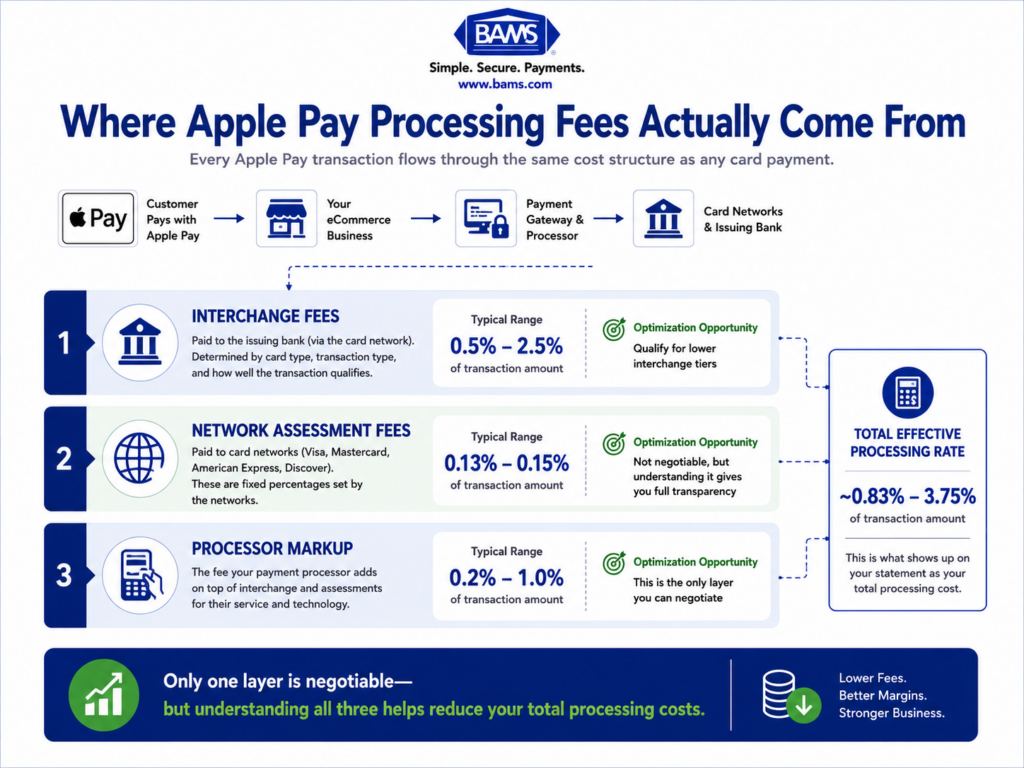
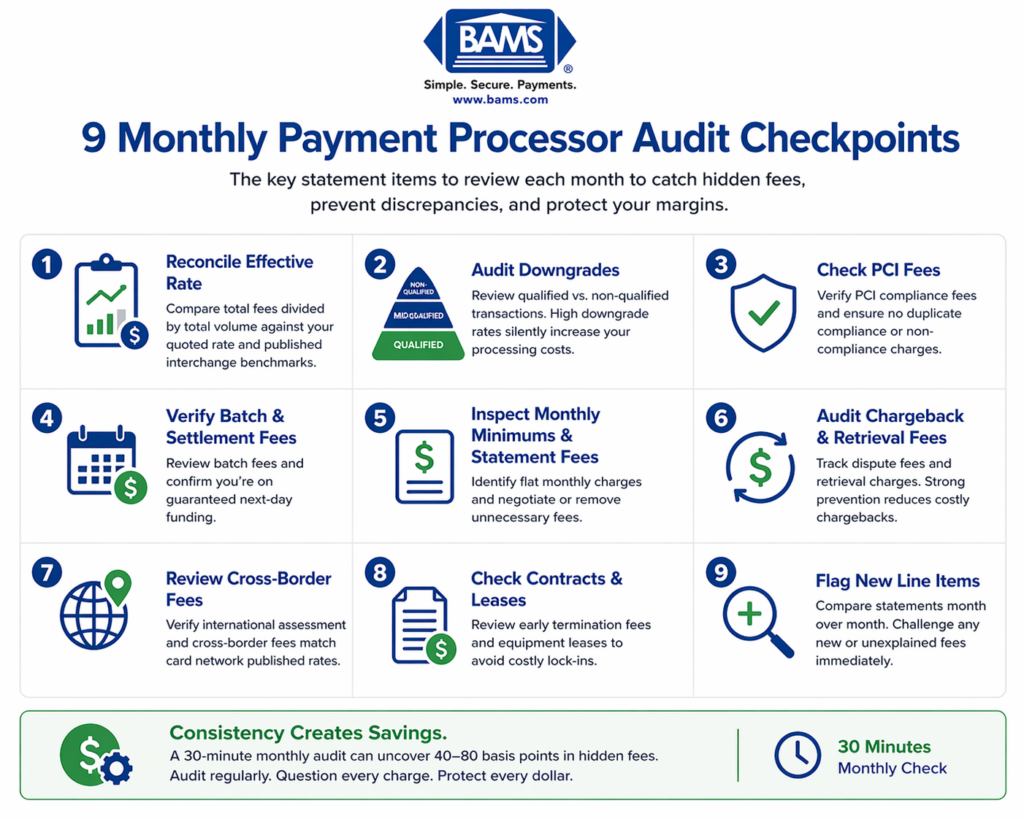
Share this report with your processor or merchant services partner. A good partner will use this data to help you adjust interchange qualification, identify configuration issues, and flag emerging risk patterns. If your processor doesn’t engage with this level of detail, that itself is a signal worth noting.
Anti-patterns: Don’t monitor mobile wallet metrics only when a problem surfaces. By then, you’ve already lost revenue. Don’t aggregate all payment methods into a single metric; the whole point is segmentation.
Success indicators: You have at least three months of trended data segmented by payment method. You can identify whether mobile wallet transactions are outperforming or underperforming your portfolio averages on each key metric.
Practical Examples: What This Looks Like in Real Operations
Scenario 1: The Unmatched Chargeback
A customer buys a $180 pair of shoes using Apple Pay on your Shopify store. Three weeks later, a chargeback arrives. Your support team searches for the last four digits of the card referenced in the dispute notification. No match. The digits belong to the DAN, not the customer’s actual Visa card. The team spends 40 minutes searching before realizing the mismatch. By the time they locate the order using the gateway transaction ID, they’ve burned time and nearly missed the response deadline.
The fix: After Step 3, this team stores the DAN alongside the order record at checkout. When the dispute arrives, the DAN search returns the order in seconds. The evidence package includes the DAN, the order ID, delivery confirmation, and the customer’s email, all submitted within 48 hours.
Scenario 2: The Invisible Fraud Cluster
A fraudster obtains stolen card credentials and loads them into Apple Pay on three different iPhones. Each device generates a unique DAN. The fraudster places three orders, each for $95, each shipping to a different address in the same ZIP code. Your fraud rules check for repeated card numbers and find nothing. Each DAN appears only once. The orders ship.
The fix: After Step 4, your fraud rules flag orders with shipping addresses in the same ZIP code placed within a two-hour window, regardless of card number. The cluster is caught during manual review before fulfillment.
Scenario 3: The Authorization Rate Mystery
An eCommerce manager notices that Apple Pay transactions are declining at a higher rate than traditional card transactions, the opposite of what industry data predicts. After investigation, the gateway is stripping the Apple Pay cryptogram during authorization because of an outdated integration. Issuers see a token without its cryptographic proof and treat it as higher risk. Once the gateway configuration is updated, the approval rate on Apple Pay transactions jumps by 8 percentage points, recovering thousands in monthly revenue that was being silently lost to false declines.
Common Mistakes and Pitfalls
Treating tokenization as a “set and forget” security upgrade. Tokenization changes your data environment permanently. If you don’t adjust your processes, the security benefits come with operational costs that compound over time.
Assuming Apple Pay chargebacks are rare. Lower fraud rates do not mean lower dispute rates. Friendly fraud, service disputes, and authorization issues still generate chargebacks. The difference is that the data in those chargebacks is harder to work with.
Relying on card-last-four as a universal identifier. This is the single most common failure point. The last four digits of a DAN are not the last four digits of the customer’s card. Every system that uses card-last-four for matching (support lookups, refund searches, CRM records) will break on tokenized transactions.
Ignoring authorization rate differences by payment method. If you don’t segment your approval rates, you can’t tell whether a configuration issue is silently costing you revenue on your fastest-growing payment channel.
Waiting for your processor to flag problems. Many processors don’t proactively surface tokenization-related issues. You need to ask the right questions and monitor the right metrics yourself, or work with a partner like BAMS that offers proactive support and faster funding designed for merchants who want visibility, not just connectivity.
What to Do Next
Start with Step 1. Pull your last 90 days of transaction data and calculate your mobile wallet mix. That single number tells you how urgent everything else in this guide is. If mobile wallets represent less than 5% of your transactions, you have time to build the right processes before volume grows. If you’re already above 15%, the reconciliation and dispute gaps described here are likely already affecting your revenue.
Then pick the step that addresses your most immediate pain point. If chargebacks are the problem, go to Step 3. If you suspect you’re losing revenue to false declines, go to Step 5. You don’t need to implement all six steps simultaneously.
Revisit this guide quarterly as your mobile wallet share shifts. The adoption curve for Apple Pay and similar wallets is still accelerating, and the operational adjustments you make today will need refinement as tokenized transactions become the majority of your volume rather than the minority. Treat this as a living reference, not a one-time checklist.
Frequently Asked Questions
What is a Device Account Number and why does it matter for my business?
A Device Account Number (DAN) is a unique number generated when a customer adds their card to Apple Pay or another mobile wallet. It replaces the customer’s real card number for every transaction. It matters because your processor, gateway, and dashboard all see the DAN instead of the actual card, which changes how you search for transactions, match chargebacks, and detect fraud patterns.
Does Apple Pay reduce chargebacks for merchants?
Apple Pay reduces unauthorized fraud significantly (its fraud rate is approximately 60% lower than traditional card transactions), but it does not reduce all types of chargebacks. Friendly fraud, service disputes, and “item not received” claims still occur at normal rates. The difference is that the transaction data in those disputes references a DAN, making them harder to match and respond to if your workflows aren’t adapted.
Why can’t I find an Apple Pay transaction when a customer disputes it?
The dispute notification from your acquirer references the Device Account Number, not the customer’s actual card number. If your support team searches by the last four digits of the card shown in the dispute, they won’t find a match because those digits belong to the DAN. To fix this, store the DAN or gateway transaction ID as a searchable field on every order record.
How does tokenization affect my authorization rates?
Tokenized transactions generally authorize at higher rates because issuers trust the cryptographic proof that accompanies the token. Industry data shows approval rate improvements of 4-10 percentage points on tokenized transactions. However, if your gateway isn’t passing the full token context (including the cryptogram), you may not see this uplift. Check with your processor to confirm your configuration.
Should I disable fraud rules for Apple Pay transactions since tokenization prevents fraud?
No. Tokenization prevents certain types of fraud (like card-not-present skimming), but it doesn’t stop all fraud vectors. A stolen card loaded into Apple Pay on multiple devices generates multiple DANs, which can bypass card-number-based velocity checks. You need fraud rules based on device-independent signals like shipping address patterns, email domains, and order behavior.
How do I know if my mobile wallet transaction volume is large enough to worry about?
Pull 90 days of transaction data from your processor and calculate the percentage of total transactions and total revenue from mobile wallets. If it’s above 10-15%, the reconciliation and dispute gaps described in this guide are likely already affecting your operations. Even below that threshold, building the right processes now prevents problems as adoption continues to grow.