7 Fraud Signals Hiding in Digital Wallet Transactions
The transaction-level data points your processor can still surface—and how to act on them before chargebacks hit
Learn which fraud signals survive tokenization in Apple Pay and Google Pay transactions. This diagnostic guide shows ecCmmerce managers the specific data points processors still expose and how to use them to catch suspicious orders.
TL;DR
- Tokenization hides fraud signals, not fraud itself – Digital wallets replace card numbers with Device Account Numbers, which makes transactions look clean individually but obscures patterns like multiple devices using the same stolen card.
- Your processor has data it is not showing you – DAN-to-PAN mapping, provisioning timestamps, and biometric authentication indicators all exist in your transaction data but are rarely surfaced in default merchant dashboards. Ask for them.
- AVS is unreliable for wallet payments – Tokenized transactions often return partial or no AVS matches even on legitimate orders, which leads merchants to loosen rules that fraudsters then exploit. Cross-reference shipping addresses against order history instead.
- Wallet chargebacks require different evidence – Standard card-not-present dispute templates often fail for wallet transactions because they lack token authentication proof and device binding data. Audit your wallet chargeback win rate and update your evidence packages.
- Start with three signals – DAN velocity, biometric authentication filtering, and chargeback reason code auditing offer the highest impact with the least technical lift for eCommerce teams without dedicated fraud staff.
The Fraud Signals Hiding Inside Your Digital Wallet Transactions
Digital wallets now account for a massive share of online payments. Over an estimate of 5 billion people globally use them, and 73% of eCommerce merchants accept them. That adoption curve is good for conversion rates. It is not automatically good for fraud prevention.
Here is the problem most eCommerce managers face: tokenization replaces your customer’s real card number with a Device Account Number (DAN), which makes the transaction more secure in transit. But it also strips away several data points you previously relied on to spot suspicious orders. The card’s BIN, the cardholder name match, the raw PAN you used to cross-reference past chargebacks: all obscured or gone.
The result is a growing category of fraud patterns that look clean on the surface but cost you revenue through chargebacks you did not see coming. This guide is about fixing that blind spot.
What This List Covers (and What It Does Not)
This is for eCommerce managers at established online businesses running 10 to 50 employees, processing enough volume that a spike in Apple Pay or Google Pay chargebacks hits your cash flow within days. You do not need a primer on how tokenization works. You need to know which transaction-level signals still exist and how to act on them before disputes drain your margin.
This list excludes enterprise-grade machine learning deployments and card network policy deep-dives. Instead, it focuses on the diagnostic signals your processor can surface and the operational responses you can implement now.
How These Signals Were Selected
Each signal below meets three criteria: it is accessible through standard processor reporting or gateway data (not requiring custom API builds), it is actionable at the merchant-operator level without a dedicated fraud team, and it has a documented connection to chargeback outcomes in digital wallet transactions. Priority goes to signals that are commonly overlooked because tokenization appears to handle security on its own.
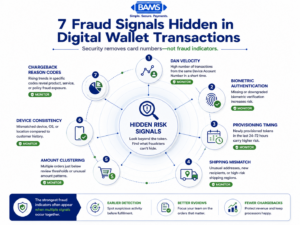
Tokenization improves payment security, but fraud signals still exist. Merchants who recognize these hidden indicators can identify suspicious transactions earlier and strengthen chargeback prevention.
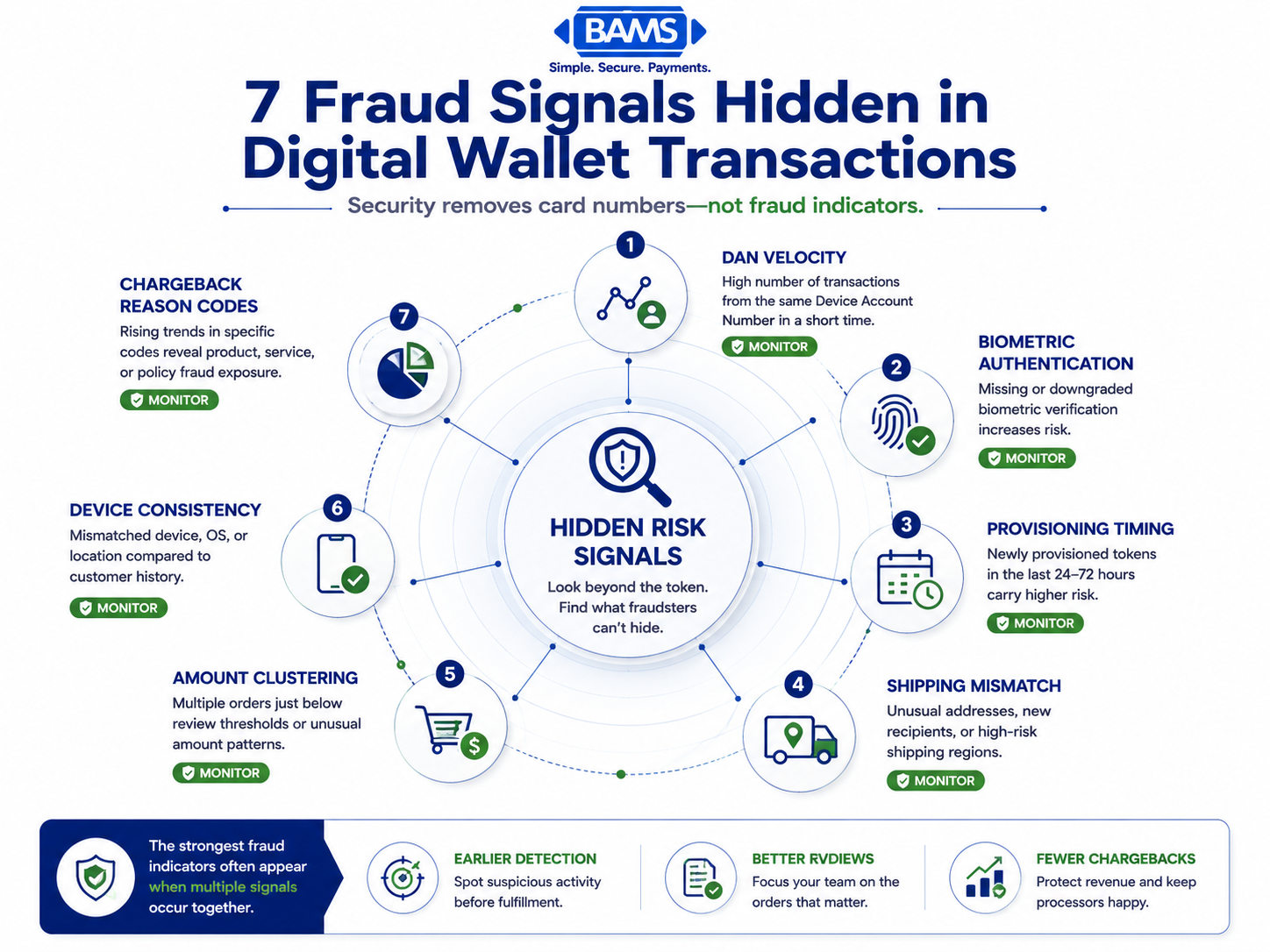
7 Fraud Signals Your Digital Wallets Obscure and How to Surface Them
1. Device Account Number (DAN) Velocity
Why it matters: When a stolen card is provisioned into a digital wallet, the token (DAN) is unique to that device. But fraudsters often provision the same stolen card across multiple devices, generating multiple DANs tied to one underlying PAN. Standard reporting shows each DAN as a separate, clean-looking transaction. You never see the pattern unless you ask for it.
Apple’s official Apple Pay documentation explains how tokenization and device-based authentication work together to protect payment credentials during wallet transactions.
What it looks like today: Your gateway logs show five orders from five different “customers,” each using Apple Pay, each with a unique token. Behind the scenes, all five tokens map to the same funding PAN. Your processor has this mapping. Most do not surface it by default.
How to apply it: Request a report from your processor that groups transactions by underlying PAN, not just by token. Flag any PAN with three or more unique DANs within a 30-day window. Review those orders manually before fulfillment.
2. Biometric Authentication Indicator
Why it matters: Apple Pay requires biometric verification (Face ID, Touch ID) for each transaction. Google Pay does not always enforce the same standard. Fraud analysts Vito Petruzzelli and Gena Rivera have noted that “Google Pay allows stolen card provisioning without the strict biometric verification required by Apple Pay,” and merchants have observed around a 6x spike in bad orders using Google Pay compared to normal rates over a 90-day period. The authentication method matters, and it is available in the transaction data.
Mastercard Developers documents how digital wallet transactions include authentication and tokenization data that processors can use to help validate payment credentials and transaction integrity.
What it looks like today: Your transaction records include a cryptogram type or authentication indicator field that tells you whether biometric, passcode, or no device-level authentication was used. Most merchants never check this field.
How to apply it: Filter your wallet transactions by authentication method. Apply stricter review thresholds (lower dollar limits before manual review, additional identity verification) to orders where biometric authentication was absent. This is especially critical for high-AOV products.
3. Provisioning Timestamp vs. First Transaction Gap
Why it matters: A legitimate customer provisions their card into Apple Pay or Google Pay and then uses it over weeks or months. A fraudster provisions a stolen card and transacts within minutes or hours. The gap between when the token was created and when it was first used at your store is a strong fraud indicator that most merchants ignore.
What it looks like today: This data lives in the token metadata your processor receives from the card network. It is not typically displayed in your merchant dashboard, but it can be requested or surfaced through enhanced reporting.
How to apply it: Ask your processor if they can flag or filter transactions where the token provisioning date is less than 24 hours before the purchase. Treat these as elevated-risk and apply your existing review workflow. A card provisioned at 2 AM and used at your store at 2:47 AM deserves scrutiny.
4. Shipping-to-Billing Mismatch in Tokenized Transactions
Why it matters: Tokenization obscures the cardholder’s billing address from your standard AVS (Address Verification System) check. In many digital wallet transactions, AVS returns a partial match or no match because the wallet stores a billing address that may not sync with the issuer’s records the same way a manually typed address does. This makes your existing AVS rules unreliable for wallet payments.
What it looks like today: You see AVS results of “N” (no match) or “U” (unavailable) on wallet transactions that are actually legitimate, so you loosen your AVS rules. Fraudsters exploit that loosened threshold.
How to apply it: Instead of relying on AVS alone for wallet transactions, cross-reference the shipping address against your order history database. A new shipping address on a tokenized payment with no prior order history at that address is a stronger signal than AVS for wallet-based fraud. Build a simple internal flag for this combination.
5. Transaction Amount Clustering
Why it matters: Fraudsters testing stolen cards through digital wallets often place orders in tight dollar-amount clusters, staying just below your review threshold. Because each transaction uses a unique token, your system treats them as unrelated. The clustering pattern disappears when you look at transactions individually but becomes obvious when you view them in aggregate.
What it looks like today: Ten orders between $89 and $94 from different wallet tokens in a single afternoon. Each passes your fraud filters. Combined, they represent a coordinated test. 269 million card records were posted on dark web platforms in 2024, meaning the supply of cards available for this kind of testing is enormous.
How to apply it: Set up a daily report that groups wallet transactions by dollar-amount bands (e.g., $5 increments). Look for unusual concentration in any single band. If you see clustering, cross-reference with the DAN velocity check from Signal #1 to determine if the same underlying PAN is involved.
6. Device and Session Fingerprint Consistency
Why it matters: A digital wallet transaction tells you the payment was authenticated on a device. It does not tell you whether the browsing session, the device fingerprint, and the wallet device are consistent. A fraudster might browse your site on a desktop, add items to a cart, and then complete checkout using a provisioned wallet on a different device entirely. That session handoff is a red flag your payment data alone will not catch.
What it looks like today: Your analytics show a session originating on Chrome/Windows, but the payment method is Apple Pay (which requires an Apple device). This inconsistency is logged in your site analytics and your payment gateway separately. Few merchants connect these two data streams.
How to apply it: Compare the device/browser from your site analytics or session tracking tool against the wallet type used at checkout. Flag orders where the browsing device ecosystem (Windows, Android) does not match the wallet ecosystem (Apple Pay). This check takes minutes to set up as a manual spot-check and can be automated with most analytics platforms.
7. Chargeback Reason Code Shifts
Why it matters: When digital wallet chargebacks hit, they often arrive under different reason codes than traditional card-not-present disputes. Tokenized transactions shift liability in ways that change which reason codes apply, and merchants who built their chargeback defense playbook around standard CNP codes find their response templates rejected.
Compromised digital wallets create different dispute patterns than traditional card-not-present fraud because tokenized payment credentials and device authentication change the evidence available during representment. PCI Security Standards Council guidance explains how tokenization protects payment credentials while still requiring merchants to maintain strong operational evidence for dispute resolution.
What it looks like today: You receive a chargeback coded as “unauthorized transaction” on an Apple Pay order. Your standard response includes AVS match data and IP geolocation. But the issuer rejects your evidence because the token-level authentication data (biometric confirmation, device binding) was not included. You lose the dispute by default.
How to apply it: Audit your last 90 days of wallet-specific chargebacks. Categorize them by reason code and win/loss rate. If your win rate on wallet chargebacks is significantly lower than on standard card disputes, your evidence package needs updating. Work with your processor to include token authentication proof, device binding confirmation, and cryptogram validation in your dispute responses. A merchant services partner like BAMS, which offers proactive chargeback defense and dedicated account management, can help you restructure your evidence packages specifically for wallet-based disputes and flag these patterns before they escalate.
The Pattern Across These Signals: Transaction Analysis Requires a New Lens
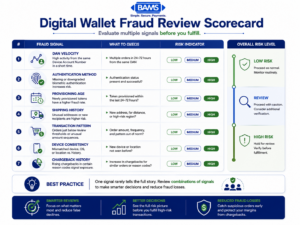
One fraud signal rarely tells the full story. A structured review process helps merchants evaluate multiple risk indicators before fulfillment.
Every signal above shares a common thread: tokenization solved one security problem (card number exposure) while creating a new diagnostic problem (data fragmentation). The fraud signals still exist. They are just scattered across different systems: your processor’s token vault, your gateway logs, your site analytics, and your chargeback management workflow.
The merchants who protect revenue are not the ones with the most sophisticated fraud tools. They are the ones who reconnect these fragmented data points into a coherent picture. That means asking your processor for data they have but do not display by default. It means cross-referencing payment data with session data. And it means updating your chargeback defense to reflect how wallet disputes actually work, not how card-not-present disputes worked three years ago.
The tradeoff is real: tighter fraud controls add friction. But the cost of undetected wallet fraud (chargebacks, lost merchandise, processor risk flags) compounds faster than the cost of a few additional manual reviews.
Where to Start: Prioritizing for Your Team
You do not need to implement all seven signals at once. Start with three: DAN velocity (Signal #1), biometric authentication filtering (Signal #2), and chargeback reason code auditing (Signal #7). These three require the least technical lift and surface the highest-impact patterns. Signals #1 and #2 depend primarily on data your processor already has. Signal #7 requires only a spreadsheet and 90 days of chargeback records.
Once those are in place, layer in session fingerprint checks (Signal #6) and provisioning timestamp analysis (Signal #3) as your review capacity allows. The goal is not to build a fraud department. It is to make your existing workflow literate in the specific ways digital wallet transactions differ from standard card payments.
Frequently Asked Questions
Why do Apple Pay transactions seem secure but still result in chargebacks?
Apple Pay uses tokenization and biometric authentication, which reduce the risk of card number theft during transit. However, chargebacks can still occur from friendly fraud (customers disputing legitimate purchases), from cards that were stolen before being provisioned into a wallet, or from merchants submitting incomplete evidence during disputes. The security of the transaction does not eliminate the security of the card provisioning process or the dispute process.
What is a Device Account Number (DAN) and why should merchants care about it?
A DAN is the token that replaces your customer’s actual card number inside their digital wallet. Each device gets a unique DAN, even if the underlying card is the same. Merchants should care because fraudsters can provision one stolen card across multiple devices, creating multiple DANs that appear unrelated. Tracking DAN velocity through your processor helps you spot this pattern.
How does digital wallet fraud differ from traditional card-not-present fraud?
Traditional CNP fraud relies on stolen card numbers used directly in online forms. Digital wallet fraud involves stolen cards provisioned into wallets, which then generate tokens that pass standard fraud checks. The key difference is that wallet fraud often bypasses AVS checks, hides behind device-level authentication, and produces chargebacks under different reason codes that require different evidence to dispute.
Can small eCommerce businesses realistically detect wallet fraud without a dedicated fraud team?
Yes. The signals outlined here (DAN velocity, biometric indicators, provisioning timestamps, amount clustering) are accessible through standard processor reporting and basic analytics tools. You do not need machine learning or a fraud department. You need to ask your processor for the right data fields and build simple review triggers using spreadsheets or your existing order management system.
Should merchants treat Apple Pay and Google Pay transactions with the same fraud scrutiny?
No. Apple Pay enforces biometric authentication for each transaction, while Google Pay’s authentication requirements vary and can be less strict. Fraud analysts have documented significantly higher bad-order rates on Google Pay compared to Apple Pay. Merchants should apply tighter review thresholds to non-biometric wallet transactions and use the authentication indicator field in their transaction data to differentiate.
How do I update my chargeback defense for digital wallet disputes?
Start by auditing your wallet-specific chargebacks from the last 90 days. Compare your win rate on wallet disputes versus standard card disputes. If wallet win rates are lower, your evidence packages likely lack token-level data such as biometric confirmation, device binding proof, and cryptogram validation. Work with your processor to include this data, or partner with a merchant services provider that offers proactive chargeback defense tailored to wallet transactions.