7 Customer Retention Methods That Prevent Chargebacks
Last Updated on June 4, 2026 by Dimitri Akhrin
How payment security enhancements build loyalty and protect your revenue from costly disputes
Learn customer retention methods that reduce chargebacks and build trust. This guide covers payment security enhancements that keep customers returning while protecting your bottom line.
TL;DR
- Billing descriptors matter – Customers dispute charges they don’t recognize. Update your descriptor to show your brand name, not your corporate entity.
- Proactive communication prevents disputes – Automated order confirmations, shipping updates, and delivery notifications eliminate the uncertainty that leads to chargebacks and lost customers.
- Checkout clarity builds trust – Display total costs, delivery estimates, and return policies before payment. Confusion at checkout becomes disputes weeks later.
- Make refunds easier than chargebacks – Responsive support with empowered agents intercepts problems before they become formal disputes. The refund usually costs less than the chargeback.
- Start with three changes – Audit your billing descriptor, review your post-purchase emails, and establish support SLAs. These address the most common chargeback causes with manageable effort.
Why Customer Retention Costs You Less Than You Think (And Chargebacks Cost More)
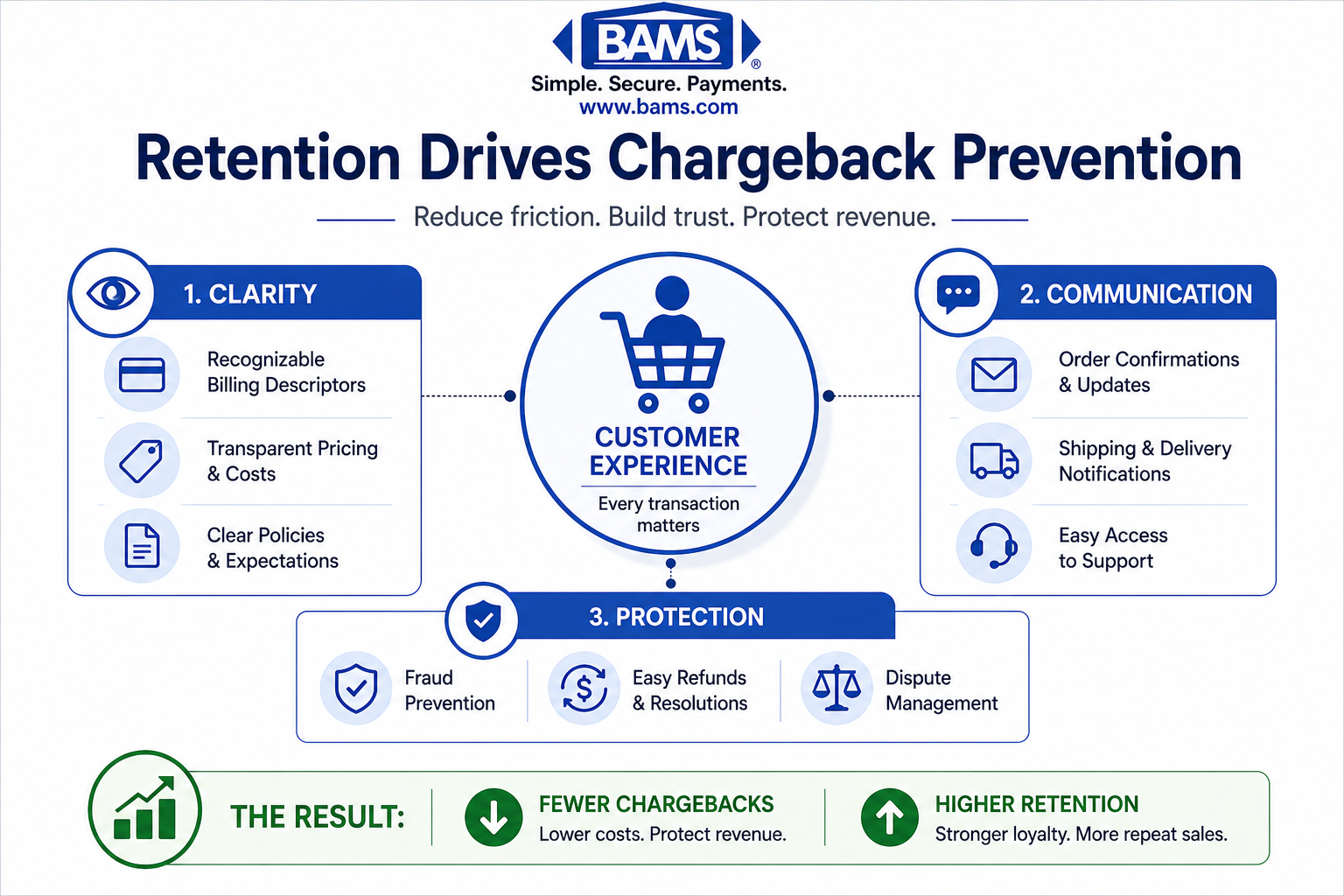
Customer retention and chargeback prevention are driven by the same foundation: clear communication, transparent experiences, and proactive protection.
E-commerce businesses in 2025 face a frustrating paradox. You spend significant budget acquiring customers, only to lose them through preventable friction points: unclear billing descriptors, delayed refunds, or payment disputes that could have been resolved with a single email.
Effective customer retention methods and chargeback prevention strategies share the same foundation: reducing friction, building trust, and making every transaction feel secure. When customers trust your payment process, they return. When they dispute charges, you lose twice.
Customer disputes often stem from unclear or unrecognized transactions, making proactive communication and transparency more effective than reactive dispute handling as outlined by Visa.
What This Guide Covers (And What It Doesn’t)
This guide targets e-commerce managers at established businesses handling meaningful transaction volume. You already have customers. The question is how to keep them while protecting your revenue from disputes.
We focus specifically on retention strategies that intersect with payment security enhancements. You won’t find generic advice about loyalty points or email subject lines. Instead, you’ll find tactical approaches that address the payment-related reasons customers leave or dispute charges.
Each strategy was selected based on three criteria: measurable impact on retention or dispute rates, implementation feasibility for teams of 10-50 employees, and durability across changing payment technologies.
7 Customer Retention Methods That Prevent Chargebacks
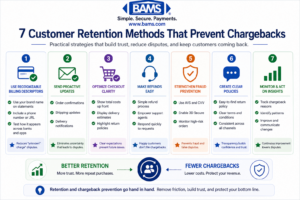
Seven practical customer retention methods that reduce disputes, build trust, and keep customers coming back.
1. Implement Recognizable Billing Descriptors
Why it matters: A significant percentage of chargebacks stem from customers not recognizing charges on their statements. They see “XYZ Holdings LLC” instead of your brand name and assume fraud. This triggers a dispute that could have been prevented with a simple descriptor change.
What it looks like today: Modern payment processors allow dynamic descriptors that include your brand name, website URL, or even order details. Some processors support soft descriptors that show additional context in online banking apps.
How to apply it: Audit your current billing descriptor across all payment methods. Test how it appears on major card networks and banking apps. Update to include your customer-facing brand name and a phone number or URL. This single change can reduce “friendly fraud” disputes by double digits while making customers feel more secure about future purchases.
2. Deploy Proactive Order Confirmation and Shipping Communication
Why it matters: Customers dispute charges when they feel uncertain. Did my order go through? When will it arrive? Is this charge legitimate? Proactive customer success outreach boosts retention because it eliminates the anxiety that leads to both disputes and abandoned relationships.
What it looks like today: Automated email sequences triggered by order status changes, SMS notifications for shipping updates, and self-service order tracking portals. A lot of marketers use email as their primary retention channel for good reason.
How to apply it: Map every post-purchase touchpoint where customers might feel uncertain. Create automated communications for order confirmation, payment processing, shipping, delivery, and follow-up. Include clear return instructions and support contact information in every message. This reduces “item not received” disputes while building the trust that drives repeat purchases.
3. Optimize Checkout UX to Set Clear Expectations
Why it matters: Confusion at checkout creates problems that surface weeks later as chargebacks or lost customers. Unclear shipping timelines, hidden fees, or ambiguous return policies all plant seeds of distrust.
What it looks like today: Transparent pricing displayed before payment submission, clear delivery estimates, visible return and refund policies, and multiple payment options including guest checkout. Digital wallet payments like Apple Pay and Google Pay add biometric security that customers increasingly expect. Card payments include interchange fees, network assessments, and processing costs, which together determine the financial impact of disputes on merchants as outlined by the Federal Reserve.
How to apply it: Review your checkout flow as if you were a first-time customer. Identify every point where expectations could be misaligned. Display total costs including shipping and taxes early. Show estimated delivery dates prominently. Link to your return policy before payment confirmation. These adjustments prevent the “not as described” disputes that damage both revenue and relationships.
4. Build a Responsive Pre-Dispute Resolution System
Why it matters: Most customers who file chargebacks tried to contact you first. They called, emailed, or used chat, and either couldn’t reach anyone or didn’t get a satisfactory response. A responsive support system intercepts disputes before they become chargebacks, preserving both the transaction and the customer relationship.
What it looks like today: Multi-channel support with clear response time commitments, empowered frontline agents who can issue refunds without escalation, and a responsive support system combined with chargeback defense solutions helps intercept disputes early and resolve issues before they escalate into formal chargebacks.
How to apply it: Establish clear SLAs for support response times across all channels. Train support staff to prioritize potential dispute situations. Implement a policy that makes refunds easier than chargebacks for customers. Consider the lifetime value of a retained customer against the cost of a single refund. Most of the time, the refund is the better investment.
5. Implement Fraud Prevention That Doesn’t Punish Legitimate Customers
Why it matters: Aggressive fraud prevention that declines legitimate transactions damages retention as much as actual fraud. Customers who get declined once rarely try again. The goal is fraud protection measures that catch bad actors while approving good customers quickly.
What it looks like today: Machine learning fraud scoring that adapts to your customer patterns, velocity checks that flag unusual behavior without blanket blocks, and identity verification techniques like AVS and CVV matching that add security without friction. Authorization rate improvement has become a key metric alongside fraud prevention.
How to apply it: Monitor your decline rate alongside your fraud rate. If you’re declining more than 5-10% of transactions, your fraud rules may be too aggressive. Review declined transactions to identify false positives. Implement step-up authentication for borderline cases rather than outright declines. A customer who successfully completes verification becomes more loyal, not less.
6. Create Transparent Subscription and Recurring Payment Management
Why it matters: Subscription chargebacks are among the most common and most preventable disputes. Customers forget they signed up, can’t find how to cancel, or don’t recognize recurring charges. These disputes destroy customer lifetime value and often indicate systemic problems with your subscription UX.
What it looks like today: Self-service subscription management portals, clear renewal notifications before charges, easy cancellation processes, and recurring payments support that includes pause and modification options. The best retention sometimes means making it easy to leave, because customers who feel trapped become hostile.
How to apply it: Send renewal reminders 7-14 days before each charge. Make cancellation as easy as signup. Offer pause options for customers considering cancellation. Include subscription details in billing descriptors. Track cancellation reasons to identify and fix upstream problems. Customers who can easily manage their subscriptions trust you more and stay longer.
7. Leverage Transaction Data for Personalized Retention Outreach
Why it matters: Most marketers use social media for retention, but the most effective retention outreach is personalized based on actual purchase behavior. An integrated payment gateway provides the reporting and transaction visibility needed to identify churn risks, failed payments, and dispute patterns in real time.
What it looks like today: Integrated payment and marketing data, triggered campaigns based on purchase recency and frequency, and loyalty programs that increase retention when tied to actual transaction history. The best systems connect payment data to customer communication platforms automatically. Modern payment infrastructure improves transaction visibility and response timing, enabling businesses to identify issues earlier and reduce dispute risk according to Modern Treasury.
How to apply it: Identify your average purchase cycle and create re-engagement campaigns triggered by inactivity. Segment customers by purchase value and frequency to prioritize retention efforts. Use transaction data to personalize offers based on actual purchase history rather than assumed preferences. Connect your payment processor’s reporting tools to your marketing platform for automated data flow.
The Pattern: Trust Reduces Friction Everywhere
These seven strategies share a common thread: they build trust through transparency and reduce friction through proactive communication. Customers who trust your payment process don’t dispute charges. Customers who feel informed don’t abandon carts. Customers who can easily resolve issues don’t leave negative reviews.
The tradeoff worth noting is that some of these strategies require upfront investment in systems and processes. Better billing descriptors require processor coordination. Proactive communication requires automation setup. Fraud prevention tuning requires ongoing attention.
But each investment pays dividends across multiple metrics simultaneously. Better descriptors reduce chargebacks AND improve customer confidence. Proactive communication prevents disputes AND drives repeat purchases. The strategies compound because they address root causes rather than symptoms.
Where to Start: A Realistic Implementation Path
Don’t attempt all seven strategies simultaneously. Start with the highest-impact, lowest-effort changes: audit your billing descriptor this week, review your post-purchase email sequence next week, and examine your checkout flow the week after.
For teams managing significant transaction volume with limited resources, prioritize strategies 1, 2, and 4. These three changes address the most common chargeback causes while building the communication infrastructure that supports everything else.
If you’re already experiencing high dispute rates, understanding the chargeback process and implementing a pre-dispute resolution system should be your immediate focus. Stop the bleeding before optimizing for growth.
Frequently Asked Questions
What are the most effective chargeback prevention strategies for e-commerce?
The most effective strategies combine clear billing descriptors, proactive customer communication, and responsive support systems. Recognizable descriptors prevent “I don’t recognize this charge” disputes. Proactive shipping updates prevent “item not received” claims. Fast support resolution intercepts problems before customers contact their bank. Together, these address the root causes of most e-commerce chargebacks.
How can payment security enhancements improve customer retention?
Payment security enhancements build customer trust, which directly impacts repeat purchase rates. When customers see familiar security indicators, experience smooth fraud checks, and receive clear transaction confirmations, they feel confident buying again. The key is implementing security that protects without creating friction. Declined legitimate transactions damage retention as much as actual fraud.
Why is payment optimization important for businesses?
Payment optimization affects both immediate revenue and long-term customer relationships. Higher authorization rates mean more completed sales. Faster deposits improve cash flow for inventory and marketing. Lower processing costs improve margins. Reduced chargebacks protect revenue and customer relationships simultaneously. Each optimization compounds because payment touches every transaction.
How can I improve my payment authorization rates?
Review your fraud prevention rules for false positives, implement retry logic for soft declines, ensure your payment data is complete and accurate, and consider offering multiple payment methods. Customers blocked by one payment method may succeed with another. Monitor your decline reasons to identify patterns and adjust accordingly.
What role does fraud protection play in payment optimization?
Fraud protection must balance security against customer experience. Overly aggressive fraud rules decline legitimate customers, damaging both immediate revenue and retention. Effective fraud protection uses machine learning to adapt to your customer patterns, implements step-up authentication for borderline cases, and continuously refines rules based on actual fraud patterns rather than theoretical risks.
When should I consider expanding my payment options?
Consider expansion when you see cart abandonment at payment selection, receive customer requests for specific methods, or target demographics with strong preferences for certain payment types. Digital wallets appeal to mobile shoppers. Buy-now-pay-later options can increase average order value. International expansion often requires local payment methods. Each addition should address a specific customer need or friction point.
Sources