Three Simple Ways to Reduce Cart Abandonment
Last Updated on August 28, 2026 by Dimitri Akhrin
Reduce Cart Abandonment With a Better Checkout Experience
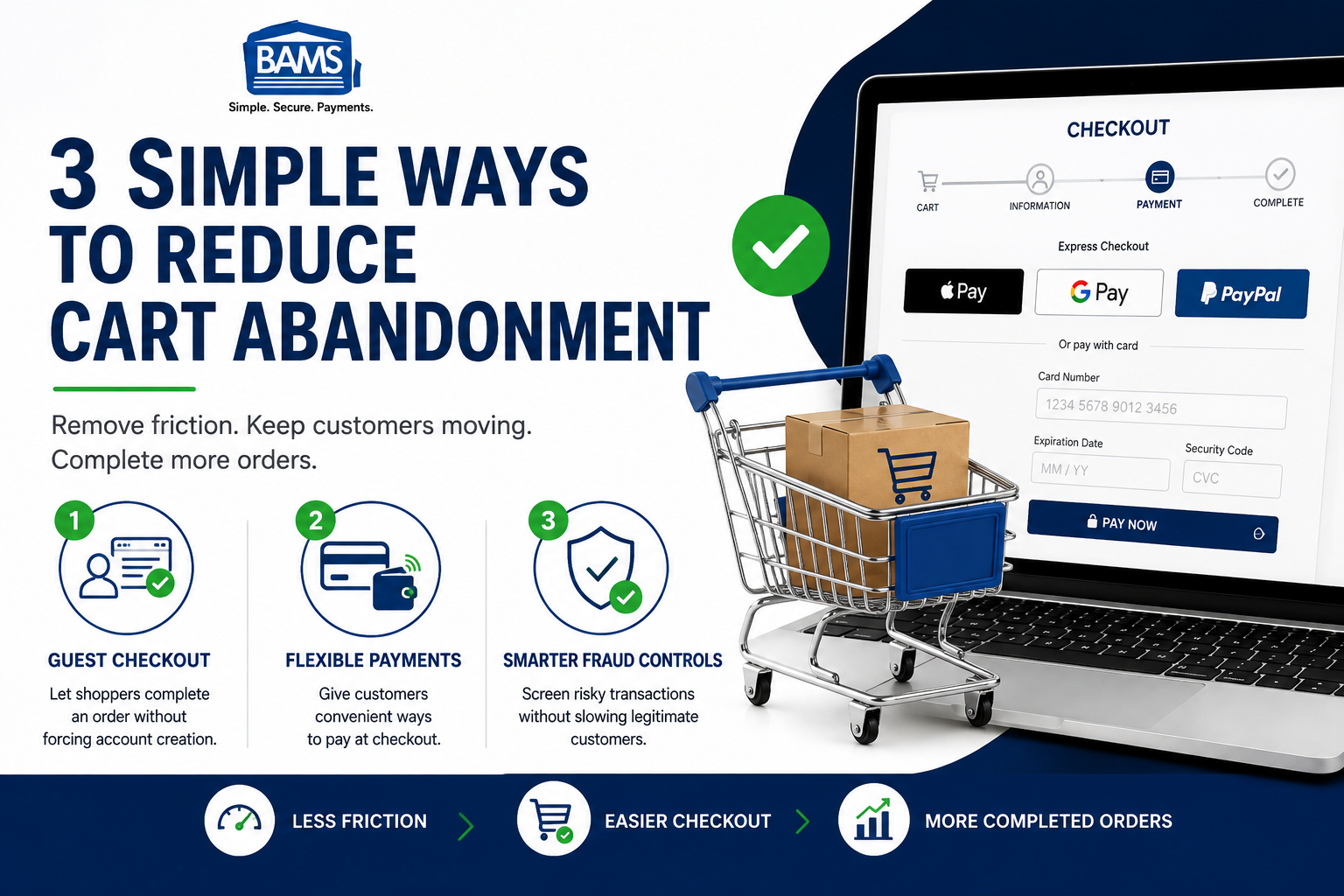
Merchants can reduce cart abandonment by making checkout faster, offering flexible payment options and using fraud controls that avoid unnecessary friction.
Online cart abandonment is one of the biggest problems plaguing eCommerce merchants, with up to 80% of all carts ditched by users before payment can be processed. The amount of money lost to cart abandonment each year is staggering, so it isn’t surprising that most merchants are constantly looking for ways to see their customers all the way through to order completion.
The following are three simple but highly effective tips that online merchants can use to minimize cart abandonment and reduce the significant impact it can have on the bottom line.
1) Offer Expedited Guest Checkout
There is nothing shoppers find more annoying than being forced to log in, or worse, create a new account to make a purchase. It’s always a good idea to offer the option of logged-in transactions because it offers an additional level of protection to the buyer and extra data to the seller, but it should never be mandatory.
Offering an expedited guest checkout that users can use to get to their carts in as little as a single click is an absolute necessity because as many as 34% of consumers say they’ve abandoned a cart due to forced account creation. Luckily, most eCommerce platforms understand how important express checkout is and it can generally be enabled easily or added with a simple plugin on platforms not offering it as a native feature.
Checkout design continues to move toward fewer manual steps. Mastercard’s one-click checkout initiative aims to make online card payments simpler, safer and faster. It uses tokenization and streamlined checkout to reduce manual card entry.
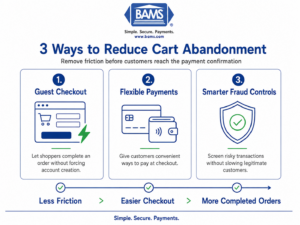
Three practical checkout improvements can help merchants reduce friction and keep more customers moving toward payment.
2) Make it Convenient to Pay
Our modern, digital world is all about convenience, which means making it convenient to check out isn’t enough; it also has to be convenient to pay. That means giving consumers the payment options they want because a customer who can’t pay through their preferred method is a huge flight risk.
Accepting major credit cards is obviously an absolute minimum and PayPal has been around so long that it’s generally a bad idea not to at least offer it (despite high fees). But today, there is a whole host of digital wallets and online payment options available that many consumers prefer over traditional payment methods. Apple Pay, Google Pay and Samsung Pay, for instance, are all important payment avenues today due to the near-complete penetration of mobile devices in the online shopping space.
Regardless of what payments a merchant chooses to offer, the key point is that the more options a consumer has, the less likely it is that a customer will abandon their cart.
Visa explains that customers expect flexible and familiar payment experiences. Businesses that do not support preferred payment methods risk losing sales at checkout.
An integrated payment gateway can help merchants connect online checkout with the payment methods their customers use.
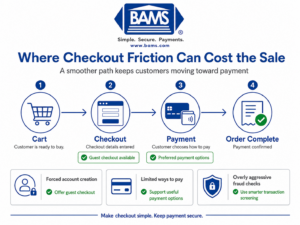
A smoother path from cart to payment can remove common reasons customers leave before completing an order.
3) Use Automation Where Possible to Protect Order Integrity
Fraud is a huge problem and while it’s important to try and put the kibosh on as many fraudulent transactions as possible, killing a legitimate transaction in the name of caution is a surefire way to lose a customer for life. For that reason, it’s a good idea for merchants to utilize advanced automation and artificial intelligence where possible to ensure that fraud gets caught, but legitimate transactions are never held up unnecessarily.
Luckily, putting AI and automation to work is a lot easier than it sounds. There are a number of services currently available to help monitor transactions and risk scoring systems, like the one offered by Signifyd, are among the best choices.
The National Retail Federation’s eCommerce risk overview identifies payment fraud, fraudulent returns and non-delivery losses as major risk areas for online retailers. Effective fraud controls should protect the transaction without adding unnecessary obstacles for legitimate customers.
Certain payment processors also offer advanced fraud protection to help automate the evaluation of transactions. BAMS, for instance, offers a complete set of fraud and chargeback defense tools, including full integration with Signifyd’s advanced risk scoring tool. For more information on how BAMS can help you mitigate fraud and minimize cart abandonment, get in touch with a member of the team or schedule a complete five-step price comparison today.
Frequently Asked Questions
What causes shoppers to leave during checkout?
Checkout friction can come from several areas. Forced account creation, limited payment choices and unnecessary transaction delays can all interrupt the purchasing process.
Should merchants offer guest checkout?
Guest checkout gives customers another way to complete a purchase without creating an account. Merchants can still offer account creation as an optional feature for customers who want it.
Why do payment options matter?
Customers often have preferred ways to pay. Supporting useful payment options can make checkout more convenient and reduce a potential reason for shoppers to leave.
Can fraud prevention interfere with legitimate orders?
Yes. Fraud controls that create too much friction can delay or block legitimate transactions. Merchants should balance fraud detection with a smooth customer experience.
How can automation help during checkout?
Automation can evaluate transaction signals quickly and help merchants identify higher-risk activity. The goal is to flag suspicious transactions while allowing legitimate customers to complete purchases without unnecessary delays.