Merchant Services: What Your Processor Knows but Won’t Share
Last Updated on October 14, 2026 by Dimitri Akhrin
Why transaction-level visibility is the difference between paying fees and actually optimizing them
Learn why pricing transparency from your processor isn’t the same as data transparency—and how that gap quietly inflates your costs. Discover what transaction-level evaluation looks like and why growth-focused eCommerce merchants should demand it.
TL;DR
- Your processor sees transaction-level detail you don’t – Summary statements show fees but hide why each transaction qualified at a specific interchange tier, obscuring real optimization opportunities.
- Commercial cards are hiding in your mix – Many eCommerce merchants unknowingly process corporate purchasing cards at higher rates because no one flags them for Level 2 or Level 3 data submission.
- Transaction-level evaluation drives real savings – Processors who actively analyze and optimize your data (not just settle batches) can reduce interchange costs and improve authorization rates by 9% to 15%.
- Ask your processor what they do with your data – If they can’t explain specific steps they take to lower your costs at the transaction level, your statement isn’t telling the whole story.
Your Processor Knows More Than You Do
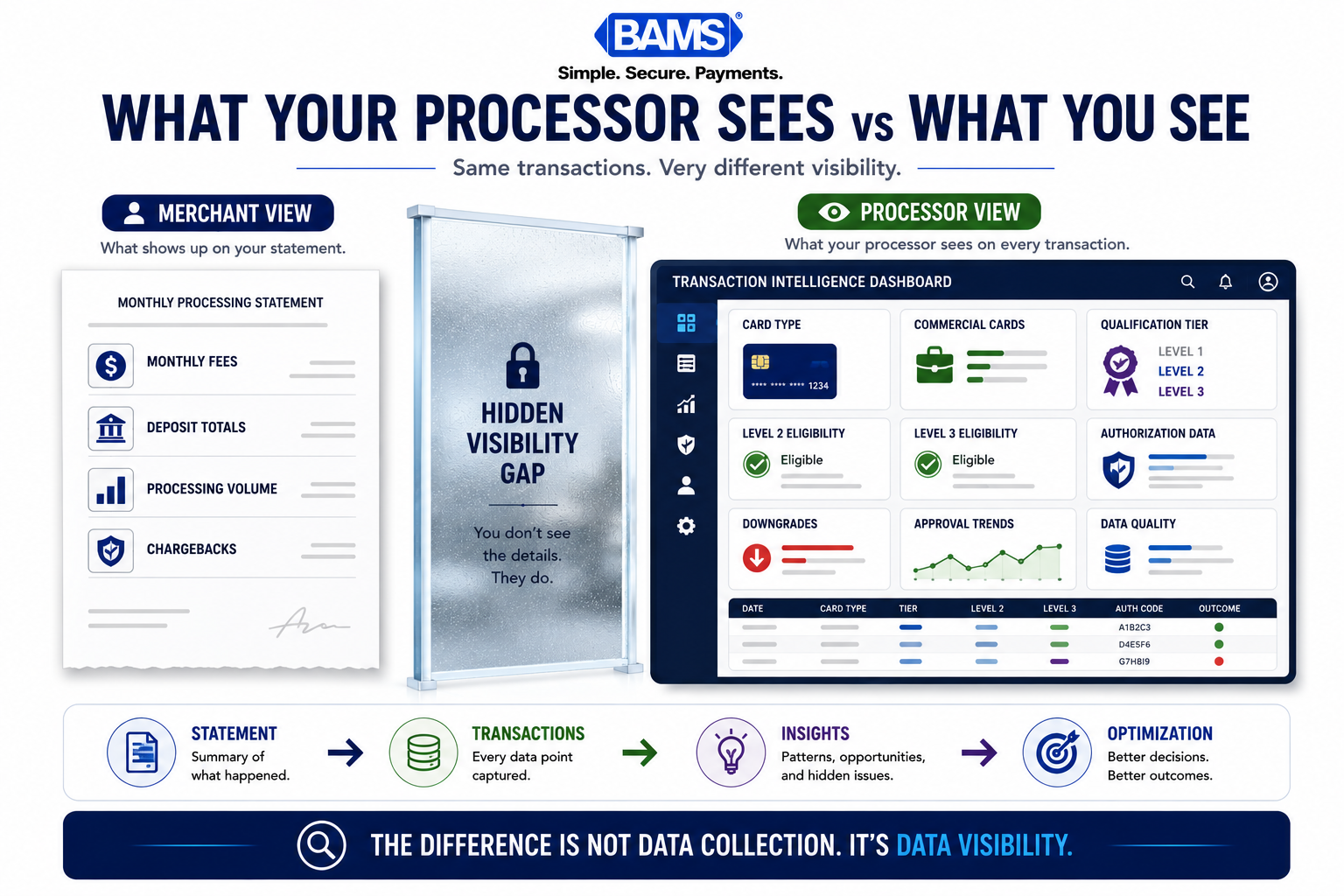
Every time a customer checks out on your site, your processor captures dozens of data fields: card type, business classification, tax amounts, item details, authorization codes. They see everything. But when your monthly processing statement arrives, most of that richness vanishes into a few summary lines and a total fee number. That gap between what your processor knows and what they share with you is where margin disappears. For eCommerce merchants serious about growth, the merchant services relationship should be a two-way mirror, not a one-way window.
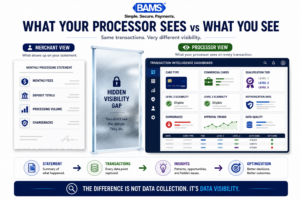
Most merchants see a statement. Processors see every transaction behind it.
The “Transparent Pricing” Illusion
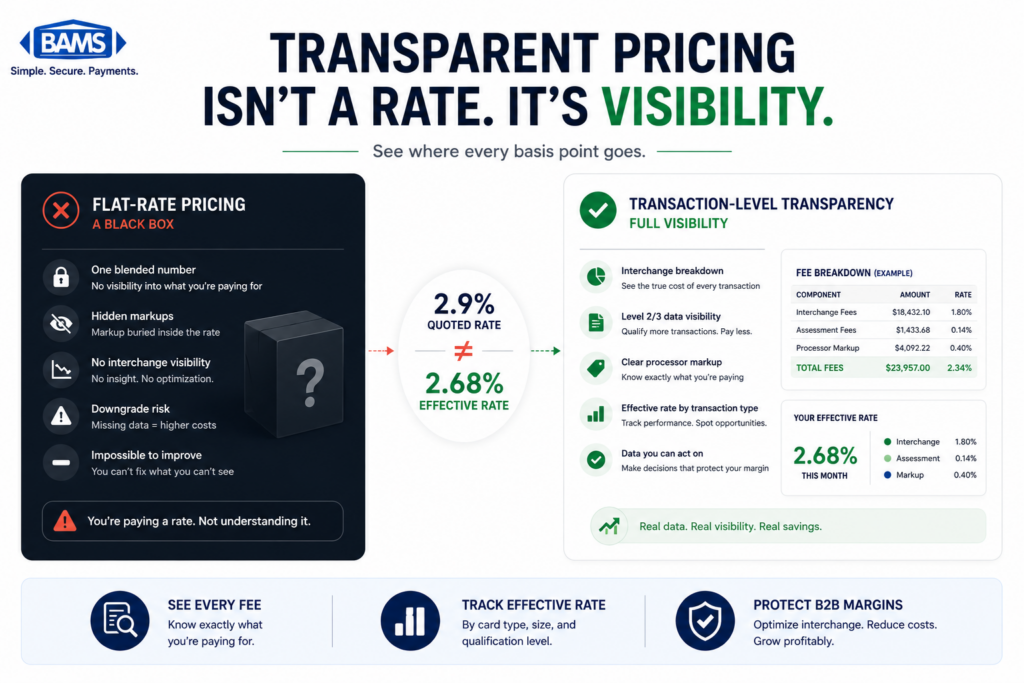
The payments industry has made real progress on pricing transparency. Interchange-plus pricing replaced bundled rates. Statements got cleaner. Processors started publishing rate tables and talking about “no hidden fees.” These were genuine improvements, and they earned trust.
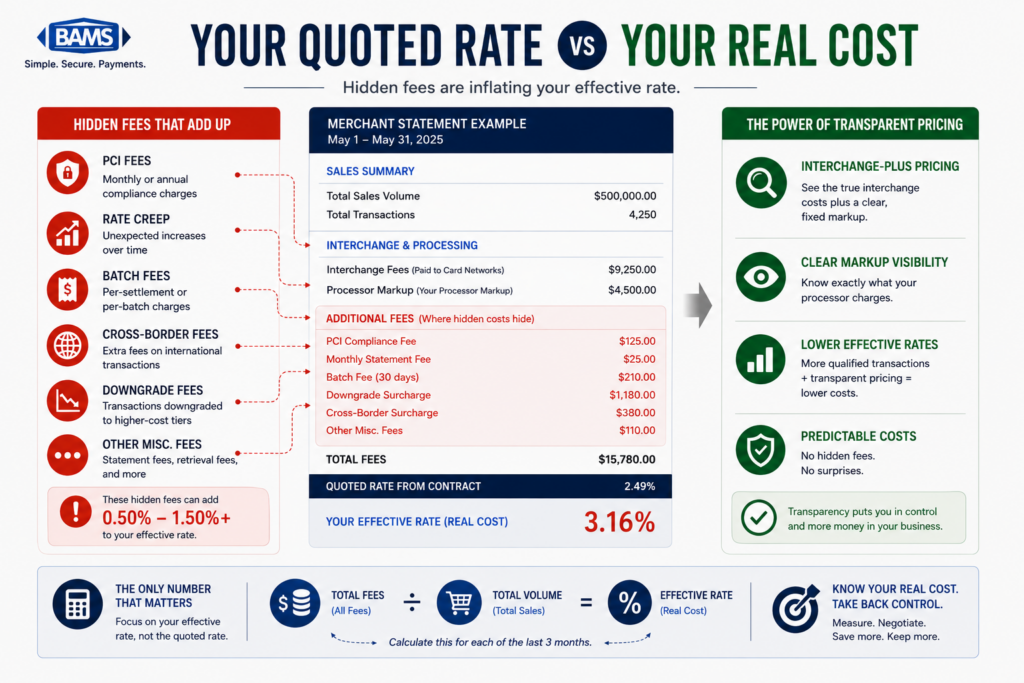
But here’s the problem: transparency about what you’re being charged is not the same as transparency about why you’re being charged that amount. Most processing statements show you the outcome (your fees) without showing you the inputs (how each transaction qualified, what data was submitted, where downgrades occurred). The statement tells you the score. It never shows you the game film.
For years, that was fine. Merchants didn’t have better options, and the complexity felt like someone else’s problem. It isn’t anymore.
The Real Question Isn’t What You’re Paying. It’s What You’re Missing.
We believe the standard for merchant services transparency needs to shift from “here’s your rate” to “here’s what we’re doing with your transaction data to earn that rate.” A processing statement that only summarizes charges is a receipt, not a diagnostic tool. And receipts don’t help you grow.
Transaction-Level Evaluation Changes the Math
Let’s make this concrete. Visa and Mastercard set interchange rates based on dozens of variables, but one of the most impactful (and most overlooked by eCommerce merchants) is the level of data submitted with each transaction.
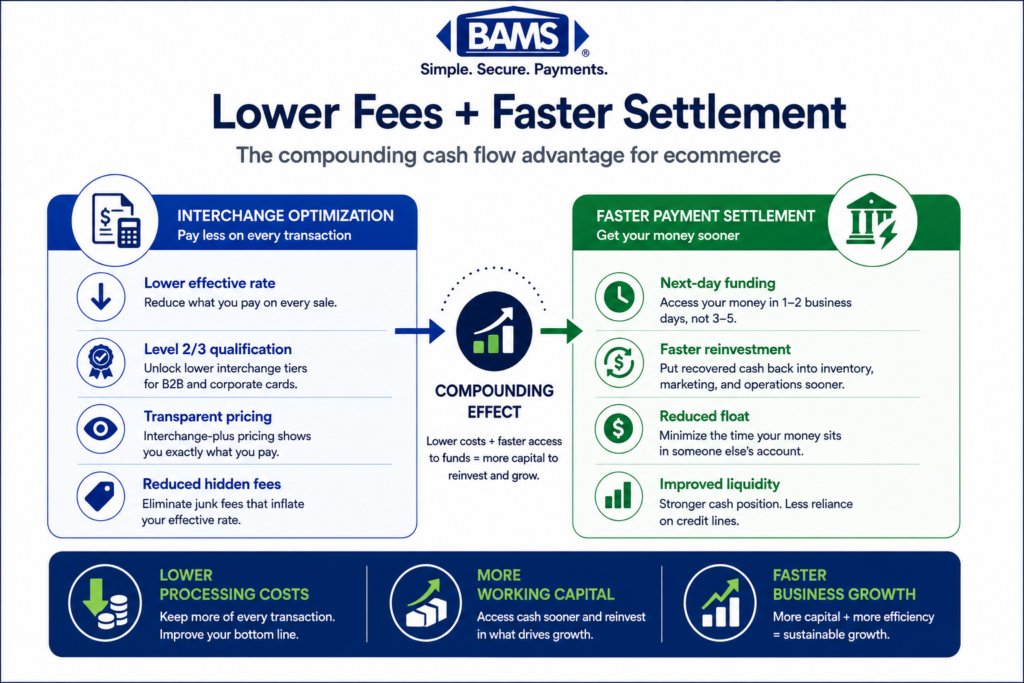
Most consumer transactions process at Level 1: basic card and amount information. That’s standard. But if you sell to other businesses, even occasionally, you’re likely processing commercial card and corporate purchasing card orders without realizing it. Those transactions are eligible for lower interchange rates if you submit enhanced data (Level 2 or Level 3), including tax amounts, customer codes, and line-item detail.
Without transaction-level evaluation, you’d never know those commercial card orders exist in your mix. They look identical to consumer transactions on a summary statement. Your processor, however, sees the card type on every single authorization. The question is whether they flag it for you or just settle the batch and move on.
Enhanced transaction data can help eligible commercial card transactions qualify for more favorable interchange categories. The Visa Commercial Enhanced Data Program highlights how richer transaction data supports commercial card qualification and improved interchange outcomes. For a midsize eCommerce operation processing even a modest percentage of commercial card volume, the annual savings can be substantial.
And this isn’t just about interchange tiers. Mastercard’s Payment Optimization Platform, which evaluates over a trillion combinations of data elements per authorization, has shown a 9% to 15% increase in merchant conversion rates in early pilots. That’s not a fee reduction. That’s revenue you’re currently losing at checkout because the data behind each transaction isn’t being optimized.
The pattern is clear: processors who actively use transaction data (not just collect it) deliver measurably better outcomes. The data is already flowing. The difference is whether anyone is reading it on your behalf.
This is where a partner like BAMS approaches things differently. Rather than handing you a summary and calling it transparency, their model pairs dedicated account management with proactive analysis of your transaction mix, identifying credit card optimization opportunities like interchange downgrades and commercial card misqualification that most processors quietly ignore.
What It Costs to Not Know
If this thesis is right, then every month you operate without transaction-level payment analytics, you’re accepting a cost you can’t see. Not because your processor is dishonest, but because the default relationship isn’t designed to surface optimization opportunities. It’s designed to settle batches.
For growth-focused eCommerce merchants, the implications compound. You’re potentially overpaying interchange on commercial card orders you don’t know you’re receiving. You’re missing authorization optimization that directly affects conversion rates. And you’re making pricing decisions (about products, shipping, margins) based on a cost structure that’s higher than it needs to be.
According to the Federal Reserve’s 2025 Small Business Credit Survey, managing operating expenses remains a significant challenge for many businesses, making payment cost visibility and optimization increasingly important.
The merchants who audit their statements at the transaction level consistently find money. The ones who don’t, consistently leave it on the table.
Think of Your Processor as a Co-Pilot, Not a Meter
Here’s the reframe: your processing relationship shouldn’t feel like a utility bill. It should feel like a co-pilot seat. A utility sends you a statement. A co-pilot tells you what’s ahead and adjusts the route.
The mental model most merchants carry (processor equals cost of doing business) made sense when payments were a commodity pipe. Today, with interchange qualification tiers, enhanced data programs, intelligent retry logic, and real-time analytics, your processor sits on top of one of the richest data sets in your business. The question worth asking isn’t “what’s my rate?” It’s “what are you doing with my data to make that rate as low as possible?”
If your processor can’t answer that question with specifics, your statement isn’t telling you the whole story.
Demand the Game Film
Processing costs aren’t fixed. They’re a function of data quality, card mix awareness, and whether anyone on the other side of your merchant account is actually paying attention. The merchants who treat their processor as a strategic partner (and hold them to that standard) consistently pay less and convert more. Stop reading the score. Start demanding the game film.
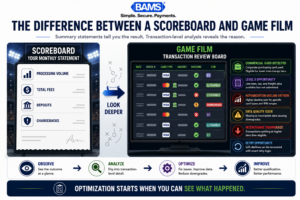
A statement shows the result. Transaction-level analysis shows the reason.
Frequently Asked Questions
What is Level 3 data in merchant services?
Level 3 data refers to detailed, invoice-quality transaction information (line items, tax amounts, product codes) submitted during payment processing. When included with commercial or corporate card transactions, it qualifies those transactions for lower interchange rates set by Visa and Mastercard.
How can eCommerce merchants benefit from transaction-level evaluation if they primarily sell to consumers?
Many eCommerce merchants unknowingly process commercial and corporate purchasing cards from business buyers. Transaction-level evaluation identifies those orders in your mix so you can submit the enhanced data needed to lower your processing fees on eligible transactions.
Do I need to overhaul my tech stack to start submitting Level 2 or Level 3 data?
Not necessarily. Many modern payment gateways support enhanced data fields, and a proactive processor can help you identify what your current setup already captures. The first step is a line-by-line audit of your statement to see where qualification gaps exist.