Transparent Pricing Model: What It Actually Means
Last Updated on May 18, 2026 by Dimitri Akhrin
Why a single quoted rate tells you nothing about where your processing margin actually goes
Learn why flat-rate pricing marketed as transparent actually obscures your true costs. Discover how to evaluate merchant service charges at the transaction level and what mid-market eCommerce businesses should demand from a processor.
TL;DR
- Flat-rate pricing isn’t transparent – It bundles interchange, assessments, and markup into one number, hiding where your money actually goes and preventing you from optimizing B2B transaction costs.
- Your effective rate is the only metric that matters – Calculate total fees divided by total sales, segmented by transaction type. Most eCommerce merchants should pay 2.3% to 3.1%. Anything above 3.5% signals hidden fees or interchange downgrades.
- Level 2/3 data qualification saves real money on B2B orders – If your processor isn’t submitting enhanced transaction data (tax amounts, PO numbers, line-item details), your high-ticket B2B transactions default to the most expensive interchange tier.
- Demand transaction-level proof every month – A processor that can’t show your effective rate by card type, transaction size, and interchange qualification level isn’t offering a transparent pricing model. It’s offering a black box.
Your Processor Quoted You a Rate. Your Statement Tells a Different Story.
Every eCommerce manager has experienced the moment: you signed up for what looked like competitive merchant service charges, then your first real statement arrived. The number at the bottom didn’t match the pitch. Not even close. The gap between the rate you were sold and the rate you actually pay is where most mid-market businesses quietly lose thousands each year. And the worst part? Most processors are counting on you never doing the math.
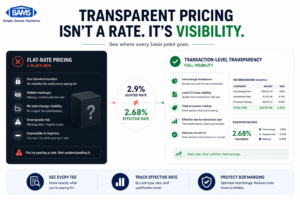
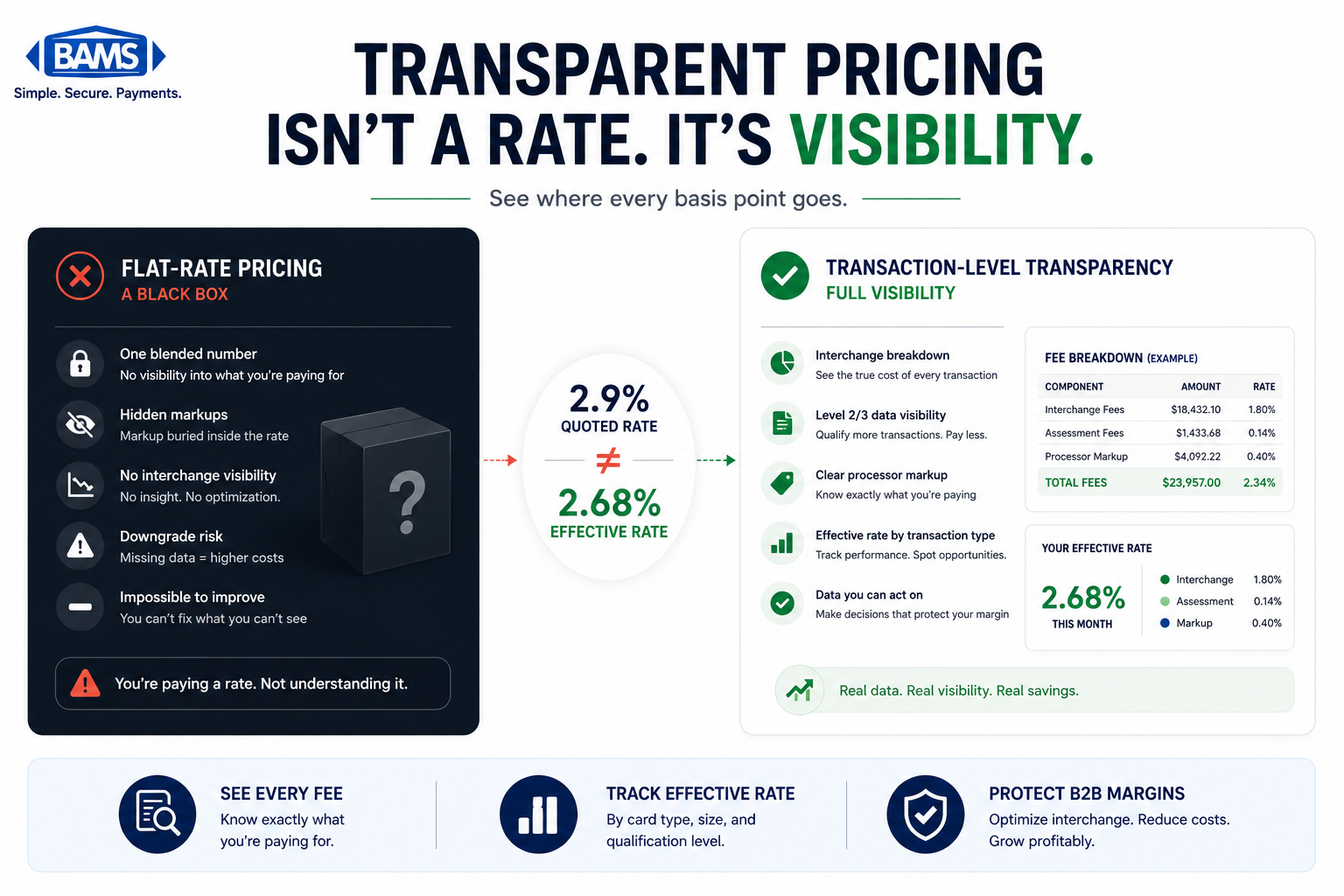
Transparent pricing means seeing interchange, processor markup, and effective rates at the transaction level instead of relying on a single blended rate.
The Flat-Rate Promise That Keeps Mid-Market eCommerce Comfortable
Flat-rate pricing became popular for a reason. It’s simple. One percentage, one promise, no homework required. For a brand-new Etsy seller processing $2,000 a month, that simplicity makes sense.
But somewhere along the way, flat-rate became the default for established eCommerce businesses doing six or seven figures in monthly volume. Processors market it as “transparent” because there’s one number on the brochure. No jargon. No interchange tables. Just a clean percentage.
Here’s the problem: simplicity is not the same as transparency. A single blended rate obscures the actual cost structure underneath. It bundles interchange fees, assessment fees, and processor markup into one figure, making it impossible to see where your money actually goes. For B2B merchants processing high-ticket orders, this is especially expensive because your transactions could qualify for lower interchange categories, but a flat rate gives you zero incentive (or ability) to pursue that.
Transparency Isn’t a Rate. It’s a Receipt.
We believe a transparent pricing model means one thing: you can see your effective processing rate broken out by transaction type, line by line, on every statement. If your processor can’t show you that, they’re not transparent. They’re just quiet about where your margin goes.
Where B2B Processing Costs Actually Hide
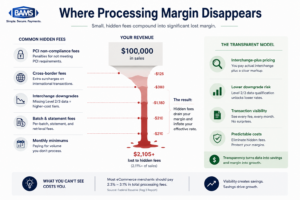
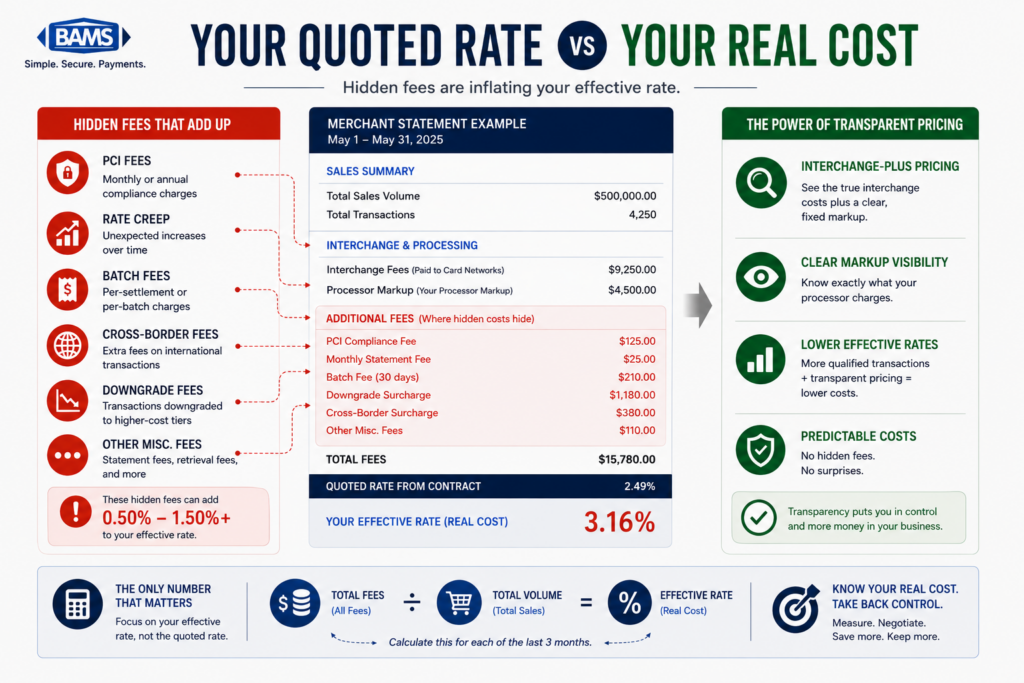
Small hidden fees compound into significant effective-rate increases when transaction visibility is limited.
Let’s look at the anatomy of a statement that’s working against you.
Many merchants discover their actual processing costs look nothing like the rate they were originally quoted. What seemed like a competitive percentage on paper often turns into a much higher effective rate once PCI non-compliance fees, cross-border surcharges, monthly minimums, batch fees, and other hidden charges start appearing on the statement.
This isn’t an outlier. It’s a pattern.
According to Federal Reserve interchange fee data, interchange costs remain one of the largest components of merchant processing expenses for eCommerce businesses. Industry data shows most eCommerce merchants should pay between 2.30% and 3.10% in total processing fees. That breaks down to roughly 1.80% interchange, 0.14% assessment, and 0.40% processor markup. When your effective rate drifts above 3.5%, something is being added that wasn’t in the pitch deck.
The most common culprits for B2B eCommerce businesses:
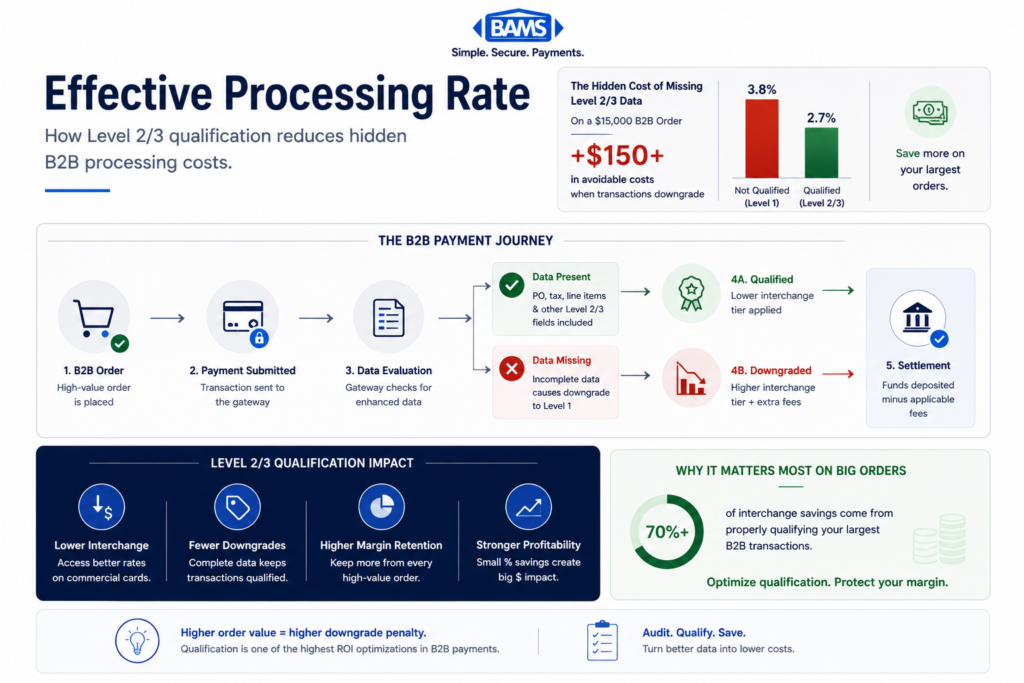
- Interchange downgrades. Your B2B transactions could qualify for Level 2 or Level 3 interchange rates, which are significantly lower. But if your processor isn’t passing the required data fields (tax amount, customer code, line-item detail), those transactions default to the highest interchange tier. You pay more. Your processor has no reason to tell you.
- Tiered pricing buckets. “Qualified,” “mid-qualified,” and “non-qualified” tiers sound objective. They’re not. Your processor decides which bucket each transaction lands in. That discretion is where hidden margin lives.
- Ancillary fees. PCI compliance fees, statement fees, gateway fees, batch settlement fees. Individually small. Collectively, they can add 0.3% to 0.5% to your effective rate without triggering a single alarm.
The effective rate is the only number that captures all of this. As payment analysts have noted, it accounts for interchange rates, transaction fees, and monthly fees combined. It’s the single metric that tells you what you’re actually paying. And critically, you need it segmented by transaction type. A blended effective rate across all transactions still hides the fact that your B2B orders might be processing at 4%+ while your consumer orders sit at 2.5%.
This is where Level 2/3 data optimization becomes a real lever, not a buzzword.
Card networks such as Visa outline how transaction data quality and processing structure affect authorization and settlement efficiency. When your processor submits enhanced transaction data (purchase order numbers, tax amounts, ship-to codes, line-item details), card networks reward that with lower interchange rates. For B2B merchants with average tickets above $200, the savings can be substantial. But most mid-market processors either don’t support Level 3 data or claim to without actually qualifying transactions. And you’d never know unless you audit your statement at the transaction level.
Tools like BAMS address this directly by pairing interchange-plus pricing with dedicated account management that reviews your statements for downgrade patterns. Instead of a flat rate that hides the problem, you get a line-item breakdown that reveals it.
What Changes When You Demand Transaction-Level Accountability
If this thesis is right, the implications reshape how you evaluate every processor conversation going forward.
First, you stop comparing advertised rates. They’re meaningless without knowing how transactions are classified and what ancillary fees are attached. Instead, you compare effective rates by transaction type across a 90-day window.
Second, you start asking your processor a question they may not want to answer: “What percentage of my B2B transactions qualified at Level 3 interchange last month?” If they can’t tell you, that silence is expensive. Your hidden processing costs are living in that gap.
PCI Security Standards Council guidance also emphasizes the importance of compliance management and secure payment processing practices for merchants handling cardholder data.
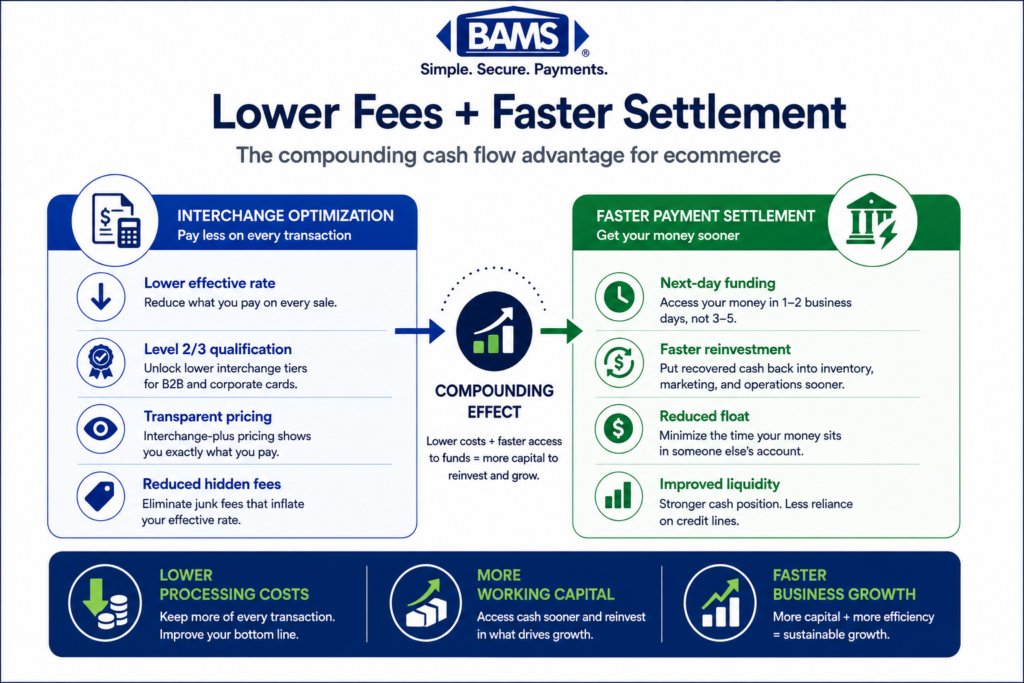
Third, you connect interchange savings to cash flow. A processor that saves you 0.5% on interchange but holds your funds for three days isn’t solving the full problem. The combination of lower effective rates and faster settlement (next-day funding, for instance) is what actually moves the needle on working capital.
A New Way to Measure Your Processor
Stop thinking of your processor as a utility you evaluate once a year. Think of them as an accountability partner you audit every month.
Here’s the reframe: your processor’s job isn’t to charge you a rate. It’s to prove your rate, transaction by transaction, every billing cycle. If they can’t show you your effective processing rate segmented by card type, transaction size, and interchange qualification level, they are not a transparent pricing model. They are a black box with a friendly brochure.
The standard for mid-market eCommerce should be simple. Show me the math. Every month. By transaction type. If you can’t, someone else will.
You can start by auditing your current statement structure and calculating your actual effective rate against industry benchmarks.
The Margin You Keep Is the One You Can See
Transparency in payments isn’t a marketing claim. It’s a verifiable practice. The processors who earn your business in the next chapter of eCommerce won’t be the ones with the lowest number on a landing page. They’ll be the ones who hand you a statement you can actually read.
Your margin doesn’t disappear in one big charge. It leaks through dozens of small ones you were never meant to notice. The only defense is a processor willing to show you every line. Demand that, or accept the leak.
Frequently Asked Questions
What is interchange-plus pricing and why does it matter for B2B eCommerce?
Interchange-plus pricing separates the three components of every transaction (interchange to the issuing bank, assessment to the card network, and your processor’s markup) into visible line items. For B2B eCommerce, this visibility lets you verify whether high-ticket transactions are qualifying at lower Level 2/3 interchange rates or silently defaulting to expensive tiers.
How do I calculate my effective processing rate?
Divide your total processing fees (including all monthly, batch, PCI, and gateway charges) by your total credit card sales volume, then multiply by 100. Most eCommerce businesses should land between 2.3% and 3.1%. If you’re above 3.5%, hidden fees or interchange downgrades are likely inflating your costs.
What are the most common hidden fees in merchant services?
PCI non-compliance fees, batch settlement fees, statement fees, cross-border surcharges, and inflated “non-qualified” tiered pricing buckets are the most frequent offenders. Individually they look minor, but together they can add 0.3% to 0.5% or more to your effective rate each month.
Sources
- Federal Reserve Interchange Fee Data
- Visa Payment Processing Resources
- PCI Security Standards Council Merchant Guidance