Payment Processing Strategies: The Fields You’re Not Sending
Last Updated on June 17, 2026 by Dimitri Akhrin
Level 3 data savings aren’t locked behind negotiations — they’re hiding in your platform’s unconfigured settings
Learn why the biggest B2B processing savings come from transaction data optimization, not rate negotiations. Discover the three fields your platform already supports but never populates, and why treating Level 3 as a configuration task changes your margins.
TL;DR
- Level 3 data saves real money – Passing tax, freight, and line-item detail with B2B transactions can lower interchange rates by 0.3% to over 1% per transaction, no negotiation required.
- It’s a configuration problem, not a pricing problem – Most eCommerce platforms already support L3 fields. The savings are lost because nobody mapped them in the gateway settings.
- Interchange-plus pricing is the prerequisite – Flat-rate processors absorb interchange differences, so L3 optimization only benefits merchants on interchange-plus models.
- The eCommerce manager is the key player – You control the platform and the data. Fixing this doesn’t require your CFO or your processor. It requires a settings change and a statement audit.
Your Processor Isn’t Overcharging You. Your Platform Is Under-Sending Data.
Most eCommerce managers assume their payment processing fees are a fixed cost, something you negotiate down once a year and then forget about. But here’s the friction: the biggest savings in B2B and high-ticket eCommerce aren’t hiding in your processor’s rate sheet. They’re hiding in three fields your shopping cart already supports but never populates. Effective payment processing strategies don’t always start with a phone call to your rep. Sometimes they start with a settings page.
The “Just Negotiate Harder” Myth
The dominant playbook for reducing processing costs goes like this: call your processor, threaten to leave, get a few basis points shaved off your markup. Repeat annually. It’s not bad advice. It worked for a long time, and for many merchants, it’s the only lever they’ve ever been told exists.
Industry content reinforces this. Search for how to lower your processing fees and you’ll find dozens of articles about negotiating rates, switching providers, or encouraging debit card use. Mastercard commercial card acceptance research continues to highlight how businesses are prioritizing payment optimization, commercial card acceptance, and operational payment efficiency.
That’s the commercial side. Almost nobody talks about the operational side, the part where the data you send with each transaction determines the interchange category it qualifies for. And interchange is where the real money lives.
The Real Lever Is Configuration, Not Conversation
Here’s what we actually believe: transaction data optimization is the most underleveraged cost reduction tool in eCommerce payments, and it requires zero negotiation. The card networks (Visa, Mastercard) publish tiered interchange schedules. If your transaction includes tax amount, freight/shipping cost, and line-item detail (commodity codes, quantities, unit prices), it can qualify for Level 3 interchange rates. Those rates are meaningfully lower than the standard Level 1 rate that most eCommerce transactions default to. Merchant Payments Coalition resources continue to highlight how interchange qualification and payment processing inefficiencies materially affect merchant operating costs, particularly in B2B eCommerce environments.
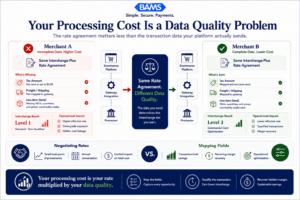
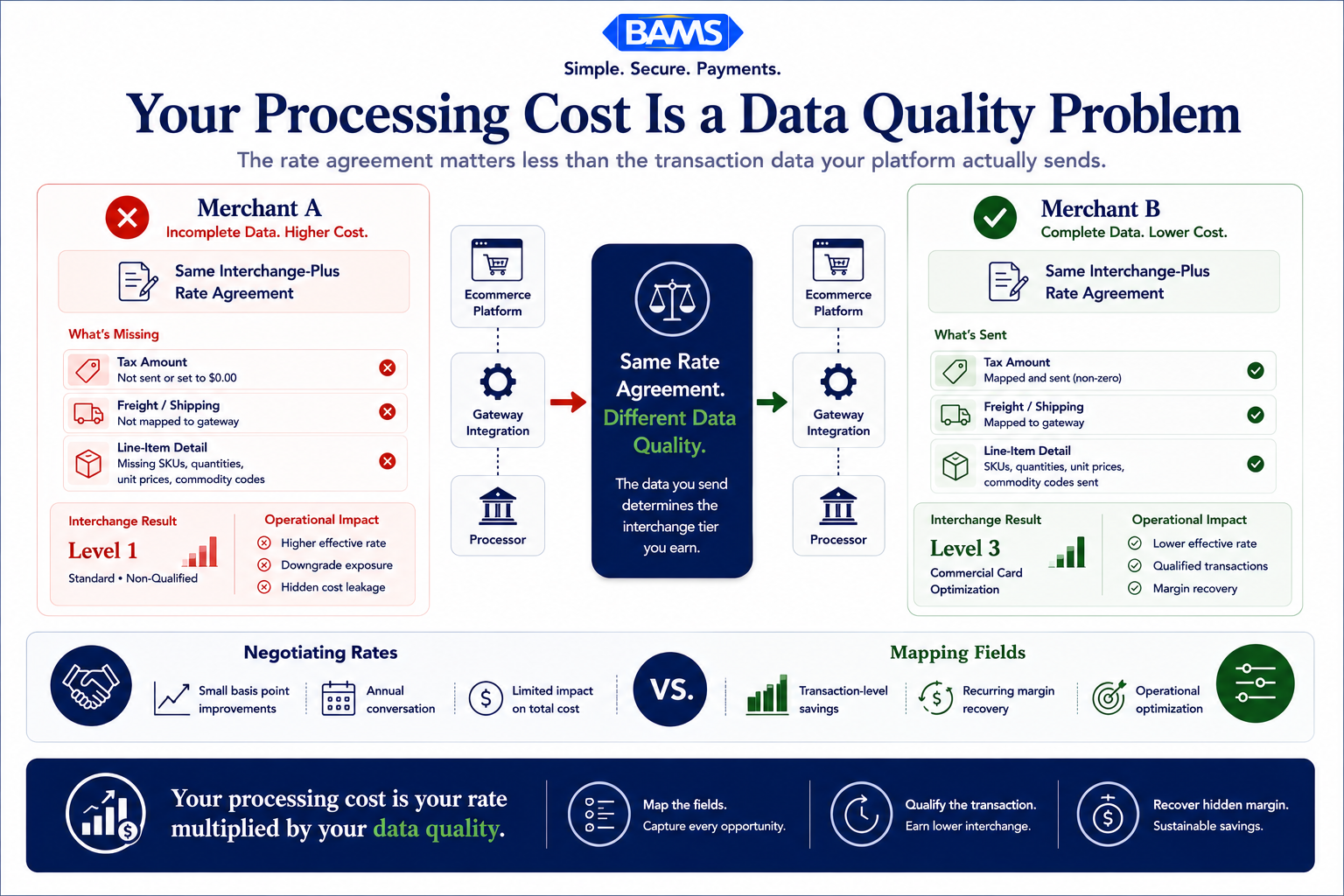
Two merchants can have the same processor and the same rate structure while paying dramatically different effective costs.
Three Fields, Real Money
Let’s get specific. When a B2B customer places an order on your site with a corporate or purchasing card, the card network evaluates the transaction data to determine which interchange tier it falls into.
- Level 1 is basic: card number, expiration, transaction amount.
- Level 2 adds tax amount and customer code.
- Level 3 adds the full line-item detail: product descriptions, commodity codes, unit costs, quantities, and freight charges.
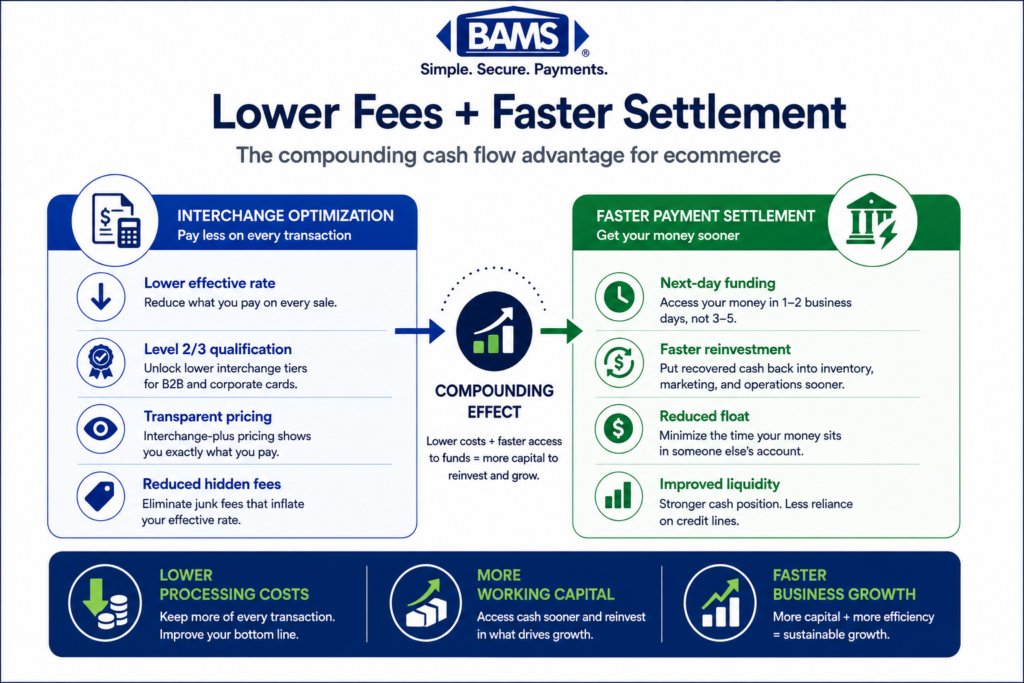
The gap between Level 1 and Level 3 interchange rates can range from 0.3% to over 1% per transaction. On a $5,000 B2B order, that’s $15 to $50 in savings on a single sale. Multiply that across hundreds of monthly transactions and you’re looking at thousands recovered annually, not from switching processors, but from populating fields that already exist in your gateway.
Most modern eCommerce platforms and gateways technically support these fields.
Shopify Plus, WooCommerce with the right gateway plugin, BigCommerce, Magento: they all have the plumbing. The problem isn’t capability. It’s configuration. Nobody set it up because nobody told the eCommerce manager it mattered.
This is where the disconnect lives. Your platform team thinks payments are the finance team’s problem and your finance team thinks interchange is the processor’s domain. Your processor assumes your platform is sending complete data. Meanwhile, every B2B transaction you process is qualifying at the most expensive tier by default.
FedNow Service resources continue to show how real-time payment infrastructure and faster settlement capabilities are reshaping liquidity management and payment operations across the U.S. financial ecosystem.
We’ve seen this pattern repeatedly. A merchant on interchange-plus pricing (the right model, by the way) still pays elevated rates because their cart sends bare-minimum data. They assume the rate is the rate. It isn’t. The rate is a function of what you send. And what you send is a function of how your platform is configured.
A partner like BAMS can help identify where your transactions are downgrading and which fields need mapping, turning this from a vague optimization idea into a concrete implementation task with measurable savings on your next statement.
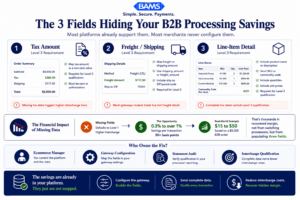
Most eCommerce platforms already support these fields. The savings disappear because nobody mapped them to the gateway.
What Changes If You Treat This as an Ops Problem
If this thesis is right, the implications are significant. It means the eCommerce manager, not the CFO, not the payment processor, is the person best positioned to reduce processing costs. You control the platform and you control the data. You control whether tax, freight, and line-item fields get mapped to the gateway’s API.
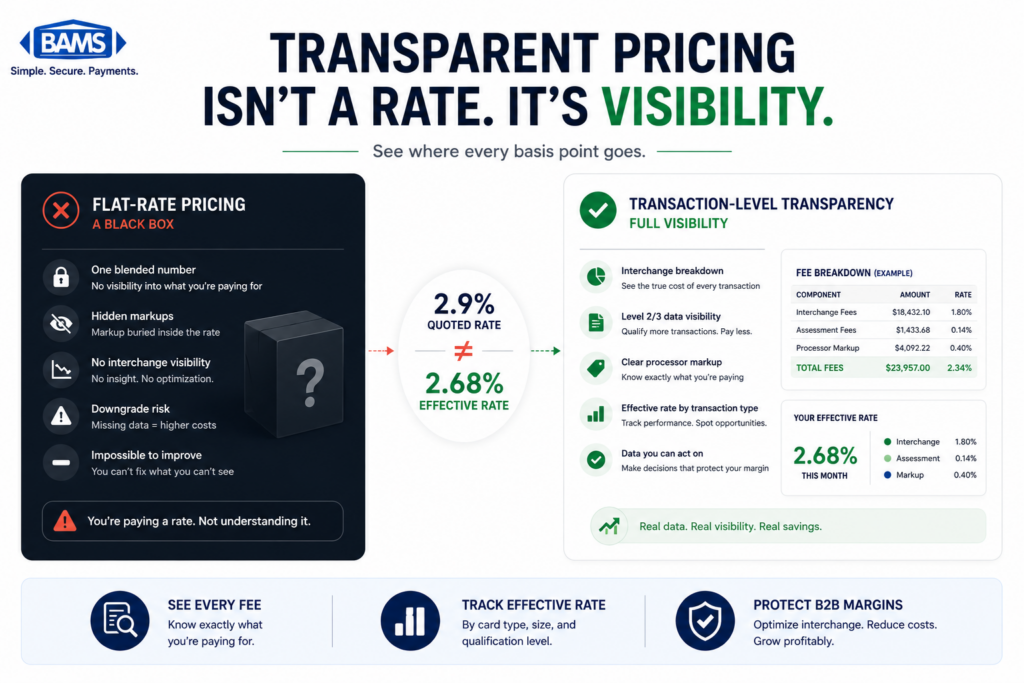
It also means that merchants on interchange-plus pricing have a structural advantage they may not be using. Flat-rate processors absorb the interchange difference themselves, so they have no incentive to help you qualify for lower tiers. Interchange-plus passes the savings directly to you, but only if the data qualifies.
And it means the annual “negotiate with your processor” ritual is solving the wrong problem. You can shave 5 basis points off a markup. Or you can drop 50+ basis points off interchange by fixing your data. The math isn’t close.
Stop Negotiating Rates. Start Mapping Fields.
Here’s the reframe: your processing cost is not your rate. Your processing cost is your rate multiplied by your data quality. Two merchants with identical interchange-plus agreements can pay wildly different effective rates depending on whether their platforms pass Level 2 and Level 3 data. The rate is the same. The cost is not.
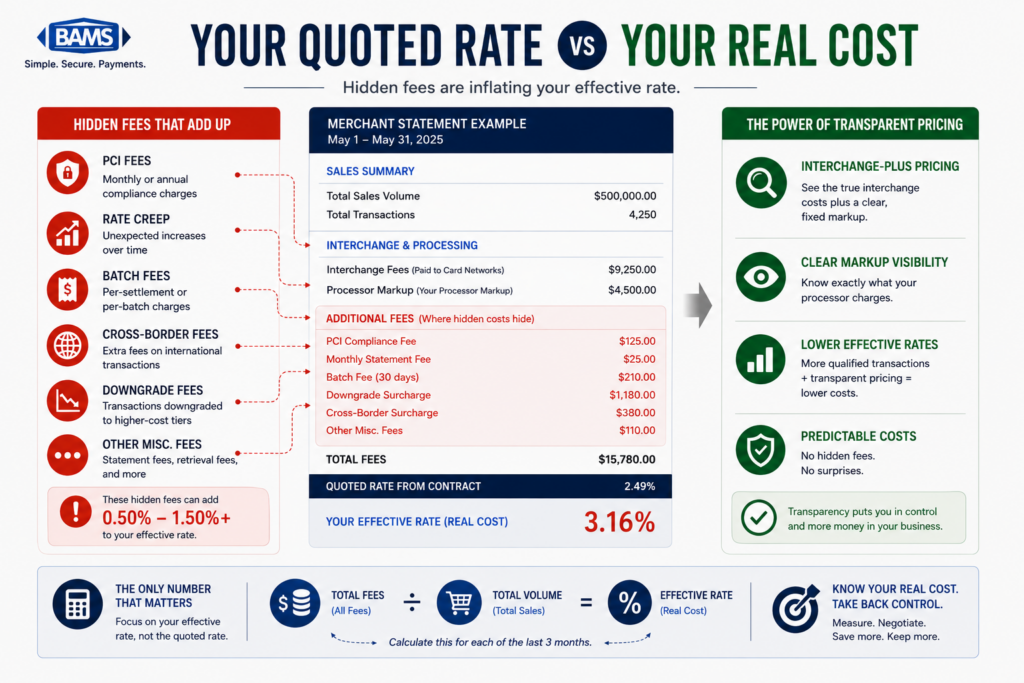
This is why auditing your processing statements matters, but not in the way most guides suggest. Don’t just look for hidden fees or surcharges. Look at the interchange categories your transactions are landing in. If you see a high percentage of “standard” or “non-qualified” transactions on B2B volume, you have a data problem, not a pricing problem. The language to carry forward is simple: qualify the transaction, not just the rate.
The Margin Is Already in the Order
Ecommerce profitability doesn’t always require selling more or spending less on ads. Sometimes it means collecting the margin that’s already embedded in orders you’re processing today. Three fields. Tax. Freight. Line-item detail. Your platform probably supports them. Your gateway probably accepts them. The only thing missing is someone deciding it matters enough to configure.
That someone is you.
Frequently Asked Questions
How does optimizing transaction data affect processing fees?
When your platform sends enriched data (tax amounts, freight costs, line-item details) with each transaction, it can qualify for lower interchange tiers set by Visa and Mastercard. This directly reduces the per-transaction cost without any change to your processor agreement.
Why is interchange-plus pricing more beneficial than flat-rate pricing for L3 optimization?
Interchange-plus pricing passes the actual interchange cost through to you, so when your transactions qualify for a lower tier, you keep the savings. Flat-rate processors charge the same regardless of data quality, eliminating any incentive to optimize.
What are the best strategies to reduce payment processing fees?
Start by auditing which interchange categories your transactions land in, then map tax, freight, and line-item fields in your gateway configuration. Pair this with interchange-plus pricing and regular statement reviews to ensure transactions aren’t downgrading unnecessarily.
Sources
- Mastercard Commercial Card Acceptance Research
- FedNow Service Resources
- Merchant Payments Coalition Resources