MPAN: The Margin Lever Hiding in Your Apple Pay Setup
Last Updated on October 14, 2026 by Dimitri Akhrin
Why the tokenization architecture behind Apple Pay is a chargeback defense most merchants never optimize
Learn how the MPAN powering Apple Pay functions as more than a fraud filter. This piece reveals why merchants who manage tokenization strategically see higher approval rates and lower chargeback costs.
TL;DR
- MPAN is a margin lever, not just a security feature – The Merchant Payment Account Number inside Apple Pay carries richer data and survives card lifecycle events, directly reducing chargebacks and failed recurring charges.
- Default token settings cost you money – Running recurring transactions on DPANs instead of MPANs leads to silent declines, higher dispute rates, and worse interchange qualification.
- Higher approval rates compound into real savings – Apple Pay transactions see 2 to 3% higher approval rates, and merchants who actively manage their token strategy land at the lower end of processing cost ranges.
- Think transaction quality, not fraud prevention – The merchants with the lowest effective processing costs aren’t the ones with the best fraud filters. They’re the ones producing the highest-quality transactions.
The Chargeback Problem Nobody Blames on Checkout Architecture
Most eCommerce managers treat chargebacks like weather. Unpredictable, unavoidable, and something you deal with after the damage. But what if a significant chunk of your chargeback costs could be traced back to how your checkout tokenizes card data in the first place? The MPAN architecture sitting inside Apple Pay isn’t just a fraud filter. It’s a margin lever. And almost nobody is pulling it on purpose.
Why “Just Accept Apple Pay” Became the Default Advice
The standard guidance goes like this: enable Apple Pay, give customers a faster checkout, and enjoy the fraud reduction that comes with biometric authentication. It’s solid advice on the surface. Apple Pay is available for purchases in stores, online, and in apps, so the demand for convenient digital wallet payments is clearly established.
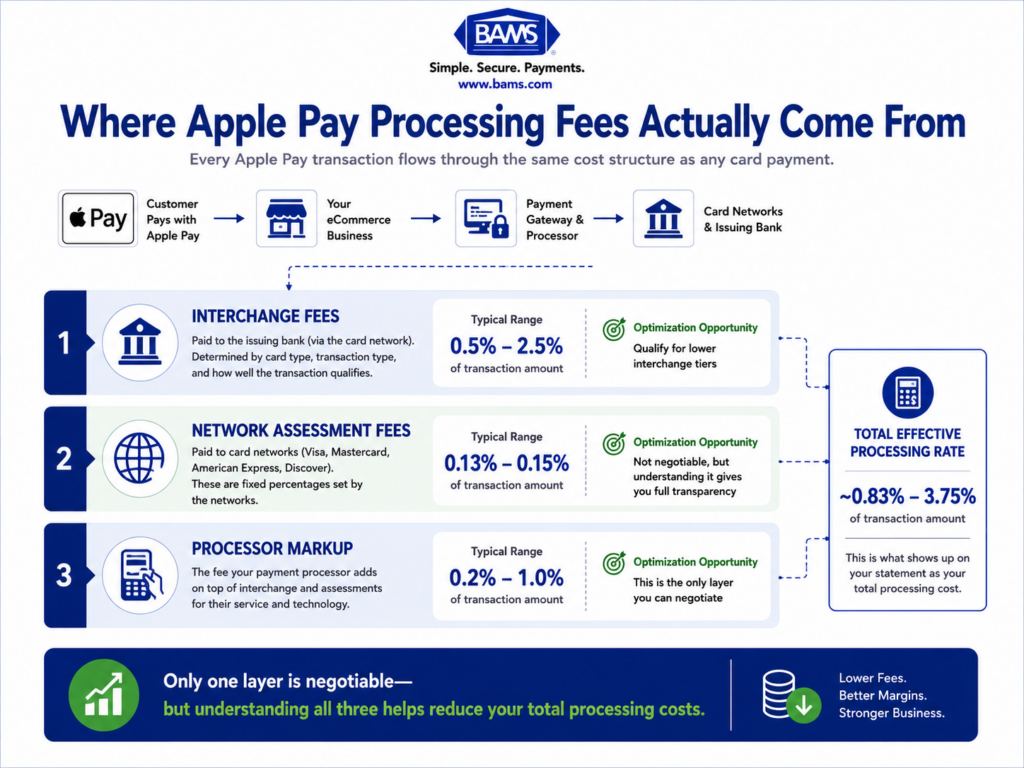
Processors and platform providers position it as a convenience feature. Turn it on, watch conversion tick up, move on. Apple charges merchants nothing extra for acceptance. You still pay your standard credit card processing fees (interchange, assessments, processor markup), but the wallet layer itself is free.
So most merchants flip the switch and never think about it again. The assumption is that the value is baked in. That there’s nothing left to optimize. That assumption is expensive.
The Token You’re Not Managing Is Costing You Money
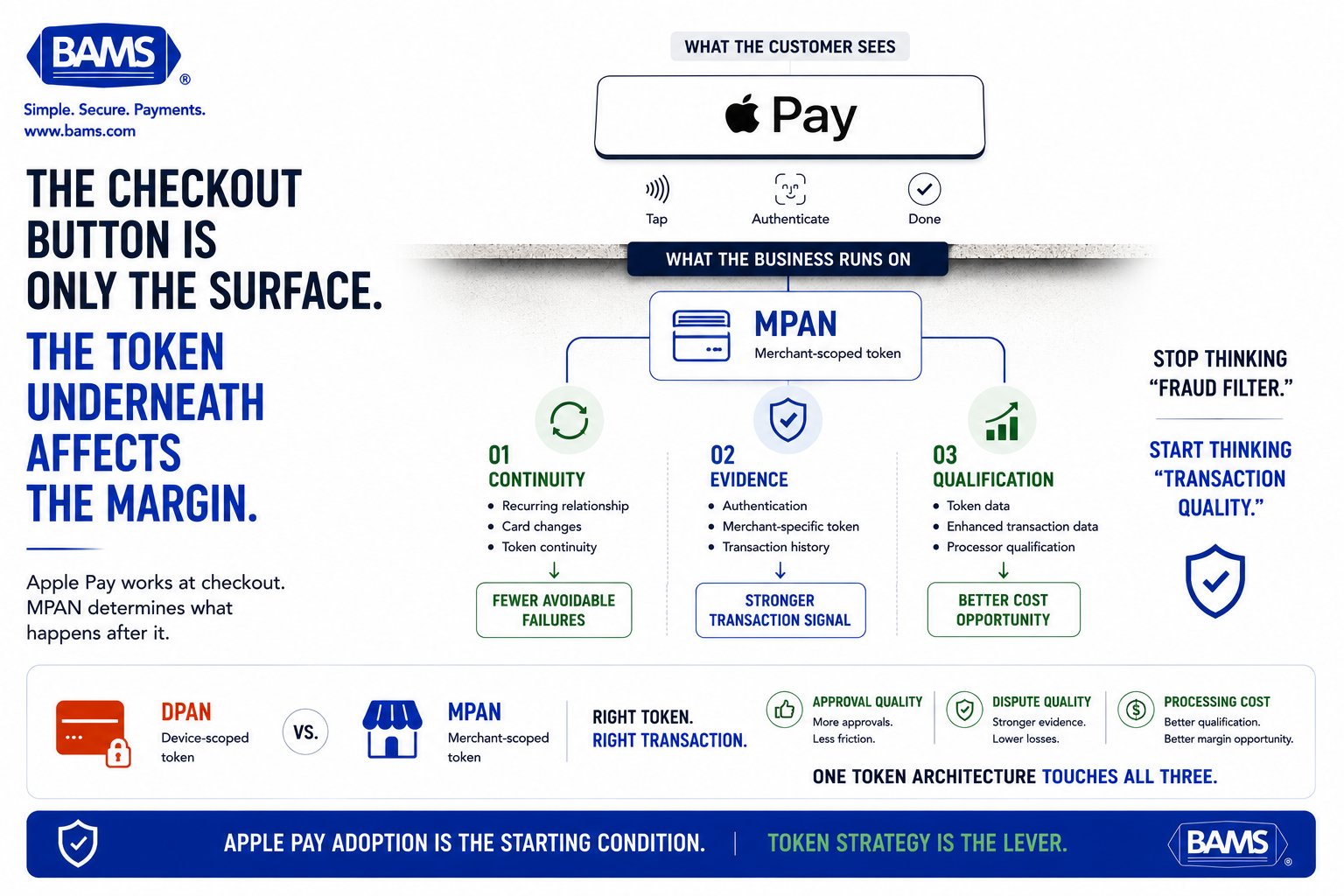
Here’s what we actually believe: the real financial value of Apple Pay lives in the MPAN (Merchant Payment Account Number), not the checkout button. Merchants who understand the difference between an MPAN and a DPAN, and deploy the right one for the right transaction type, unlock higher approval rates, fewer chargebacks, and lower effective processing costs. Those who don’t are leaving margin on the table every single day.
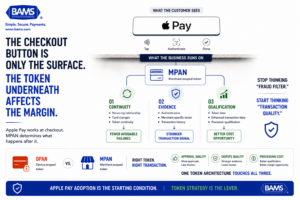
Apple Pay adoption is only the starting point. The token architecture underneath the checkout determines how durable, identifiable, and useful the transaction data becomes.
How MPAN Architecture Turns Fewer Chargebacks Into Real Savings
Let’s unpack this, because the distinction matters more than most payment content will tell you.
When a customer pays with Apple Pay, the transaction doesn’t use their actual card number. It uses a token. But there are two kinds of tokens in this system. A DPAN (Device Primary Account Number) is tied to the customer’s device and generated at the moment of purchase. It works well for one-time checkout flows.
An MPAN (Merchant Primary Account Number) is different. It’s a token provisioned specifically for a merchant, designed to persist across transactions. Apple’s developer documentation explains that merchant tokens support recurring and deferred transactions, giving merchants a token designed for ongoing payment relationships.
Why does this matter for chargebacks and approvals? Three reasons.
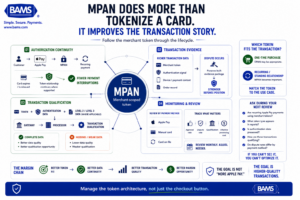
MPAN becomes valuable when you follow its effect through the entire transaction lifecycle, from initial authentication through recurring charges, disputes, and processing review.
1. Authorization continuity reduces declines
When a customer’s physical card expires, gets replaced, or is reissued by their bank, a DPAN-based token can break. The next charge attempt fails. The customer doesn’t know why. They may dispute the original transaction or abandon the subscription entirely.
MPANs survive card lifecycle events. The token persists because it’s linked to the merchant relationship, not the device. Tokenization can also support better authorization performance. Visa identifies increased authorization rates as a potential benefit of network tokenization, helping merchants reduce avoidable payment failures.
2. Stronger transaction data means fewer friendly fraud disputes
Chargebacks from “friendly fraud” (the customer authorized the purchase but disputes it anyway) are the fastest-growing category of disputes for eCommerce merchants. MPAN-based transactions carry richer authentication data. The biometric verification, the device binding, the merchant-specific token all create a stronger evidence trail when a dispute lands.
This doesn’t just help you win representments. It discourages issuers from siding with the cardholder in the first place. The data footprint of an MPAN transaction tells a clearer story than a standard card-not-present charge ever could.
3. Interchange qualification improves quietly
This is the piece almost no one talks about. Tokenized transactions that carry strong authentication signals can qualify for more favorable interchange tiers. Combined with Level 2 and Level 3 data capture, the effective cost per transaction drops. Not dramatically on any single swipe, but compounding across thousands of monthly transactions, the savings become material.
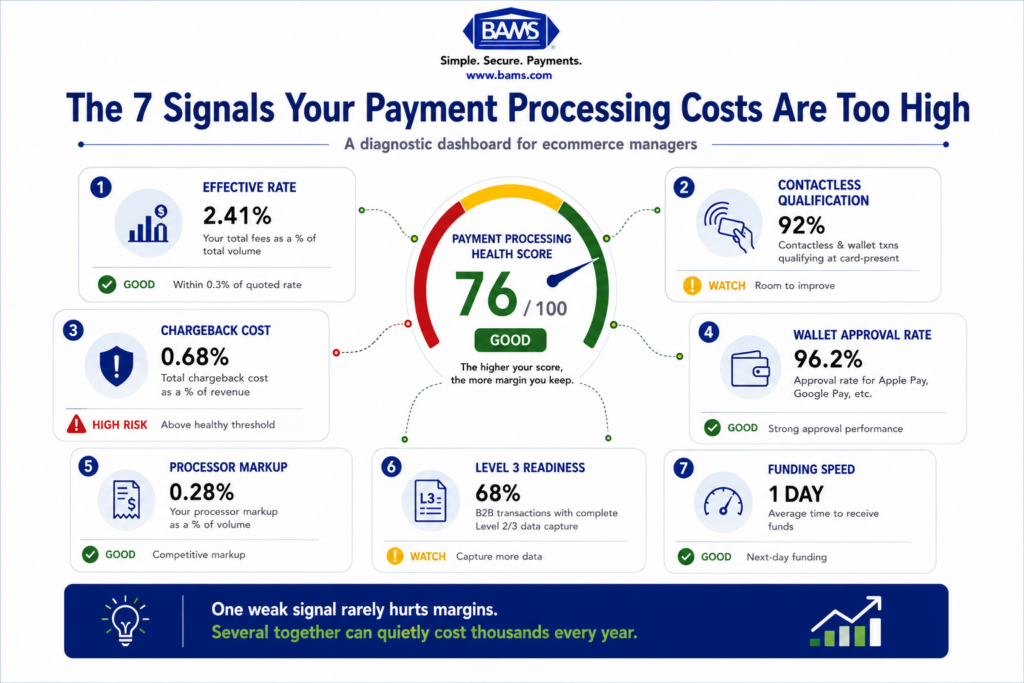
Typical Apple Pay merchant costs run roughly 2.5% to 3.5% per transaction depending on card type and processor agreement. The merchants who actively manage their token strategy, ensuring MPANs are deployed for recurring and subscription flows, consistently land at the lower end of that range.
What This Means for Your Next Processing Review
If this thesis is right, then most eCommerce businesses are sitting on an optimization lever they’ve already paid to install but never learned to use. The checkout button is live. The Apple Pay integration is done. But the token architecture underneath is running on defaults, not strategy.
That means chargebacks that could have been prevented are hitting your dispute ratio. Recurring transactions that could have been approved are declining silently. And interchange rates that could have qualified lower are being assessed at standard card-not-present tiers.
The cost isn’t catastrophic on any given Tuesday. It’s the slow, compounding kind. The kind that shows up as margin erosion you can’t quite explain when you review your quarterly numbers. This is exactly the type of inefficiency that a merchant services partner like BAMS helps surface during a processing statement review, pairing proactive chargeback defense with interchange optimization so the savings actually reach your bottom line.
Stop Thinking “Fraud Prevention.” Start Thinking “Transaction Quality.”
The reframe is simple. MPAN isn’t a security feature. It’s a transaction quality architecture. Security is a byproduct. The primary function is ensuring that every transaction carries the richest possible data, the strongest possible authentication signal, and the most durable possible token.
When you think of it as fraud prevention, you measure success by what didn’t happen (fewer chargebacks). When you think of it as transaction quality, you measure success by what did happen: higher approval rates, better interchange qualification, and more predictable cash flow.
The merchants winning on processing costs aren’t the ones with the best fraud filters. They’re the ones with the highest-quality transactions.
The Checkout Button Was Never the Point
Apple Pay adoption isn’t a strategy. It’s a starting condition. The strategy is what you do with the token architecture underneath. Every eCommerce business running recurring charges through a DPAN when an MPAN is available is choosing higher costs and more disputes by omission.
The savings from fewer chargebacks are real. But only if you stop treating the checkout layer as the whole story.
Frequently Asked Questions
What fees do merchants pay when accepting Apple Pay?
Apple charges merchants nothing extra. You still pay your standard credit card processing fees (interchange, assessment, and processor markup), which typically total around 2.4% to 3.5% per transaction depending on card type and your processor agreement.
How does MPAN differ from DPAN for recurring payments?
A DPAN is tied to a customer’s device and works for one-time purchases. An MPAN is provisioned for a specific merchant, persists across card lifecycle events like reissuance, and is now required for recurring or subscription billing through Apple Pay.
Why does Apple Pay produce higher approval rates than traditional card payments?
Tokenized Apple Pay transactions carry stronger authentication signals (biometrics, device binding) and, when using MPANs, survive card replacements and expirations. This combination reduces false declines, contributing to approval rates 2 to 3% higher than standard card-not-present transactions.